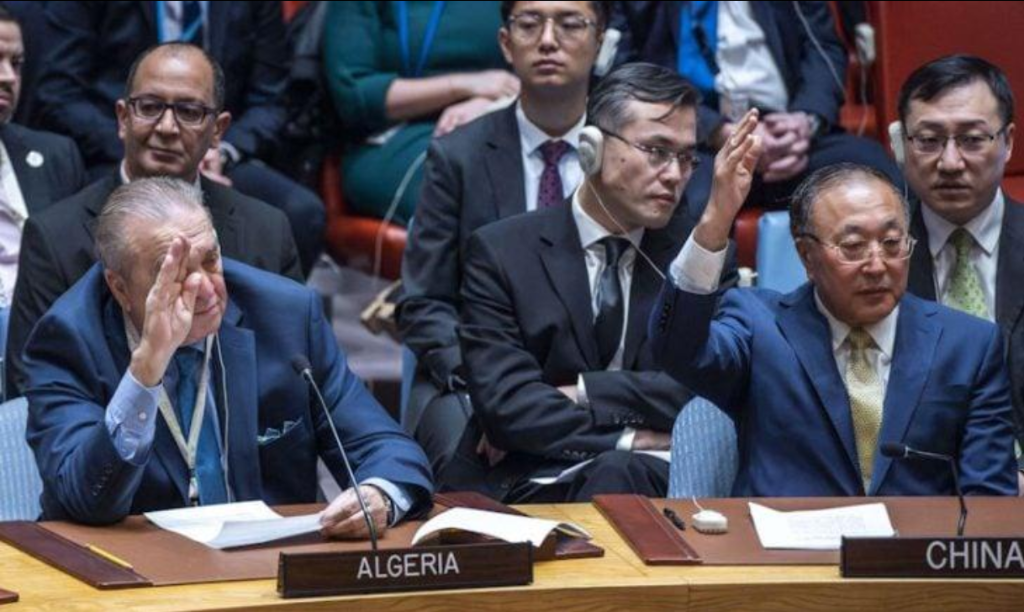
Russia blocks US-backed autonomy plan for Western Sahara at UN Security Council
UN Security Council deadlock leaves Western Sahara’s future in limbo after dual vetoes
The United Nations Security Council witnessed a dramatic stalemate on October 30, 2026, as Russia vetoed an American-backed resolution aimed at reshaping the Western Sahara autonomy process. The Russian veto, combined with the subsequent failure of Moscow’s own counter-proposal, left the existing UN mission’s mandate in jeopardy, exposing deep divisions among permanent Security Council members.
With the mandate of the UN Mission for the Referendum in Western Sahara (MINURSO) set to expire on October 31, 2026, the Council’s inability to reach a consensus threatens the continuity of international oversight in the disputed territory.
American resolution seeks to redefine MINURSO’s mandate
The U.S.-sponsored resolution proposed extending MINURSO’s mandate by one year, until October 31, 2027, while significantly altering its structure and objectives. The draft sought to centralize the Moroccan autonomy initiative as the sole framework for negotiations, effectively sidelining other political options.
Key changes included a proposal to drop the referendum reference from the mission’s name—renaming it the UN Mission in Western Sahara (MINUSO)—and gradually transitioning the peacekeeping force into a specialized political mission. The American text framed Morocco’s autonomy plan as the exclusive foundation for a political settlement, a move criticized by Russia for undermining the principle of self-determination.
The U.S. resolution gained 11 votes in favor, with three abstentions from China, Pakistan, and Somalia. However, Russia’s veto blocked its adoption, marking a major setback for Washington’s diplomatic push.
Russian counter-proposal also fails to secure majority
Russia responded with a stripped-down resolution aimed at preserving the status quo. Unlike the American plan, Moscow’s proposal sought only to extend MINURSO’s mandate unchanged until October 2027, without altering its name or mandate. The intention was to avoid a sudden withdrawal of UN peacekeepers from the region.
Yet, this initiative received only three votes in support—Russia, China, and Somalia—while the U.S. voted against it and 11 members abstained. The lack of sufficient backing prevented the resolution from passing, despite no veto being exercised.
The failure of both proposals underscores the Council’s inability to bridge the divide between Washington’s vision of a Moroccan-led autonomy process and Moscow’s insistence on maintaining the existing framework.
Self-determination debate intensifies amid diplomatic gridlock
The clash between the U.S. and Russia reveals fundamental disagreements over Western Sahara’s political status. Established in 1991, MINURSO was tasked with organizing a referendum on self-determination, which has never materialized due to persistent disputes over voter eligibility and the scope of independence options.
The Moroccan government advocates for its autonomy plan under Moroccan sovereignty, while the Polisario Front demands a referendum that could include independence as one of the choices. For the Sahrawi people, the U.S. proposal risked narrowing political options by prioritizing Morocco’s initiative, while the Russian approach preserved a stalemated process without offering new pathways to resolution.
The dual rejection of both resolutions leaves the Sahrawi population in a precarious position, with no clear mechanism for advancing their right to determine their political future.
MINURSO’s uncertain future raises regional concerns
With MINURSO’s mandate expiring without renewal, the UN’s presence in Western Sahara hangs in the balance. The absence of a new resolution leaves the mission’s future—and the broader peace process—in limbo, raising questions about the sustainability of international mediation.
The diplomatic impasse highlights the limitations of the Security Council when permanent members pursue conflicting interests. For the Sahrawi people, the stakes extend beyond geopolitical rivalries: the ability to exercise self-determination remains unresolved, and the lack of progress threatens regional stability.
As the Council remains paralyzed, the Western Sahara conflict enters a critical phase—one where the absence of compromise risks further entrenching divisions and prolonging a decades-old dispute.
