Russia-Africa summit 2026: Mali’s Goïta leads Sahel delegation amid missing allies
Goïta’s solo presence at Moscow summit contrasts with Burkina Faso and Niger’s uncertain participation
The third Russia-Africa summit, held on October 28-29, 2026, in Moscow, has spotlighted a striking disparity within the Alliance of Sahel States (AES). While Malian transitional president Assimi Goïta arrived in person and engaged with Kremlin officials, Burkina Faso and Niger’s delegations reveal a fragmented approach to the high-profile gathering. The absence of confirmed attendance by Burkina Faso’s Ibrahim Traoré and Niger’s Abdourahamane Tiani raises questions about the alliance’s cohesion and diplomatic priorities.
Mali stands out with direct presidential representation
General Assimi Goïta touched down in Moscow on October 26, leading a Malian delegation and participating in bilateral meetings with Russian President Vladimir Putin. His presence has been widely documented, including through official airport arrivals and Kremlin statements, underscoring Mali’s commitment to the summit’s agenda. Unlike other Sahelian counterparts, Mali’s leader chose a direct, unmediated diplomatic stance—one that maximizes visibility and reinforces bilateral ties.
Burkina Faso sends Prime Minister amid earlier promises
Despite early reports suggesting Burkina Faso’s Ibrahim Traoré would attend, the Ouagadougou government ultimately dispatched Prime Minister Rimtalba Jean Emmanuel Ouédraogo to represent the country. His arrival preceded the summit’s formal opening, allowing Burkina Faso to maintain official participation. Yet, the substitution of a head of government for the president signals a reduced political profile—a move that may reflect internal priorities or logistical considerations. What remains clear is that Ouédraogo’s presence, while formally valid, lacks the symbolic weight of Traoré’s direct involvement.
Niger’s presence hangs in the balance
Niger’s Abdourahamane Tiani was also listed among confirmed attendees by Russian authorities, yet public records from October 28 show no definitive confirmation of his arrival. While it is premature to declare his absence final, the lack of transparent communication fuels speculation. The uncertainty contrasts sharply with Mali’s assertive participation and raises concerns about the long-term unity of the AES, which has sought to present a unified front in its engagements with Moscow.
Pan-African attendance reflects diverse representation strategies
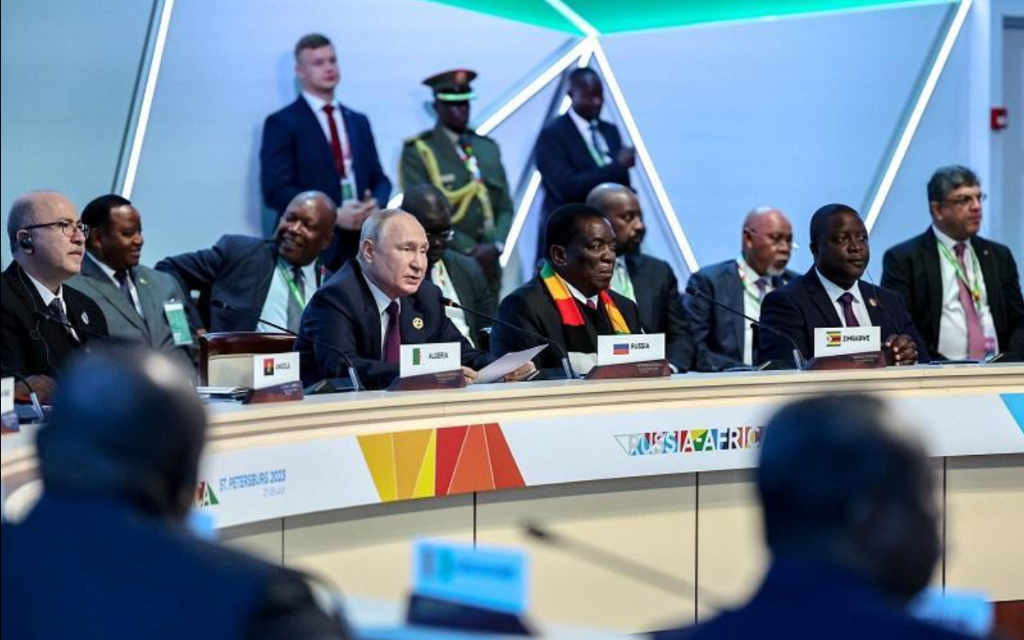
The summit has drawn leaders from across the continent, demonstrating Russia’s sustained diplomatic outreach. Notable attendees include Burundi’s president Évariste Ndayishimiye—current chair of the African Union—alongside Zimbabwe’s Emmerson Mnangagwa, Ghana’s John Dramani Mahama, and Mozambique’s Filipe Nyusi. Russia’s Kremlin advisor Yuri Ushakov confirmed that 48 of Africa’s 54 nations will participate, with 22 represented by their heads of state. This broad participation highlights the geopolitical stakes but also the varying levels of commitment among African governments.
Other countries have opted for high-level representation without presidential attendance. Algeria sent Prime Minister Sifi Ghrieb, while Benin’s delegation was led by Vice President Mariam Chabi Talata. South Africa’s Cyril Ramaphosa is notably absent, with a senior ministry official representing the country. Uganda, Rwanda, and others have similarly chosen vice-presidential or ministerial-level participation—a pragmatic approach that prioritizes continuity over symbolic leadership.
Six nations remain unaccounted for at the summit
According to Kremlin records, six African countries have not confirmed their participation, though specific names and motivations remain undisclosed. This group may include nations facing internal challenges, diplomatic realignments, or strategic reconsiderations regarding engagement with Moscow. While the absence of a president does not equate to a country’s full withdrawal, it does signal a potential recalibration of priorities—particularly in a summit where visibility and messaging are paramount.
Security, trade, and future cooperation top the agenda
The summit’s official focus spans trade, energy, agriculture, security, and infrastructure investments. Moscow has also announced a new cooperation framework for 2027-2029, aiming to deepen ties with African partners. For the AES, the stakes are high: while Goïta’s presence ensures Mali retains a leadership role in Sahel-Russia relations, the uncertain participation of Burkina Faso and Niger may hinder collective bargaining power. The true test will lie in the tangible outcomes—whether through defense agreements, economic partnerships, or joint security initiatives—that emerge in the coming months.
For now, the optics remain clear: as the summit progresses, Mali’s Goïta has positioned himself as the most visible Sahelian leader in Moscow. But whether this leadership translates into sustained influence or merely highlights the alliance’s fragilities will depend on the commitments inked beyond the ceremonial halls.
