
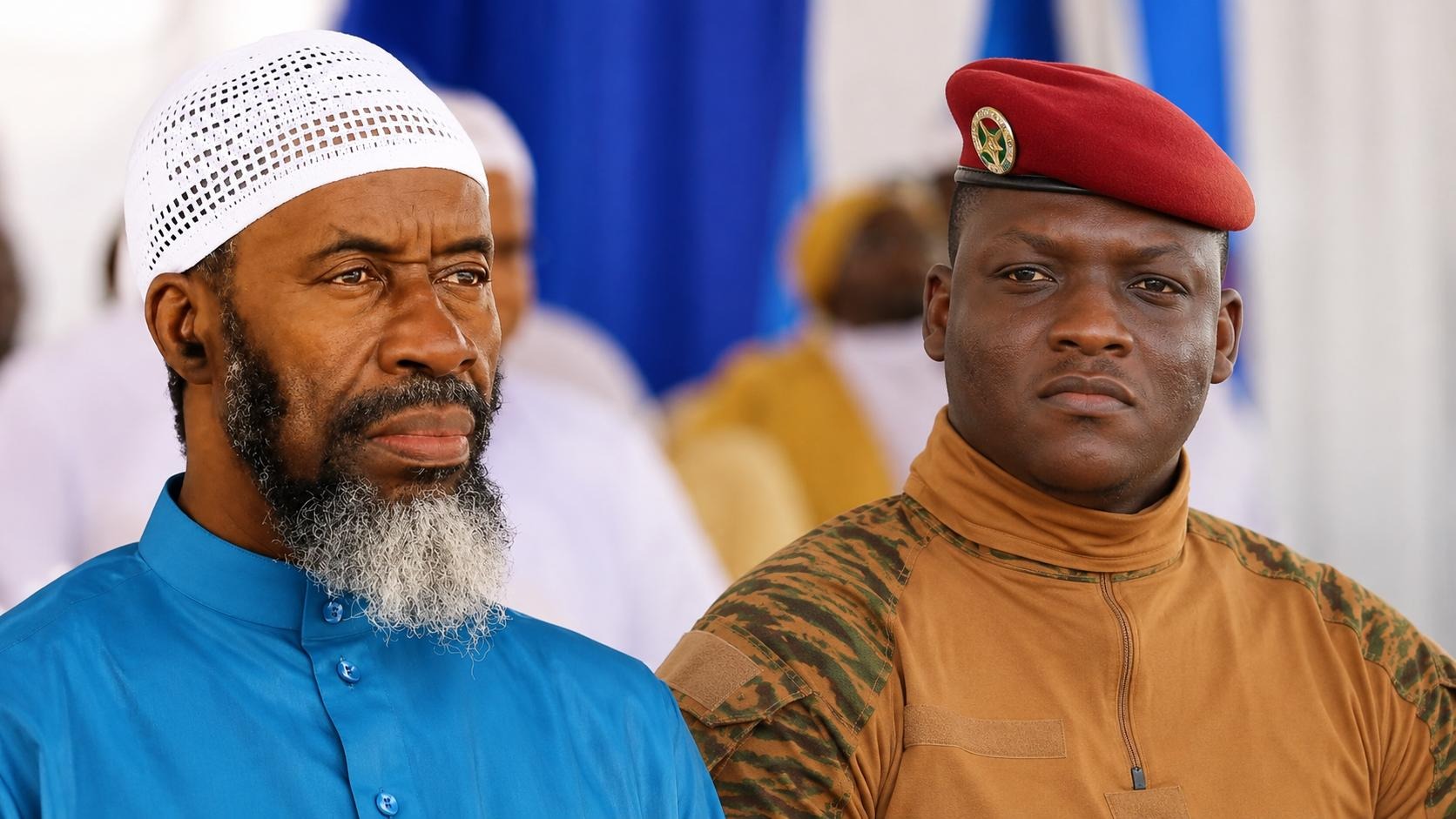
The governor of the Kadiogo region’s decree mandating the closure of the prominent Sunni movement’s grand mosque in Ouagadougou has sent ripples of profound incomprehension through the public. This abrupt severing of ties appears as a significant political misstep, especially given that the current administration heavily relied on the fervor and backing of these very communities to establish its legitimacy within an already precarious national landscape.
Regional authorities officially sealed the doors of the capital’s grand Sunni mosque on May 28, 2026, citing potential “risks to public order.” While safeguarding security is an undisputed state prerogative, the timing of such a severe sanction raises serious questions about the long-term strategy of the current leaders towards their former allies.
a selective political memory
It is impossible to analyze this closure without recalling the recent history of power consolidation in Burkina Faso. During periods of political transition and assertion, the current authorities extensively sought, structured, and utilized the nation’s associative and religious fabric. The Sunni movement, known for its discipline and mobilization capabilities, proved to be an indispensable wellspring of popular legitimacy.
By skillfully leveraging piety, nationalism, and a degree of religious idealism, those in power successfully transformed spaces of faith into political strongholds. The faithful, convinced they were supporting a just cause for national stability, now face a dramatic irony: the very place that amplified their popular adherence is now locked down by those they helped elevate to power. This move, to exploit a community’s faith for political legitimacy only to then criminalize its spaces of expression at the first sign of dissent, represents a political miscalculation Burkina Faso can ill afford today.
unforeseen consequences of ill-timed action
Burkina Faso is navigating a multifaceted crisis where social cohesion remains the final bulwark against collapse. In this delicate context, directly confronting a major religious community is profoundly ill-advised. Far from easing tensions, the arbitrary closure of the mosque risks radicalizing frustrations and fostering a deep sense of injustice, abuse, and betrayal among its adherents.
When a community is deprived of its central hub under the guise of preventing unrest, it often sows the seeds of clandestine opposition, which is far more challenging to manage. The hasty nature of this administrative decision reveals a glaring lack of discernment regarding crucial social balances.
dialogue over coercion is essential
While the rule of law must undoubtedly prevail, it loses its authority when applied unilaterally against those who believed in promises of inclusive governance. Burkinabè authorities must remember that stability is not achieved by closing places of worship, but through frank, patient, and transparent dialogue with opinion leaders.
By persisting on this repressive path, the government alienates an essential confessional base and exposes itself to accusations of opportunism and political ingratitude. It is imperative to suspend this decree and prioritize consultation before the divide between the religious community and the state becomes irrevocably unbridgeable.