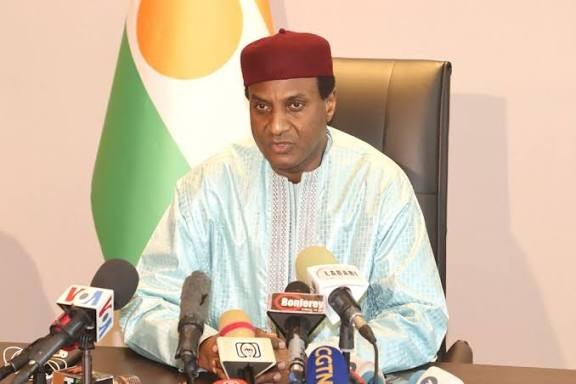
Niger’s UN stage moment: behind the curtain of the junta’s economic illusion
The carefully choreographed speech at the United Nations rarely tells the whole story. When Niger’s Prime Minister Ali Mahaman Lamine Zeine took the podium at the 81st General Assembly, he delivered the usual anthem of military rule: reclaiming national resources, achieving economic independence, and breaking free from neocolonial chains. The words echoed with patriotic fervor, but behind the polished performance lay a different reality—one of collapsing industries, vanished revenue, and a population left to foot the bill.
As the cameras switched off and the red carpet in New York faded from view, the junta’s grip on economic reality began to slip. Under the leadership of General Abdourahamane Tiani, the glittering promise of “sovereign wealth” has curdled into financial ruin. Two state-owned giants—once hailed as symbols of Nigeria’s newfound independence—now stand as monuments to mismanagement and missed opportunity.
SOMAÏR’s uranium dream gone cold: from pride to production paralysis
For generations, the Arlit mines have been more than just geological deposits; they have been political talking points. When the military-led National Council for the Safeguard of the Homeland (CNSP) wrested control of the Société des Mines de l’Aïr (SOMAÏR) from its French partner Orano, slogans of self-reliance filled the air. The promise? A flood of revenue to fund schools, hospitals, and infrastructure.
Today, that dream has evaporated. Uranium production has plummeted by nearly 80%, a collapse so steep it has left the mining towns of northern Niger in economic frost. Behind the scenes, a perfect storm of incompetence has taken hold:
- Supply chain collapse: Essential reagents like sulfuric acid, vital for processing ore, sit stranded at closed borders or in customs limbo. Without these inputs, the processing plants grind to a halt.
- Export gridlock: Yellowcake sits in warehouses, certified but unsellable. Export certificates—once routine—now require mysterious approvals, leaving tonnes of high-value uranium locked away.
- Human cost: Local contractors go unpaid, families lose breadwinners, and towns once buzzing with mining activity now face rising unemployment and empty schools.
It turns out changing a company’s letterhead doesn’t restart a mine. Technical expertise and operational discipline cannot be replaced by patriotic slogans.
The 25 billion FCFA black hole: SONIDEP’s oil gamble turns sour
If SOMAÏR’s failure is measured in lost tons of uranium, the Société nigérienne des produits pétroliers (SONIDEP) has charted a different kind of disaster: a financial abyss. Tasked with leading Niger’s new era of oil independence—boosted by a $4 billion pipeline to Benin—SONIDEP was supposed to be the junta’s cash cow.
Instead, internal reports reveal a staggering loss of over 25 billion West African francs—a figure that isn’t just a number; it’s a systemic failure.
The reasons are becoming clearer with each passing audit:
- Shadow contracts and middlemen: Oil sales, once transparent, now flow through opaque agreements with untested brokers and inflated fees.
- Broken accountability: No certified annual reports, no independent audits—the Ministry of Petroleum remains silent, feeding public distrust.
- Pipeline paradox: Despite a shiny new route to the coast, crude oil still can’t reach global markets efficiently. Storage overflows, export licenses lapse, and invoices go unpaid.
With SOMAÏR’s uranium hemorrhage and SONIDEP’s oil hemorrhage, the junta has turned two of Niger’s economic pillars into liabilities. Instead of filling state coffers, they bleed them dry—all under the banner of “sovereignty.”
Sovereignty without substance: the illusion of control
The military government’s playbook is familiar: blame sanctions from ECOWAS, point fingers at “imperialist interference,” and rewrite history to absolve itself. But when the applause fades and the flags are lowered, the questions remain unanswered.
Where are the promised audits from the July 2023 coup era?
Who actually benefits from the oil and uranium trade deals?
If the national treasury is collecting so little revenue from these industries, where does the money go?
What sovereignty really means
True sovereignty is not measured in speeches delivered on the world stage. It is measured in functioning schools, paid salaries, functioning hospitals, and transparent budgets. It is measured in the ability of a nation to feed, educate, and protect its people—not in the ability of its leaders to deliver hollow rhetoric.
By cloaking incompetence in the language of patriotism, the CNSP has not only failed its economy—it has betrayed the very idea of self-determination it claims to uphold. The people of Niger deserve better than a stage-managed UN moment followed by real-life collapse.
The curtain has been drawn. The audience has seen the truth.
