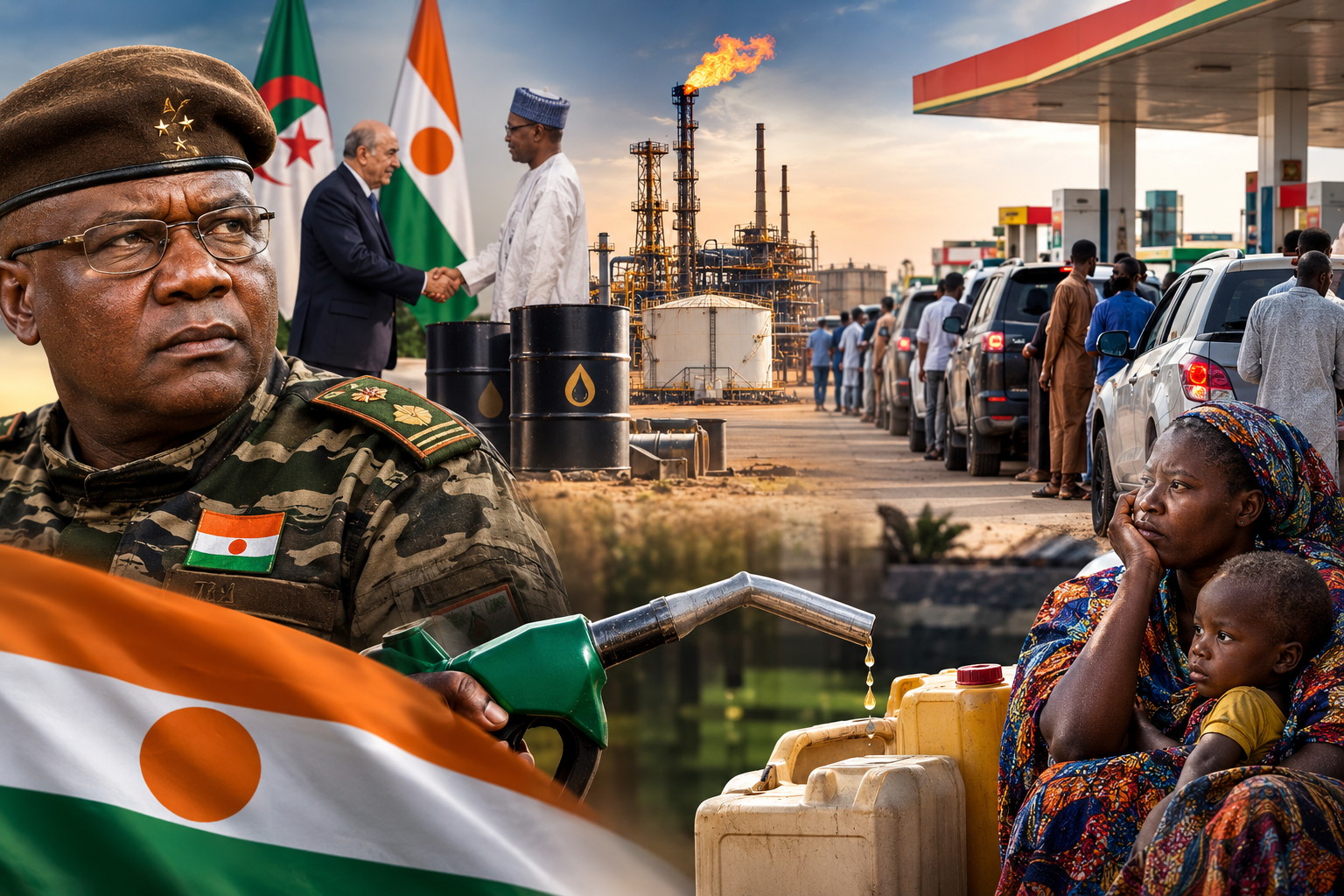
Niger’s oil wealth fails to curb domestic fuel shortages amid security pact
The recent security agreement between Algeria and Niger underscores a pressing issue in Niamey: despite its oil reserves, the nation continues to grapple with persistent fuel shortages that disrupt daily life. As authorities pursue diplomatic and strategic partnerships to assert national sovereignty, the discrepancy between resource abundance and domestic supply remains unresolved.
The paradox is striking. Niger possesses significant oil reserves and has invested in extraction and refining infrastructure. Yet, fuel availability on the local market remains inconsistent. Long queues at petrol stations, hindered transportation, and economic disruptions reveal the tangible impact on citizens, transporters, and small businesses when supply chains falter.
Distribution gaps overshadow production claims
The core issue extends beyond oil production to the distribution and control of national resources. Where does Niger’s extracted oil go? How much is allocated for domestic consumption, and how much is exported under what terms? The refining, storage, and distribution mechanisms must be scrutinised to determine whether they truly meet the country’s needs. Authorities owe the public clear, data-backed answers to these critical questions.
Foreign partnerships under scrutiny
The growing influence of external actors in strategic sectors also demands closer examination. Russia’s expanding partnerships with military regimes across the Sahel raise concerns about the economic and security agreements being forged. Transparency is non-negotiable if Niger’s claims of strengthened sovereignty over natural resources are to hold weight.
A call for tangible benefits
Sovereignty must deliver concrete outcomes for the population: consistent fuel supply, affordable pricing, and transparent management of oil revenues. While the Algerian security partnership may address regional threats, diplomatic agreements alone cannot resolve everyday economic and social challenges. Security cooperation does not substitute for effective energy policies or accountable resource management.
Ultimately, citizens are left with a fundamental question: what good is oil wealth if it fails to secure sufficient domestic fuel supply? True sovereignty is not measured by the number of signed agreements or new alliances but by a state’s ability to convert its resources into tangible benefits for its people.
For Niamey, the priority must be to eliminate the ambiguities surrounding the oil supply chain, clarify accountability for shortages, and ensure that strategic decisions prioritise national interests. Until petrol stations can reliably meet demand, rhetoric about economic independence will continue to face a harsh reality: who truly benefits from Niger’s oil, and where do its citizens stand in the equation?
