Niger’s healthcare revolution: local treatment gains ground over foreign evacuations
Niger’s healthcare revolution: local treatment gains ground over foreign evacuations
For decades, Nigeriens requiring specialized medical care faced an inevitable choice: travel abroad for treatment or accept limited local options. That paradigm is shifting as the country’s healthcare system undergoes a strategic transformation under the leadership of Colonel-Major Garba Hakimi, Minister of Public Health and Hygiene. The new approach prioritizes strengthening domestic medical infrastructure to reduce reliance on costly foreign evacuations.
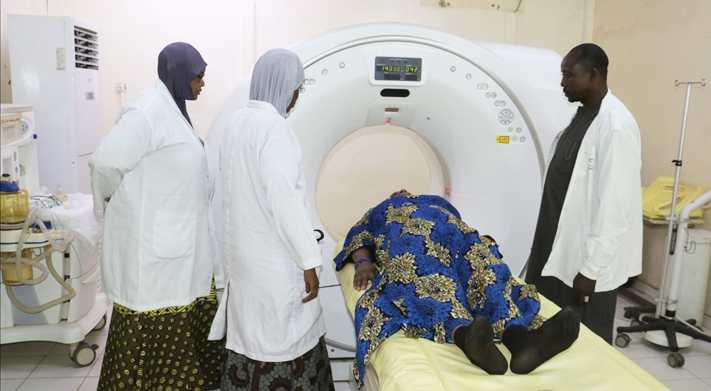
The cornerstone of this healthcare revolution lies in the acquisition of advanced medical equipment. The Nigerien government has invested in cutting-edge technology including 64-slice CT scanners, MRI machines, and linear accelerators for radiotherapy. These investments address critical gaps in cancer treatment, where the country now possesses all three essential pillars: surgery, chemotherapy, and radiotherapy. This comprehensive approach eliminates the need for many patients to seek treatment abroad, where costs often prove prohibitive for families.
Cardiology represents another area where local capabilities are expanding rapidly. Nigerien surgeons are now performing complex cardiac procedures domestically at significantly reduced costs compared to foreign alternatives. This shift marks more than just medical progress—it represents a fundamental change in how serious illnesses are managed. Conditions that previously required evacuation can now be treated effectively within Niger’s borders.
The implications of this healthcare evolution extend far beyond clinical outcomes. By reducing foreign medical evacuations, the government alleviates financial strain on families while strengthening national healthcare sovereignty. The initiative also fosters the development of local medical expertise, creating a self-sustaining ecosystem of specialized care. While extremely specialized cases may still require international assistance, the trajectory is clear: Niger is building a healthcare system capable of handling an increasing share of medical needs domestically.
This transformation signals a new chapter in Niger’s healthcare journey—one where the country treats more of its citizens at home rather than abroad. The message is unambiguous: Niger is committed to delivering quality specialized care within its own borders.
