Niger’s Goumeri W8 methane inferno: 17 days of unchecked pollution reveal industrial negligence
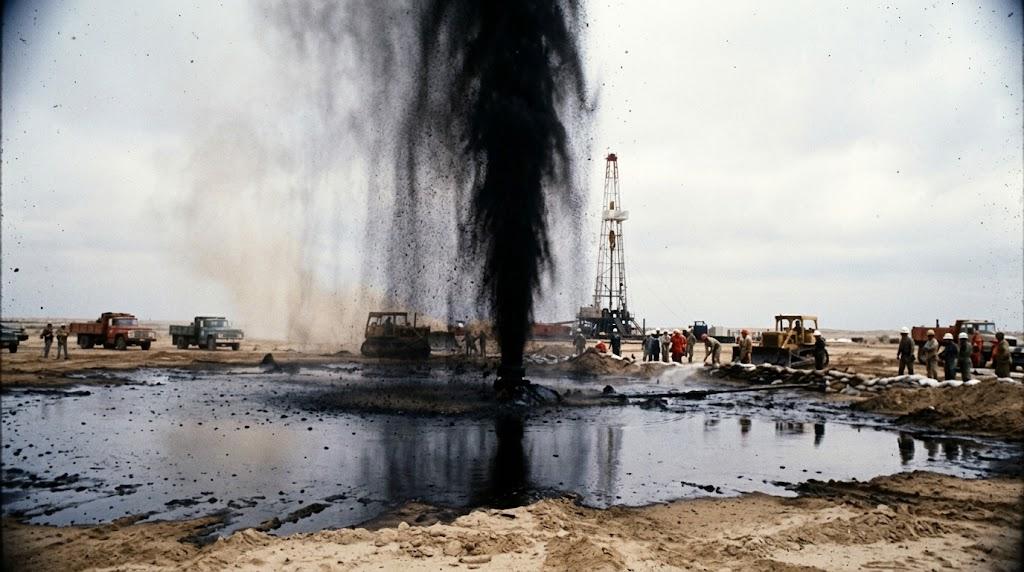
Seventeen days of unchecked environmental destruction. That’s how long it took for Niamey to acknowledge the unfolding disaster at the Goumeri W8 oil well in Niger’s Agadem block. What began as a technical failure has spiraled into a full-blown ecological crisis, with toxic gas emissions poisoning the Sahara and defying every attempt at containment.
From technical failure to environmental catastrophe
The blaze at Goumeri W8, first reported on September 25, 2026, is far more than a burning oil well. It’s a symbol of industrial recklessness in one of the world’s most fragile ecosystems. The eruption has unleashed a toxic plume of hydrocarbons and methane, turning the desert into an open-air pollution chamber. Yet, the true scale of the disaster was systematically downplayed by both the operator and the authorities.
The silence that fueled the crisis
For nearly three weeks, the Chinese state-owned CNPC, which operates the well, maintained complete radio silence. No public statements, no transparency on the causes, no data on the volume of emissions. The Nigerian government followed suit, only confirming the incident on October 12—after global satellite data exposed the extent of the pollution. What should have been an immediate emergency response became a study in institutional inertia.
A methane bomb threatening the climate
The government’s televised address did little to address the core issue: the unchecked release of methane. According to European Space Agency data from the Sentinel-5P satellite, the well is emitting over 40 tonnes of methane per hour. In just three weeks, this has added more than 17,000 tonnes of methane to the atmosphere—an invisible but devastating contributor to climate change, with a warming potential 80 times greater than CO₂ over 20 years.
The authorities’ claim of “partial control” over the situation is contradicted by real-time satellite observations. The gas flow has shown no signs of abating, raising urgent questions about the feasibility of containment efforts.
Extraction over safety: The cost of Nigeria’s oil ambitions
The disaster at Goumeri W8 is not an isolated incident but the predictable outcome of a high-risk extraction strategy. Niger’s push to ramp up production to 90,000 barrels per day—feedstock for the pipeline to Benin—has prioritized output over safety. This gamble has already claimed lives: two severely injured workers remain hospitalized, their suffering a stark reminder of the human cost of industrial negligence.
When local expertise failed, Nigeria turned to Algerian specialists from Sonatrach for emergency intervention. This last-minute reliance on foreign technical support underscores the gaping chasm between Niger’s oil ambitions and its inability to manage industrial risks.
The desert is not a dumping ground for hydrocarbons. The absence of immediate fatalities does not absolve CNPC of responsibility—or the Nigerian state of its duty to protect both its people and the environment.
Who bears the cost of this ecological recklessness?
The Goumeri W8 disaster lays bare the hidden costs of unchecked industrialization. While authorities and corporations debate liability, the Sahara bears the brunt: air quality degradation, irreversible ecological damage, and a climate crisis accelerated by unseen pollutants. The question remains: in the race for black gold, who will pay the price of this silent disaster?
