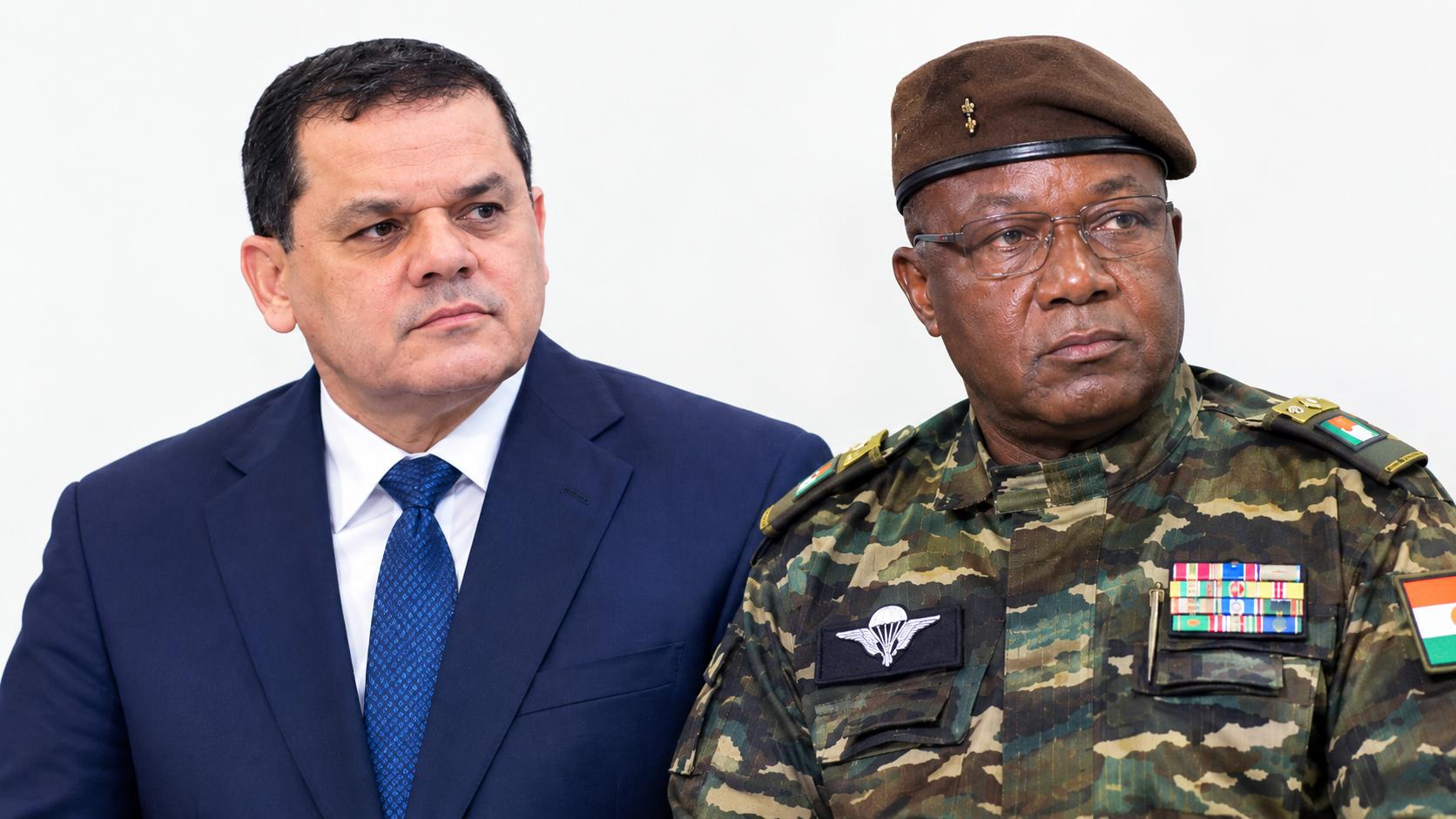
Niger’s general Tiani: the hidden calculus behind Libya’s southern power play
The coup that brought General Abdourahamane Tiani to power in Niamey in July 2023 didn’t just redraw Niger’s political map—it reset the country’s strategic compass. While the world watched for signs of domestic consolidation, behind the scenes Tiani’s regime began quietly recalibrating its foreign policy, with Libya’s southern desert emerging as a critical inflection point in that shift.
What’s driving Niamey’s quiet pivot toward the Libyan south
At first glance, the Sahara’s shifting sands hide a paradox. A border that stretches hundreds of miles between Niger and Libya often functions less as a divider and more as a porous corridor—one that channels militants, smugglers, and weapons from the Sahel into northern Libya. For Tiani, securing this junction is not just a matter of border control; it’s a question of national security, regional leverage, and regime survival.
Since seizing power, Tiani has deliberately distanced Niamey from Western partners and pivoted toward Moscow, positioning Niger as a key node in Russia’s expanding African footprint. But pragmatism doesn’t stop at ideology. The southern Libyan theatre—specifically the Fezzan region—has become a high-stakes arena where geopolitical realignments are being written in real time. And one rebel commander, Mohamed Wardougou, has become the unexpected catalyst of this transformation.
The fall of Haftar’s southern flank
Wardougou is no peripheral figure. Once a trusted security operative within Khalifa Haftar’s Libyan National Army (LNA), he was responsible for monitoring the southern border with Niger and Chad. But in early 2026, he broke ranks. Accusing Haftar’s clan of monopolizing Fezzan’s resources, imposing exploitative taxes on local communities, and monopolizing power in southern Libya, Wardougou launched the Chamber of Operations for the Liberation of the South (COLS), vowing to challenge LNA control from within.
The move was strategic. The Fezzan isn’t just a desert expanse—it’s a vital transit zone linking Libya to the Sahel, a crossroads of arms smuggling, fuel trafficking, and migrant routes. By controlling or contesting this space, Wardougou and his allies aim to fracture Haftar’s southern bastion. In doing so, they’ve created an opening for outsiders—including Niamey—to play a behind-the-scenes role.
The invisible corridor: how a logistical link is redefining regional power
Reports in September 2026 confirmed what analysts had long suspected: the Government of National Accord in Tripoli was negotiating with Nigerien authorities to establish a logistics corridor. The purpose? To facilitate the movement of military equipment and supplies to COLS forces operating near the Niger-Libya border.
This corridor doesn’t imply a formal alliance with Tiani, nor does it confirm direct orders from Niamey to support Wardougou. What it does reveal is a convergence—one that aligns Niamey and Tripoli in a shared objective: weakening Haftar’s southern grip. The meeting between Niger’s Prime Minister Ali Lamine Zeine and Libyan Prime Minister Abdelhamid Dbeibah in June 2026 solidified this alignment, marking it as a turning point in Sahel-Sahara dynamics.
The corridor itself could become a game-changer. Instead of merely serving as a transit route for smuggling, it may now function as a controlled artery for weapons, intelligence, and fighters—effectively turning southern Niger into a rear base for anti-Haftar operations in the Fezzan.
Tribal fractures that Haftar can no longer ignore
Haftar’s strength in the south has historically rested on alliances with local tribes, including the Toubou community from which Wardougou hails. But loyalty in the Sahara is transactional. When tribal interests, economic access, or political power are threatened, the fragile coalition quickly frays.
In 2025, Hassan Al-Zadma, commander of Brigade 128, defected from Haftar’s camp and aligned with Tripoli. In 2026, Wardougou followed suit, transforming what was once an internal dispute into a broader southern rebellion. Each defection weakens Haftar’s southern network and strengthens the narrative that his authority is built on shifting sands—not granite.Tiani’s gamble: stability versus geopolitical opportunity
Yet for the government in Niamey, this growing involvement comes with profound risks. Tiani’s regime remains fragile. In late August 2026, a failed coup threatened to unravel the junta. Only swift intervention by Russian-aligned Africa Corps forces prevented its collapse. Since then, Tiani has purged internal dissent, restructured the military command, and tightened control—or so the official narrative claims.
Engaging in a proxy conflict thousands of kilometers away may seem like a bold strategic move. But in the Sahara, where tribal loyalties shift faster than desert winds, a misstep could ignite consequences that spiral out of control. Arms, funds, and fighters don’t respect national borders. A single shipment of weapons intended for Wardougou could end up in the hands of a rival faction—or worse, return across the border into Niger.
From neighbor to player: the new face of Sahelian diplomacy
Tiani’s calculus appears to be twofold. First, by nurturing ties with Tripoli, he gains an influential partner in a region where Western influence is waning. Second, by allowing—even tacitly enabling—a logistics corridor, he positions Niger as an indispensable link in the anti-Haftar coalition. In doing so, he transforms Niger from a passive observer of Libyan chaos into an active shaper of Sahel-Sahara security architecture.
But transformation comes at a cost. Should Haftar retaliate militarily—or worse, if rival factions in Libya or the Sahel target Niger in response—the junta could find itself entangled in a conflict it didn’t seek but cannot control.
What comes next: a desert war by proxy?
The emerging picture is one of a low-intensity proxy struggle unfolding across the Sahara. Tripoli provides political and possibly material support. Wardougou supplies the fighters. And Niger offers the geography, roads, and neutrality—or strategic ambiguity—that makes it all possible. The Fezzan, once a secondary theatre of Libya’s civil conflict, may rapidly become its most volatile.
For Tiani, the question is no longer whether to get involved—but how deeply. The deeper the involvement, the greater the risk, but also the greater the potential reward: a seat at the table of a new regional order, one where Niger is not just a Sahelian state, but a key player in the reshaping of North and West Africa’s security landscape.
In the Sahara, fire doesn’t announce its arrival. It smolders beneath the surface—until the wind shifts. And when it does, those at the edges often feel the heat first.
