Niger’s critical security test: unraveling the human cost behind September’s devastating attacks
Revelations from the frontlines: why September 23 exposed systemic vulnerabilities
The events of September 23, 2026, have etched an indelible mark on Niger’s security narrative. Within hours, two coordinated strikes shattered the operational confidence of the nation’s defense forces, laying bare the operational cracks in a system stretched thin by relentless militant pressure. This was not merely an attack it was a strategic revelation.
The human toll and the unanswered questions
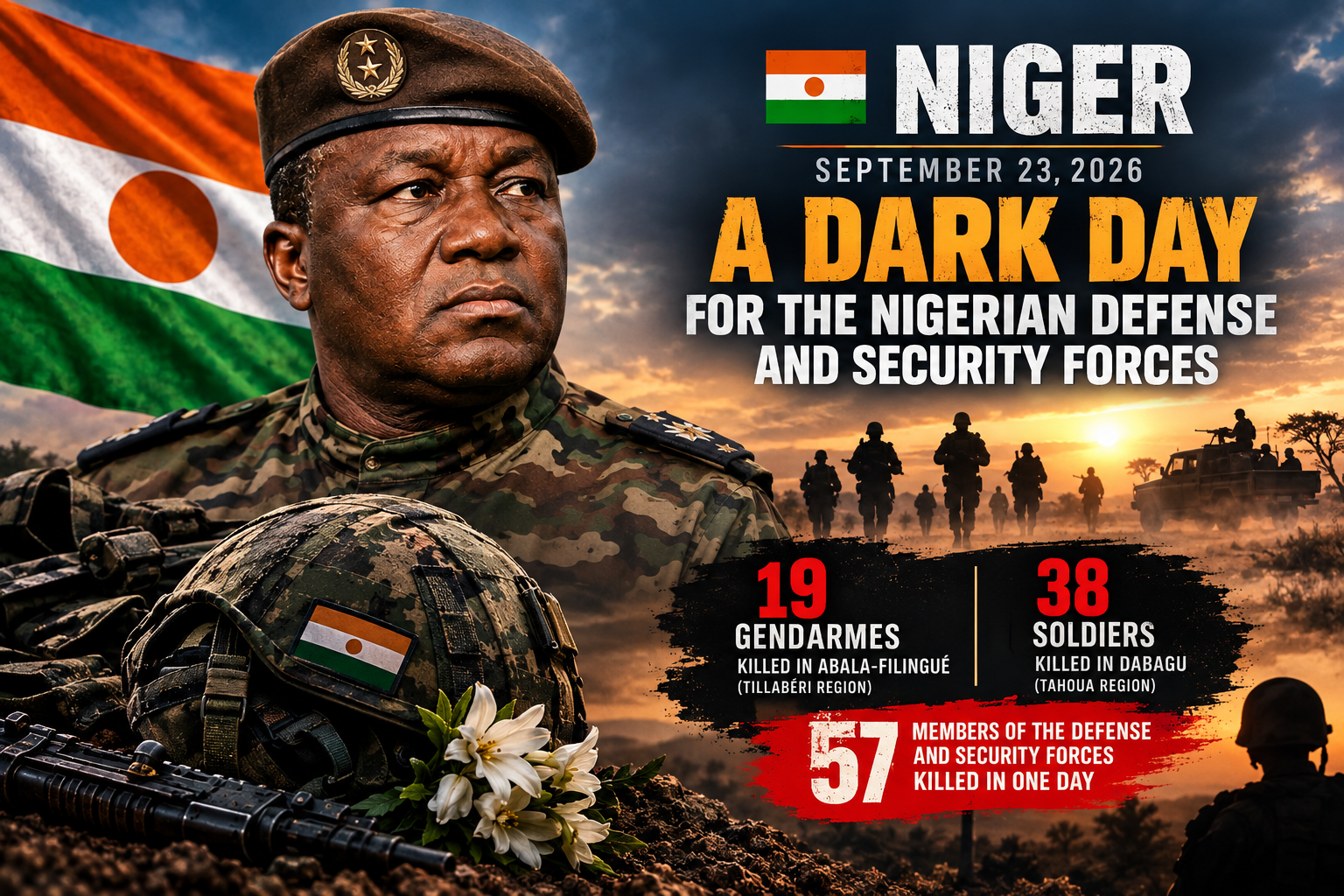
By early reports, 19 gendarmes perished in an ambush near Abala-Filingué in the Tillabéri region after intercepting a convoy of stolen livestock. Just hours later, 38 soldiers fell in a coordinated assault on a military outpost in Dabagu, Konni department, Tahoua region. Several others remain unaccounted for, their status undetermined. While the Nigerien Ministry of Defense has not confirmed these figures, preliminary assessments point to a provisional death toll of 57 members of the defense and security forces in a single day.
These staggering losses demand scrutiny beyond the battlefield. The discrepancy between official statements and local reports raises critical inquiries: How many soldiers and gendarmes were truly killed? How many are wounded or missing in action? What equipment was lost? More fundamentally, why do units deployed in high-risk zones continue to sustain such losses despite repeated assurances of military capacity enhancement under General Abdourahamane Tiani’s leadership?
The tactical reality: mobility and surprise as lethal advantages
The attackers demonstrated operational sophistication moving rapidly on motorcycles, concentrating forces against isolated posts, and disengaging before reinforcements could arrive. This asymmetry exposes deep flaws in the Nigerien security apparatus. The ability to gather timely intelligence, deploy mobile units, maintain aerial surveillance, secure communications, and equip frontline forces with advanced weaponry has never been more vital and yet, remains critically lacking.
The September 23 attacks were not isolated incidents but a manifestation of a broader operational failure. They underscore a harsh truth: enhanced troop deployments and frequent security announcements do not automatically translate to battlefield effectiveness or force protection. The vulnerability of certain zones, particularly in Tillabéri, persists despite years of policy declarations aimed at retaking control of the national territory.
Political accountability and the burden of leadership
This calamitous day forces a reckoning with political accountability. Since the CNSP’s assumption of power in July 2023, national security has been positioned as the cornerstone of governance. Yet, when over fifty defenders fall in a single day, the narrative of progress rings hollow. The regime of General Tiani must move beyond rhetorical commitments and demonstrate tangible improvements in operational strategy, intelligence integration, and resource allocation.
The families of the fallen bear the most immediate burden. Each life lost represents a personal tragedy and a national loss. As the dust settles, the question remains: What systems will be put in place to prevent such devastation from repeating? How will the state protect those who protect the nation?
Beyond the numbers: rebuilding confidence in a fractured security strategy
September 23 was not just another date in Niger’s conflict calendar. It was a turning point that forces a sober reassessment of the country’s entire security doctrine. The focus must shift from quantity number of troops deployed, number of operations launched to quality: the effectiveness of intelligence, the responsiveness of command structures, and the resilience of frontline units.
For a nation grappling with insurgent expansion and fragile stability, the true measure of success is not the volume of announcements made, but the number of lives preserved. The events of September 23 serve as a stark reminder that when defense forces become the primary targets, the cost of failure is measured not only in territory lost but in human lives extinguished.
By Yacouba Ouédraogo — Investigative journalist
