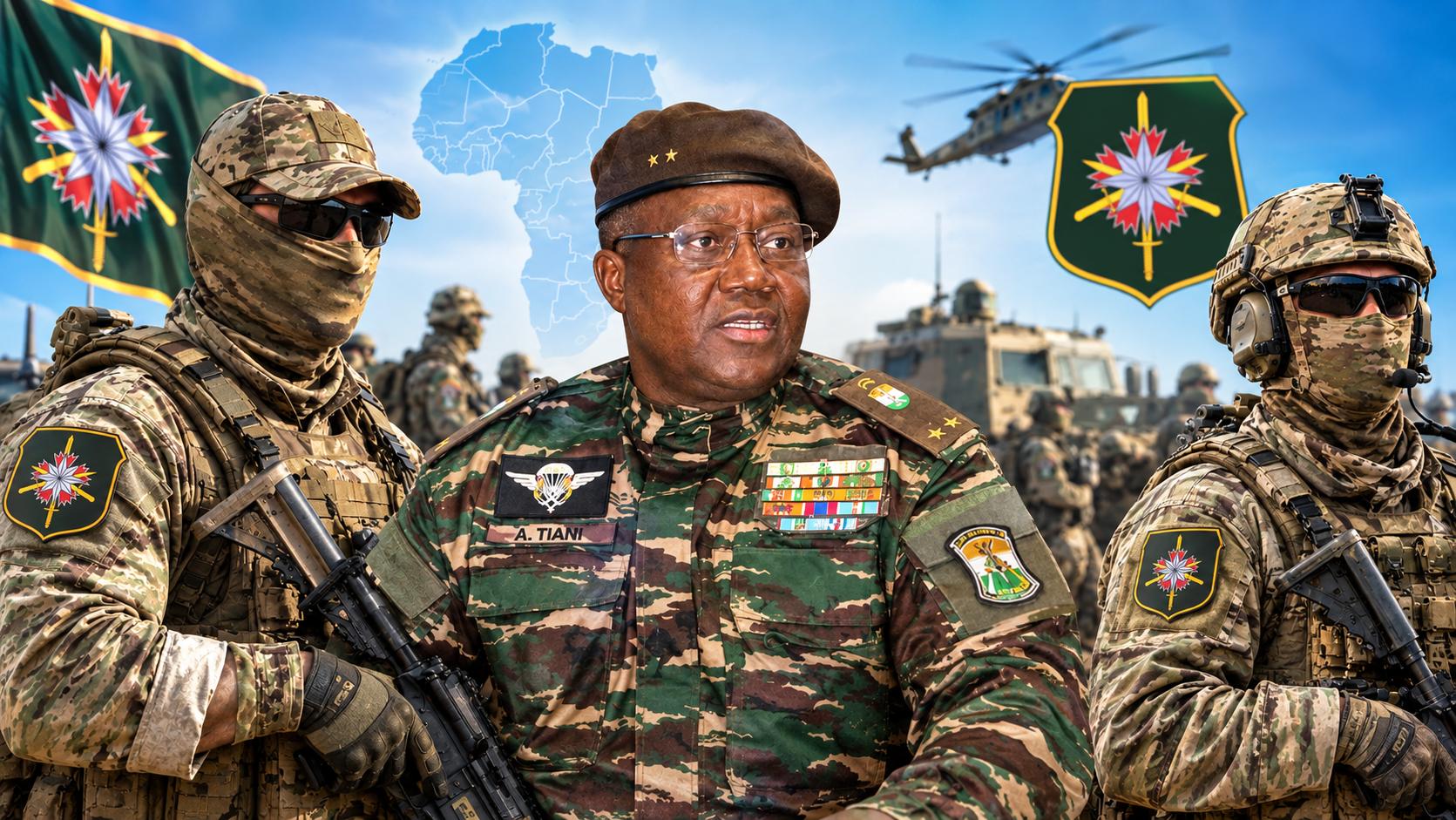
Niger’s CNSP faces mounting pressure amid base 101 mutiny and JNIM attacks near Niamey
After a week marked by internal clashes in the heart of Niger’s capital and a terrorist push just ten kilometres from Niamey, the National Council for the Safeguard of the Homeland (CNSP) is grappling with a rapidly deteriorating security situation. The events that unfolded between 28 August and 3 September expose deep fractures within the military apparatus and a heavy human toll for both the armed forces and civilian populations.
Fratricidal clash at the heart of the military system
The end of August witnessed an unprecedented outbreak of violence within the Defence and Security Forces (FDS). In the night of 28 to 29 August, acute tensions erupted at Air Base 101 in Niamey, a strategic installation that houses military aircraft and elements of the Security and Intelligence Battalion (BSR).
According to converging security assessments, the clashes pitted elite special forces units, exhausted by repeated deployments on the northern and western fronts, against the Presidential Guard, which was backed by instructors from the Russian private military company Africa Corps. Heavy weapons fire and saturation shooting at the site resulted in the deaths of at least 43 Nigerien soldiers. This internal confrontation among the country’s most battle-hardened troops represents one of the heaviest losses suffered by the army outside of combat zones against armed groups.
Human toll and terrorist raids in the Tillabéri region
While the central authorities attempted to regain control of Base 101, the situation suddenly deteriorated along the Niger River and in the rural communes of the north-west. On 2 and 3 September, elements affiliated with the Support Group for Islam and Muslims (JNIM) launched a series of coordinated incursions against four localities in the Tillabéri region: Darbani, Diamballa, Namarigoungou, and Zibane (in the Anzourou commune).
The civilian and material toll from these raids includes several deaths confirmed on the ground:
- Diamballa: The sudden arrival of the assailants triggered a general panic, during which two young girls drowned while trying to cross a pond adjacent to the village. One resident was also seriously wounded by gunfire.
- Namarigoungou: A civilian was shot dead during the capture of the village, which was accompanied by the systematic looting of livestock.
- Zibane (Anzourou): The assault on 3 September resulted in the deaths of six people, while a member of the local defence militias was killed during the response. Several hundred head of cattle were taken by the insurgents across these three areas.
Strategic JNIM push within ten kilometres of the capital
The tactical game-changer lies in the direct geographical advance of armed actions toward the seat of power. On 2 September at around 5 a.m., a mobile JNIM unit launched a surprise attack on the gendarmerie post at Komba, located on the road leading to Namaro, just ten kilometres from the capital.
This attack, contiguous to the urban belt, forced the armed forces to urgently set up roadblocks and temporarily close traffic on the national road at the descent of the third bridge in Niamey. The incident comes just days after the Nigerien authorities negotiated the release on 28 August of 20 arrested JNIM fighters as part of a prisoner exchange, demonstrating the group’s ability to maintain direct operational pressure on access routes to Niamey despite open negotiation channels.
Official rhetoric versus ground realities
In the face of these mounting crises, the official discourse broadcast by state media (RTN), notably championed by Captain Roger Gabriel, continues to attribute the security destabilisation to foreign coalitions and interference involving several neighbouring countries and regional partners.
However, the simultaneity of the losses recorded at Base 101 (43 dead) and the Komba incursion highlights a growing gap between institutional communication focused on sovereignty and the realities on the ground, where elite units and Niger’s rural population are paying a particularly heavy human price.
