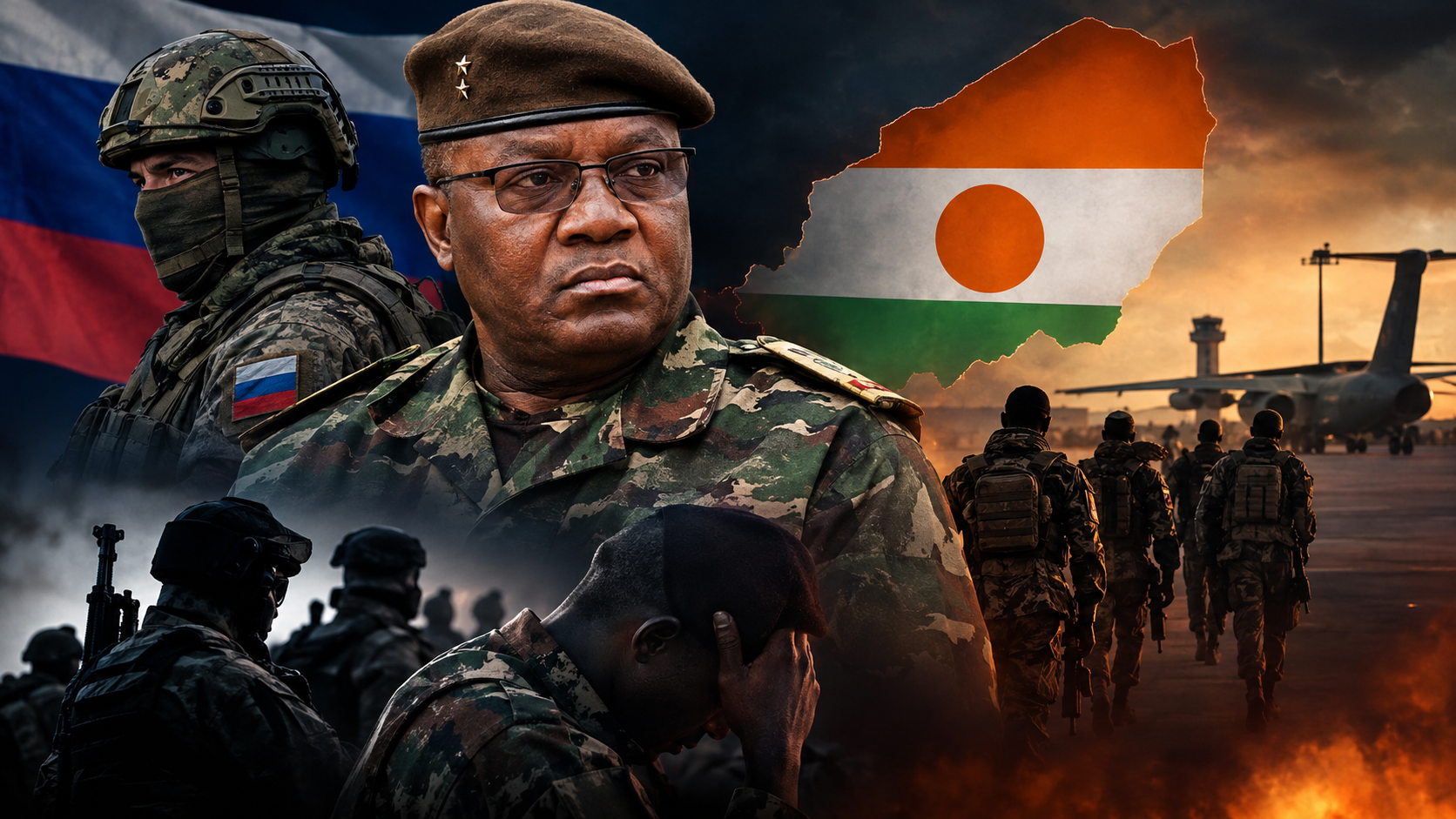
Niger’s August 2026 crisis: the military purge and Russia’s hidden hand
When soldiers turn against their own command, the survival of a regime often hinges on factors visible only in hindsight. In Niamey, the mutiny of August 28-29, 2026, exposed the fragility of Abdourahamane Tiani’s military authority and the high price paid to restore it.
The night that unraveled Niger’s chain of command
The mutiny began at the heart of power: the 101st base of Diori-Hamani International Airport, critical infrastructure, and the presidential palace perimeter. For nearly 24 hours, discontent spread among elite units of the Nigerien armed forces, predominantly drawn from the special forces. What started as a localized uprising quickly threatened to paralyze the entire military apparatus.
The regime’s response was swift and unconventional. Loyalist forces, with decisive support from Russian personnel affiliated with the Africa Corps, regained control of the airport and other strategic sites. While the official narrative cites operational coordination, the presence of foreign fighters on Nigerien soil marked a turning point: the junta’s survival now depended on external military backing.
From mutiny to mass arrests: the scale of the crackdown
As order was restored, the purge began. Over 500 military personnel, most from the special forces, were detained. Reports indicate that several officers disappeared or fled the country, leaving families and colleagues in limbo.
Among the most visible casualties was General Moussa Salaou Barmou, the army chief of staff and former commander of the special forces. On September 11, 2026, he was removed from his post and placed under house arrest. His dismissal sent a clear message: loyalty to the regime now superseded military expertise.
The general and the limits of loyalty
Barmou’s fall was not merely administrative. His history from coup participant in July 2023 to key figure in Tiani’s junta made him a paradoxical target. Unlike the regime’s pro-Russian shift, Barmou maintained ties with Western networks, including American military advisors. His opposition to using Russian forces against Nigerien soldiers during the crisis further strained his position.
The regime framed the mutiny as a failure in command, yet the removal of Barmou suggested a deeper fear: that the special forces, once his domain, had become susceptible to insubordination or worse, were being manipulated by external actors.
Russia’s role: savior or architect of Tiani’s survival?
The Africa Corps’ involvement was not incidental. Since 2023, Tiani had realigned Niger’s security strategy with Moscow after severing ties with Western partners. When the mutiny threatened to collapse the junta, Russian forces provided the firepower needed to reclaim the airport and suppress dissent within elite units.
This external intervention raises critical questions: Did Russian support merely stabilize the regime, or did it reshape the balance of power within Niger’s military? The Africa Corps’ participation in ground and aerial operations during the crisis indicates a level of integration that extends beyond temporary assistance.
The unanswered questions behind the purge
The regime has not disclosed full details of the mutiny or its aftermath. Key questions remain unanswered:
Who authorized the use of lethal force during the mutiny?
How many soldiers were killed or detained, and under what conditions?
What role did Russian forces play in arrests, interrogations, or operational decisions?
Did Tiani’s orders target specific individuals or entire units within the special forces?
Without transparency, speculation thrives. Some accounts describe the crackdown as a targeted elimination of dissenters, while others frame it as a necessary purge to prevent future rebellions. The truth lies obscured behind closed barracks and official silence.
A regime’s paradox: restoring order by dismantling it
When Tiani seized power in 2023, he promised to restore security and reassert military primacy. Yet the August crisis revealed a stark contradiction: the regime’s survival now depended on foreign fighters to suppress its own soldiers, followed by a sweeping overhaul of its command structure.
This is not just a disciplinary crisis it is a structural failure. A military that turns to external forces to quell internal dissent exposes a fundamental fracture: the institution designed to protect the state is now fractured from within.
The aftermath of the mutiny raises a chilling question: How many more lives will be sacrificed before the full truth of August 28-29 emerges from the shadows of Niamey’s barracks?
By Maimouna Kaboré — Editor-in-Chief
