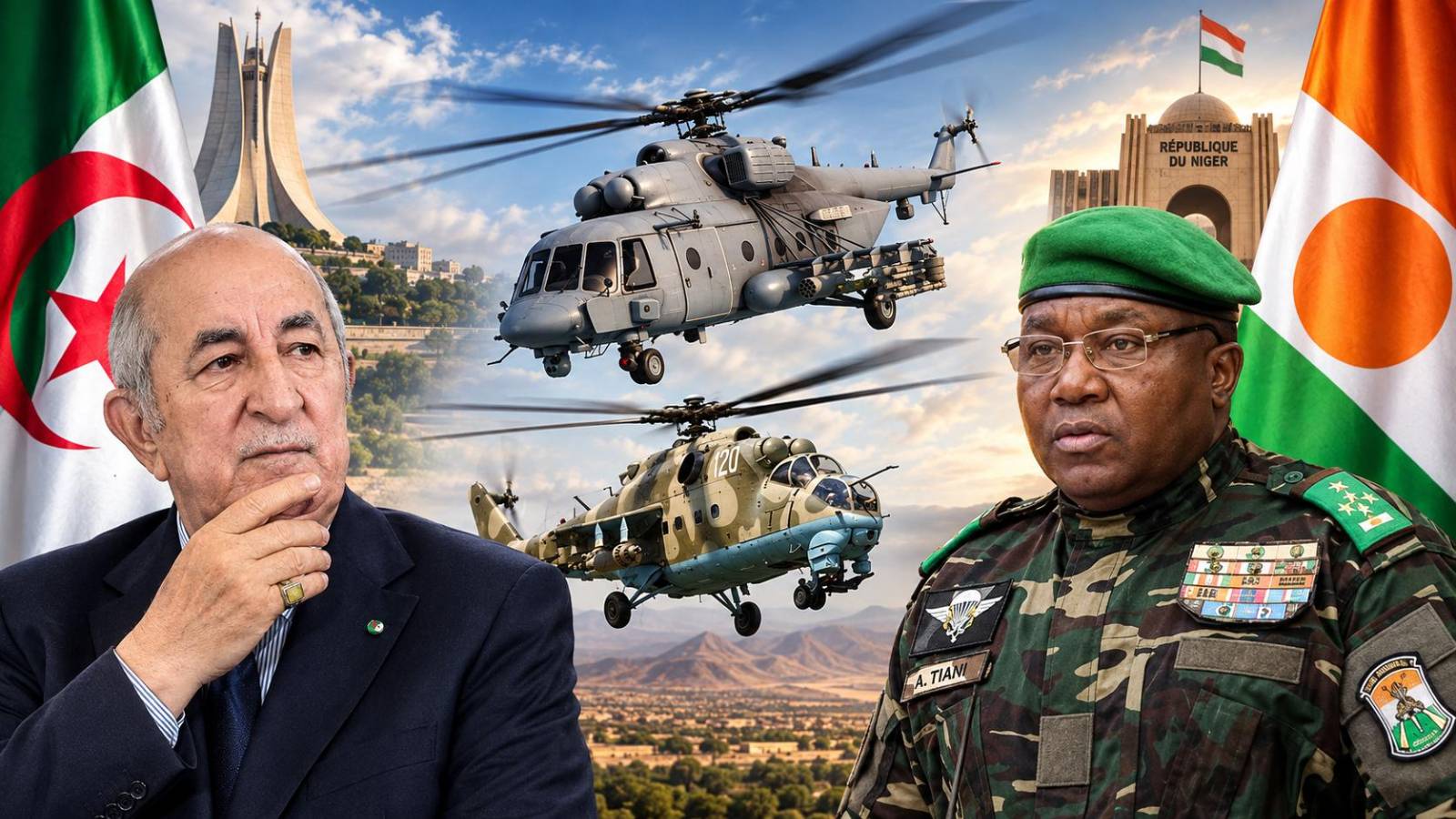
Niger seeks algerian military aid amidst escalating terrorist threats
With the persistent terrorist menace casting a long shadow over the critical «three borders» region, Niger is actively pursuing strategic military collaborations to bolster its armed forces. Under severe pressure from the relentless activities of non-state armed groups, particularly the Jama’at Nasr al-Islam wal-Muslimin (JNIM, affiliated with Al-Qaeda) and the Islamic State in the Greater Sahara (EIGS), military authorities in Niamey find themselves compelled to diversify their external support channels to maintain operational effectiveness on the ground.
It is within this context of intense security challenges that Algeria has delivered a substantial consignment of military hardware to the Nigerien armed forces. This urgent provision includes four helicopters – specifically two Mi-24V combat aircraft and two Mi-171 tactical transport helicopters – along with essential munitions, spare parts, and comprehensive logistical and maintenance support equipment.
The operational demands
From a tactical standpoint, Niger’s armed forces are engaged in a complex war of attrition. Recent engagements and ambushes, attributed to JNIM in the country’s western reaches and to EIGS along its border zones, underscore a critical and immediate requirement for enhanced aerial mobility and close-range firepower. For Niamey, the acquisition of attack and heavy transport aircraft is an absolute imperative to provide crucial fire support for ground troops and facilitate rapid medical evacuations.
The continuous deterioration of the security landscape has thus driven the Nigerien command to directly request assistance from its northern neighbor.
Algeria’s strategic alignment amid regional shifts
On the Algerian side, the provision of this material support, ordered by President Abdelmadjid Tebboune and executed by General Saïd Chanegriha, aligns with the nation’s objective of safeguarding the immediate stability of its southern borders. By responding to Niamey’s appeal, Algeria aims to contain the spread of terrorism while simultaneously asserting its prominent role as a key security partner within the wider Sahel region.
Nevertheless, this direct assistance and the accelerated rearmament efforts across the Sahel signify a growing militarization of the region. As the pressure exerted by insurgent groups shows no signs of abating, the true effectiveness of this Algerian air support will be critically evaluated on the operational fronts within Niger.
