Niger: escalating violence triggers mass displacement in Loga department
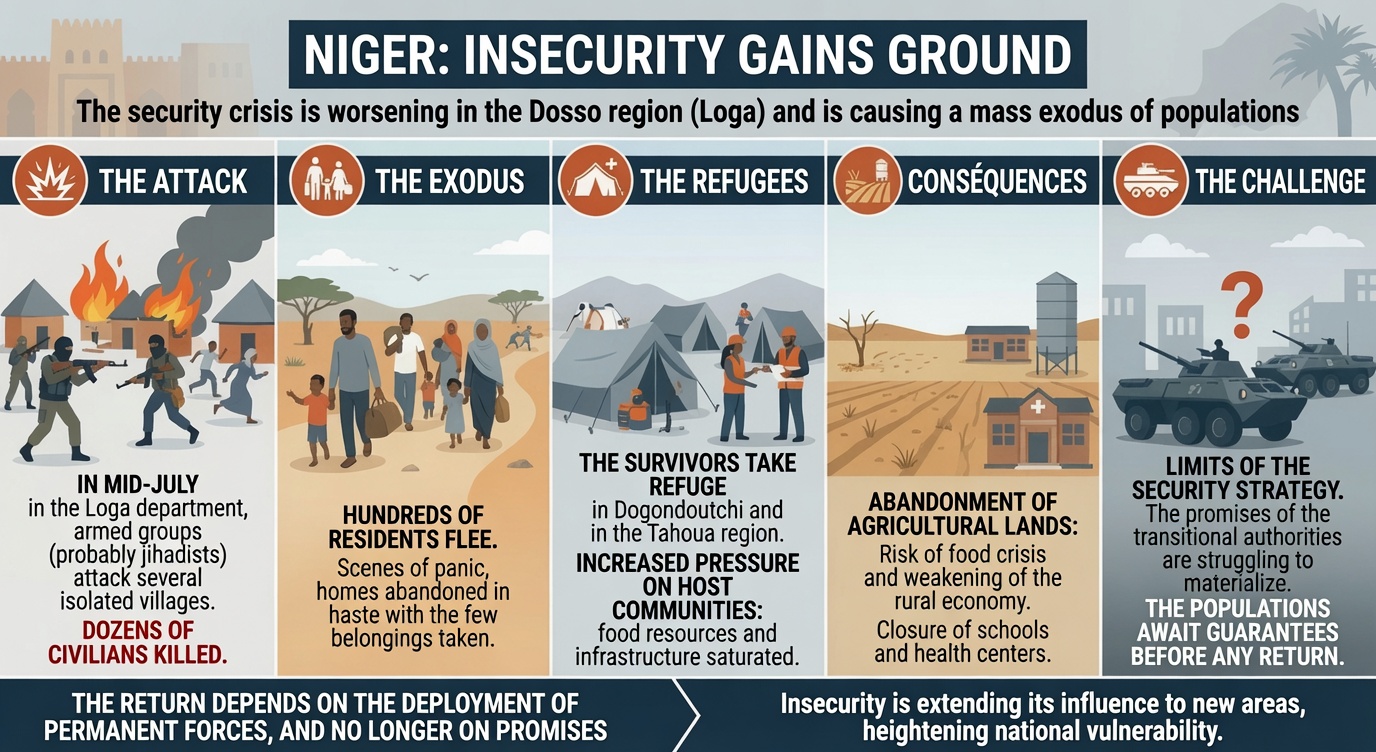
Niger’s security situation continues its alarming deterioration. In the Loga department, nestled within the Dosso region, hundreds of residents have been forced to abandon their homes following a spate of particularly deadly assaults that struck in mid-July. This recent surge in violence underscores a growing concern: despite repeated assurances from military authorities, numerous communities remain vulnerable to armed group incursions, with civilian populations bearing the brunt of the conflict.
The attacks, attributed to jihadist factions active in this part of the nation, claimed the lives of dozens of civilians. The assailants reportedly targeted isolated villages, exploiting the absence or inadequacy of security measures to sow widespread terror. Eyewitness accounts paint a grim picture of panic, homes deserted in haste, and families compelled to flee with only the meager possessions they could carry.
Survivors primarily sought refuge in Dogondoutchi and various localities across the Tahoua region, hoping to find more effective protection there. However, their arrival places additional strain on host communities already struggling with economic hardships, insufficient social infrastructure, and dwindling food resources.
The limits of the security strategy
Beyond the immediate human tragedy, this new wave of displacement brings into sharp focus the persistent limitations of the security strategy championed by the transitional authorities. Since the change in power, restoring national security has been presented as the junta’s paramount objective. Yet, attacks continue to affect both border zones and certain interior regions, fueling questions regarding the actual effectiveness of military operations and the redeployment of defense forces.
The increasing frequency of internal displacement also serves as a troubling indicator of the conflict’s progression. When communities opt to permanently abandon their lands, agricultural livelihoods, and means of subsistence, it often signals a profound loss of trust in the state’s capacity to ensure their safety. For these families, a return is no longer contingent solely on the cessation of hostilities but on concrete guarantees of security.
Nigerien authorities have affirmed their commitment to bolstering military presence in the affected area to create conditions conducive to the return of displaced persons. Nevertheless, residents interviewed remain cautious. Many explain they will only consider returning to their villages after the effective deployment of security forces capable of maintaining a permanent presence and preventing future attacks. Promises, they contend, are no longer sufficient in the face of recurrent violence.
Economic and social repercussions
This evolving situation also reveals the profound economic and social repercussions of the conflict. The abandonment of agricultural lands risks jeopardizing upcoming harvests, exacerbating food insecurity, and further weakening rural economies already battered by years of violence. Schools are closing, health centers operate under severe constraints, and the local economic fabric is progressively unraveling, intensifying the vulnerability of the populations.
On the humanitarian front, needs have become considerable. Displaced individuals urgently require swift access to food, potable water, medical care, and dignified shelter. Humanitarian organizations consistently highlight the scarcity of available resources to address the continuously rising number of displaced persons across the country.
Ultimately, these events serve as a stark reminder that Niger’s security crisis is no longer confined solely to traditionally affected regions. The expansion of attacks into new areas heightens concerns about armed groups’ ability to extend their influence and exploit vulnerabilities within the security apparatus.
For the residents of Loga, the paramount priority remains unchanged: re-establishing minimal security conditions before contemplating a return. Until this fundamental requirement is met, the exodus of populations is likely to persist, leading to ever-heavier human, economic, and social consequences for a Niger grappling with a security crisis that continues to entrench itself.
