Niger emerges as new geopolitical hotspot in Sahel power struggles
Niger emerges as new geopolitical hotspot in Sahel power struggles
The Sahel is witnessing a rapid reshaping of alliances, and Niger has become the epicenter of this transformation. Diplomatic and military maneuvers by regional and international players in recent weeks underscore a strategic shift that transcends the country’s borders.
Recent high-level engagements reveal a complex web of interests converging on Niamey. From Benghazi to Paris, these developments reflect a new phase in Sahelian geopolitics, where traditional influence zones are being contested and redrawn.
Libya and France deepen ties amid shifting regional dynamics
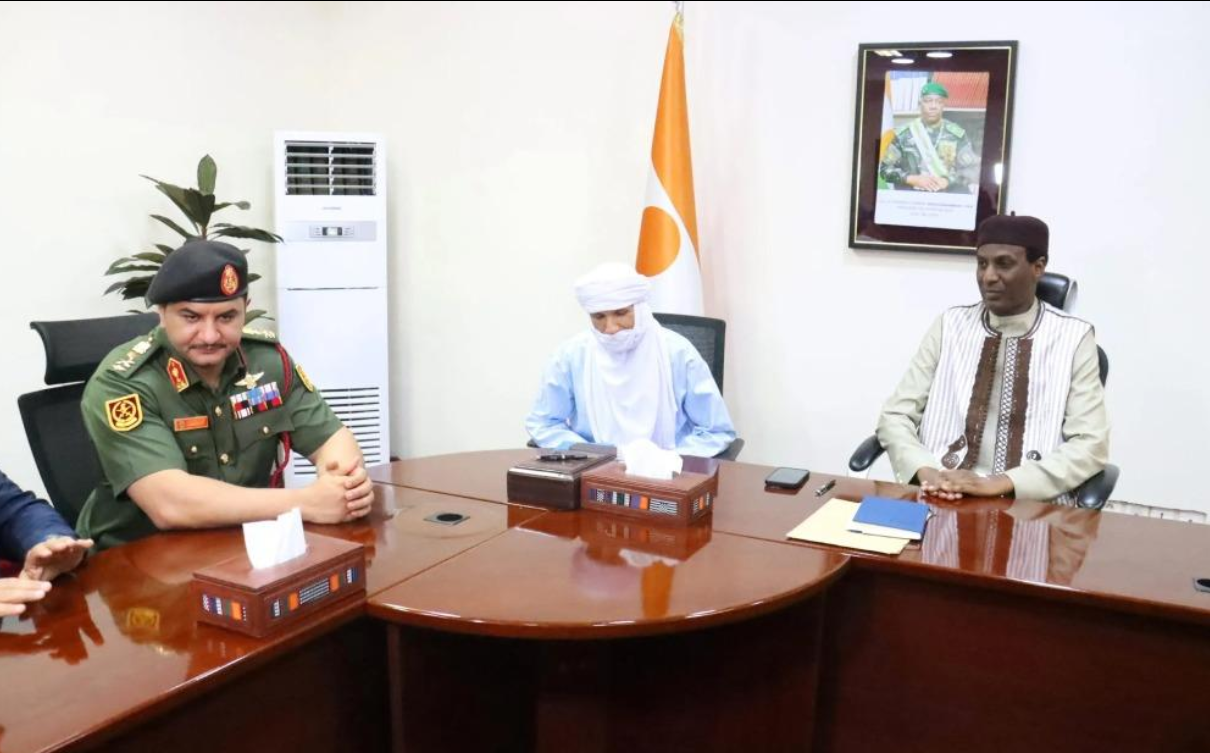
On November 1, 2026, Niger’s Prime Minister Ali Mahaman Lamine Zeine traveled to Benghazi for discussions with Libyan military leader Saddam Haftar. The meeting resulted in a strategic cooperation agreement aimed at strengthening security and political partnerships between the two nations. While specific details remain undisclosed, the accord signals Niamey’s intent to diversify its alliances in an increasingly volatile region.
Just two days later, Libyan military chief Khaled Haftar met with French Chief of Staff General Fabien Mandon in Paris. Reports indicate the talks centered on military cooperation, intelligence sharing, and joint training initiatives. The timing of these exchanges suggests a coordinated effort to address shared security concerns, though no formal alliance has been confirmed.
Algeria asserts regional leadership amid rising tensions
Algeria has intensified its diplomatic offensive in the Sahel, sending Foreign Minister Ahmed Attaf to N’Djamena on November 3. The visit, part of a broader strategy to strengthen ties with Chad, included discussions on security challenges, cross-border crime, and the implementation of 27 bilateral agreements.
Algiers’ push for regional influence comes as relations between Niger and Chad remain strained. Niamey has accused N’Djamena of destabilizing efforts, a claim Chad denies while working to repair relations with both Paris and Niamey following the collapse of a 2024 defense pact.
For Algeria, securing a partnership with Chad is crucial to maintaining its regional leverage. The move also aims to counterbalance growing Libyan and Emirati influence in southern Libya, which borders Niger and serves as a critical corridor for trade, migration, and energy flows.
UAE’s growing footprint raises Algerian concerns
The United Arab Emirates maintains long-standing ties with Libya’s eastern faction, raising alarms in Algiers. Abu Dhabi’s political and military support for Khalifa Haftar’s forces has been a point of contention, particularly as Haftar’s influence expands into southern Libya and toward Niger’s borders.
Algeria views Libya’s stability as directly tied to its own national security. The prospect of increased foreign military presence near its southern frontier has prompted Algiers to accelerate its engagement with Niamey, including the recent approval of military deployment in Niger by the Algerian Parliament on October 25.
Morocco-Algeria rivalry spills into the Sahel
The longstanding Morocco-Algeria rivalry has extended beyond the Maghreb into the Sahel. While Algeria seeks to preserve its historical influence, Morocco has been cultivating relationships with key Sahelian states. The October visit of Khaled Haftar to Morocco, where he met with Moroccan military officials, has raised eyebrows in Algiers, which sees potential convergences between Rabat, Abu Dhabi, and Libya’s eastern leadership.
Though no formal bloc has emerged, these shifting alliances indicate a fluid geopolitical landscape where overlapping interests could reshape power dynamics in the region.
Niger’s strategic pivot: diversifying partnerships while maintaining autonomy
Niger’s geographical position, energy resources, and proximity to multiple regional players have made it a highly sought-after partner. The recent agreements with Libya and Algeria, coupled with ongoing security cooperation with France, demonstrate Niamey’s strategy to avoid over-reliance on a single ally.
However, the country’s balancing act is increasingly complex. Regional tensions, competing interests, and shifting security landscapes require careful navigation to ensure stability and national sovereignty remain intact.
Sahel’s new battleground: control over routes, resources, and influence
The recent flurry of diplomatic and military activity reveals a deeper truth: the Sahel is no longer just a battleground against armed groups. It has become a theater for competition over trade routes, energy resources, political alliances, and strategic dominance.
In this high-stakes environment, Niger stands at the crossroads. Its choices will not only determine its own future but could also reshape the geopolitical landscape of the entire Sahel-Saharan region.
