Niger appoints eu envoy amid unresolved disputes with brussels
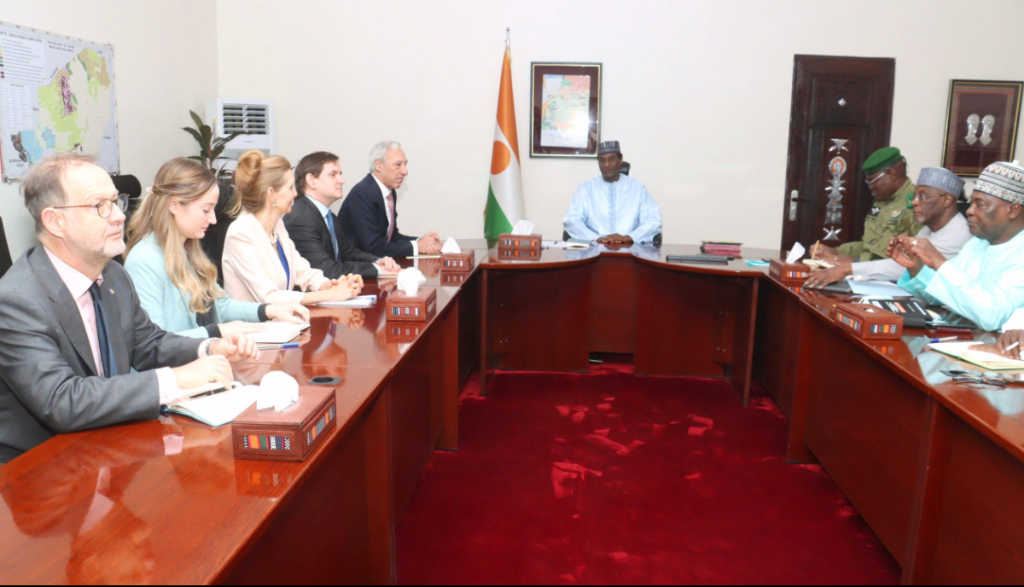
In a move that signals continued diplomatic engagement despite lingering tensions, Niger has formally appointed Adamou Moumouni as its new ambassador to the European Union. On October 22, the Nigerien diplomat presented his credentials to António Costa, president of the European Council, and Ursula von der Leyen, president of the European Commission. The gesture underscores Niamey’s commitment to maintaining official channels with Brussels, even as political disagreements persist.
The question now looms: is this a strategic shift in Niger’s stance toward the EU, or merely a procedural step to keep dialogue alive amid deep-seated conflicts?
Strained ties since the 2023 coup
Relations between Niger and the EU have been fraught since the July 26, 2023, military coup that ousted then-president Mohamed Bazoum. Disputes have centered on governance, humanitarian aid, and the treatment of Bazoum, who remains in detention. Yet, despite these friction points, both sides have kept diplomatic lines open.
Moumouni’s accreditation marks a formal step in sustaining these ties. While the ceremony confirms his role as Niger’s representative to EU institutions, it does not resolve underlying disputes. In diplomacy, maintaining an official presence allows nations to protect their interests and continue negotiations, even when political relations are strained.
The humanitarian aid dispute: 1.3 million euros at the heart of a crisis
A particularly contentious issue flared in November 2024, when a €1.3 million EU aid package for flood victims in Niger sparked a diplomatic row. Niger’s foreign ministry argued that the government had not requested the assistance, insisting it could handle flood relief independently. Authorities also criticized the EU for announcing the aid before formally notifying Niamey.
Niger’s government took issue with how the funds were allocated. According to an official statement on November 24, 2024, the EU had directed the aid to international NGOs—including the International Committee of the Red Cross (ICRC), Danish Refugee Council, and Cooperazione Internazionale—without sufficient prior consultation with Nigerien officials. Niamey condemned this as a unilateral decision, demanding that its foreign ministry be involved in the process.
The dispute escalated when Niger’s government summoned EU Ambassador Salvador Pinto da França on October 14, 2024, demanding his recall and replacement. The EU, in turn, expressed “deep disagreement” with Niger’s accusations. In a November 23, 2024 statement, Brussels defended its approach, emphasizing that humanitarian aid is delivered by UN agencies and NGOs under principles of neutrality, impartiality, and independence. The EU also warned against the politicization of humanitarian assistance and announced it would recall its ambassador to Niamey for consultations.
This clash highlights a fundamental divergence: Niger insists on oversight of aid operations within its borders, while the EU upholds the independence of humanitarian mechanisms from political interference.
The Bazoum case: a persistent sticking point
Tensions resurfaced in March 2026 when the European Parliament adopted a resolution condemning Bazoum’s continued detention and demanding his “immediate and unconditional release.” The vote—524 in favor, 2 against, and 29 abstentions—reflected the EU’s concerns over Niger’s political trajectory.
For the EU, Bazoum’s situation and the restoration of democratic order remain critical issues. Niger’s authorities, however, view such interventions as infringements on national sovereignty. This disagreement extends beyond Bazoum’s case, symbolizing broader conflicts over governance since the 2023 coup and posing a significant barrier to full normalization.
Diplomatic pragmatism in a volatile region
Against this backdrop, Moumouni’s accreditation can be seen as an effort to preserve a space for dialogue. However, it does not signify a broader shift in policy. Niger operates in a region grappling with security threats, economic instability, and humanitarian crises. Maintaining ties with international partners, even amid political disagreements, may serve strategic interests.
For the EU, keeping diplomatic channels open allows Brussels to address sensitive issues, even without broader political alignment. Yet, a true rapprochement would require tangible progress: deeper discussions, better coordination on humanitarian matters, or shifts in stance on contentious issues.
A diplomatic move, but no clear shift
So, is Niger reversing its position after years of tension? The answer remains unclear. The accreditation of Moumouni is neither a capitulation nor evidence of reconciliation. It primarily reflects the continuation of official diplomatic relations between Niamey and Brussels.
Future developments will reveal the true impact of this step. Will both sides move beyond disputes to restore regular cooperation? Or will they maintain formal contacts while remaining at odds on fundamental political questions?
Beyond the ceremonial act, the test lies in what follows. For Niger, the challenge is balancing its positions with the need for beneficial international relations. For the EU, it’s about sustaining cooperation opportunities while upholding political and humanitarian principles.
Ultimately, Moumouni’s appointment marks a new phase in Niger-EU relations—one that opens dialogue but does not guarantee reconciliation. The path from maintaining contacts to achieving political normalization remains uncertain.
