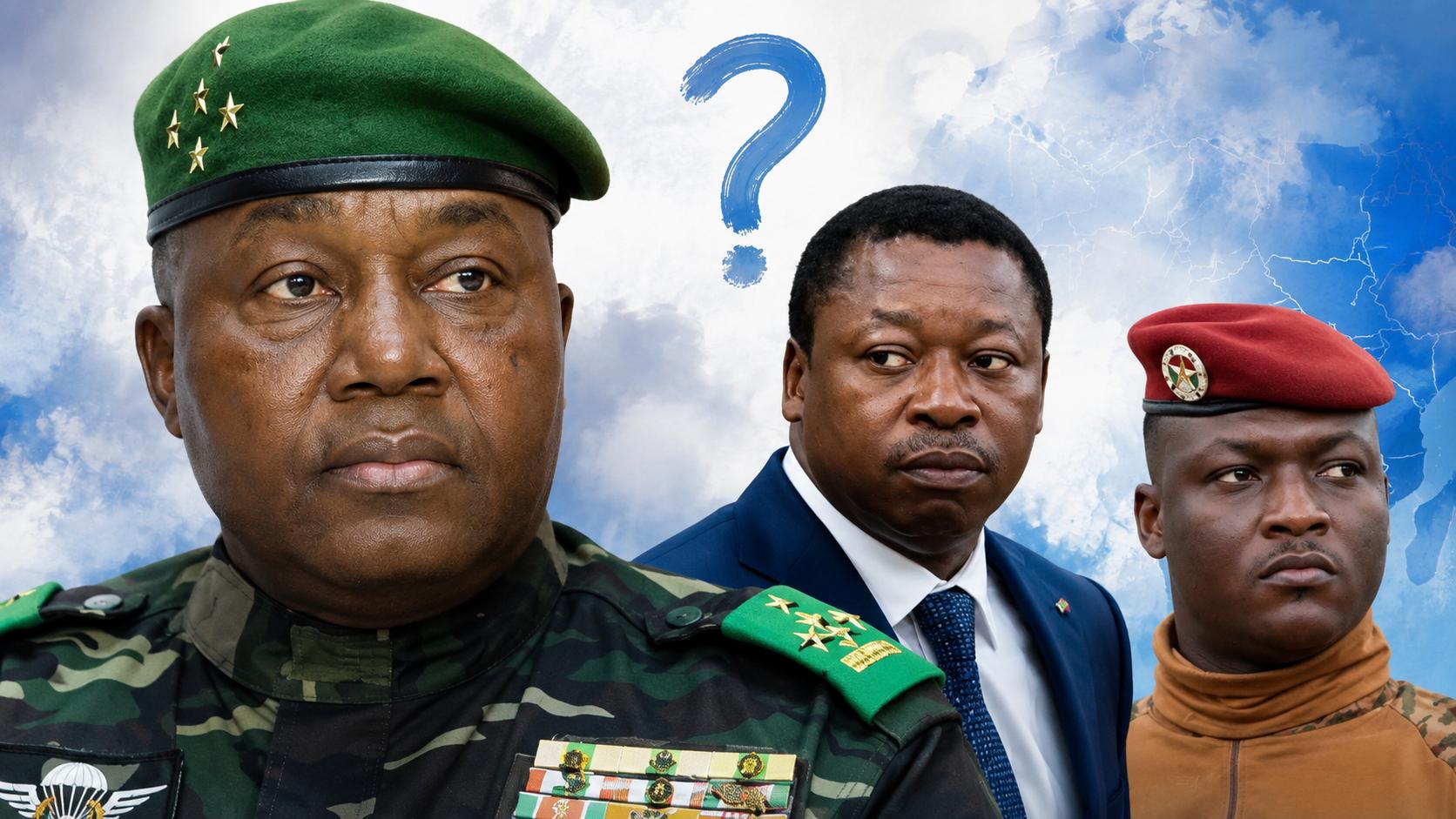
Niamey’s tremors: a coup warning for Ibrahim Traoré and Faure Gnassingbé
The recent upheaval in Niamey, marked by heavy gunfire and escalating tensions that challenged General Abdourahamane Tiani’s authority, sends a clear message far beyond Niger’s borders. This event exposes a deep-seated vulnerability that official narratives previously sought to conceal. Crucially, this seismic shift isn’t isolated to Niger; it casts a long, foreboding shadow over two of its key regional partners: Captain Ibrahim Traoré in Burkina Faso and Faure Gnassingbé in Togo. Indeed, the ripple effect from the Nigerien crisis strongly suggests that their respective administrations have every reason to fear potential military insurrections or even outright coup attempts across West Africa.
Burkina Faso’s perpetual barracks threat
For Captain Ibrahim Traoré, the looming threat is far from abstract; it’s a daily reality. The Burkinabé administration navigates an atmosphere of constant apprehension. Ouagadougou’s hold on power remains extraordinarily fragile, having already thwarted multiple destabilization efforts within its armed forces, notably in early 2026 and during the autumn of 2023. As Niamey plunged into a night of intense gunfire, Traoré likely saw a stark reflection of his own vulnerability. The very elements endangering General Tiani are strikingly similar in Ouagadougou:
- Troop exhaustion: Despite pronouncements of national sovereignty, frontline security demands are immense, and soldiers continue to make the ultimate sacrifice. The deep frustration among rank-and-file soldiers over unfulfilled pledges serves as a primary catalyst for potential mutinies.
- Factional anxieties: Repeated purges within the Burkinabé military, coupled with the widespread deployment of Volontaires pour la Défense de la Patrie (VDP), have created a significant divide between the regime’s inner circle and career officers. Just as in Niamey, the potential for dissident factions to take up arms has never been more pronounced.
Faure Gnassingbé’s defensive reshuffle syndrome
While Togo’s political landscape appears outwardly calmer, the underlying nervousness at the highest levels of government is equally evident. The timing of events speaks volumes: in August 2026, President Faure Gnassingbé urgently initiated a sweeping reorganization across the entire military high command and intelligence agencies (ANR), elevating trusted new figures to critical positions. This extensive reshuffling within the Togolese armed forces was no mere scheduling coincidence; it represented a clear survival instinct:
- Garrison concerns: Togo’s perceived or actual involvement in regional geopolitical maneuvers, alongside the worsening security situation in the North (specifically the Koundjoaré operation zone), has generated unprecedented tensions within the military command.
- Palace paranoia: When a head of state hastily reorganizes the leadership of their army and intelligence apparatus, it often signals an awareness of eroding loyalty within the barracks. Faure Gnassingbé understands that the infectious nature of coups d’état extends beyond the borders of military regimes, and that the Togolese army, historically central to power, remains an unpredictable force.
The instability’s domino effect
By endorsing regional destabilization efforts and relying on military might to advance their agendas, the Niamey-Ouagadougou-Lomé axis has been playing a dangerous game. The recent occurrences in Niamey starkly illustrate that when the military is exploited for political ends, its chain of command inevitably fractures, rendering the institution ungovernable. The clear lesson from August 29th in Niamey resonates: force inevitably begets more force. Both Ibrahim Traoré and Faure Gnassingbé are now acutely aware that a critical countdown has begun. As long as legitimacy stems not from institutional stability but solely from control over weaponry, every night in their respective capitals will carry the bitter taste of potential insurrection and a heightened West Africa coup risk.
