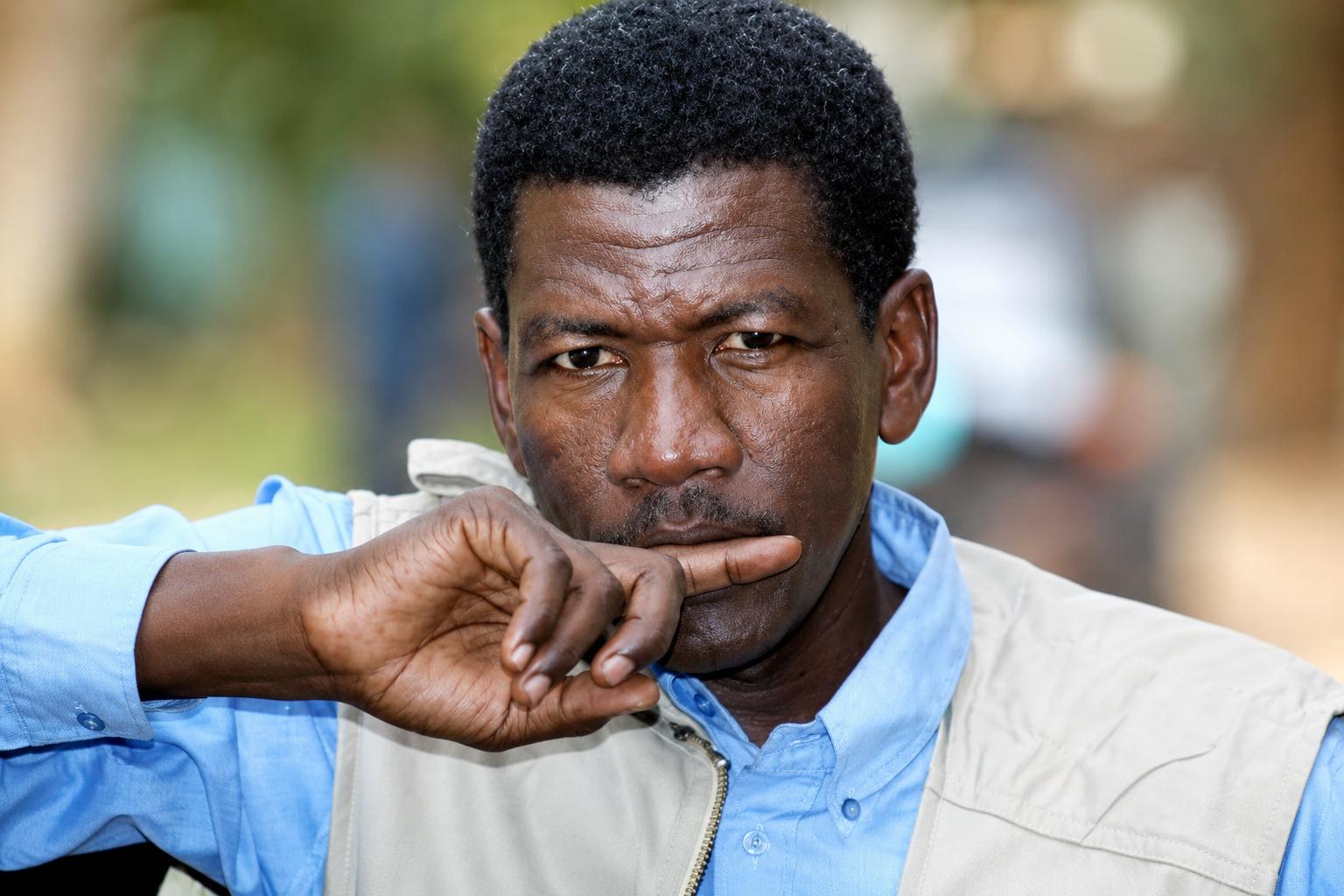
Niamey’s shadowy silence: what’s really behind the vanishing of journalist Moussa Kaka?
The sudden disappearance of Moussa Kaka, a venerated Nigerien journalist and director-general of Radio Télévision Saraounia (RTS), has cast a long shadow over Niamey’s media landscape. Kaka, whose decades-long career includes high-profile reporting on Sahelian security crises and political dynamics, vanished without explanation weeks ago, leaving behind a trail of unanswered questions about his whereabouts and the circumstances of his abduction.
The unspoken mechanisms driving Niamey’s media crackdown
While no official charges have been filed, the absence of transparency from Niger’s transitional government has only deepened concerns. Local reporters and Kaka’s family report that attempts to gather information through security channels have been met with deliberate obstruction, signaling a systemic pattern of silence rather than investigation. This opaque environment mirrors broader pressures facing journalists across the Alliance of Sahel States (AES)—Niger, Mali, and Burkina Faso—where media freedom has come under intensified scrutiny.
Kaka’s decades-long career, marked by fearless coverage of insurgent movements and political transitions, positioned him as a critical voice in a region besieged by conflict. His work, often crossing into sensitive geopolitical territory, made him a recurring target of state pressure. The current void in his presence underscores a troubling reality: when journalists of his stature disappear, the message to others is clear.
RSF’s urgent call: breaking the cycle of impunity
Reporters Without Borders (RSF) has issued a stark warning, framing Kaka’s disappearance as a potential act of enforced disappearance under international law. The organization’s Africa desk director, Sadibou Marong, framed the situation as an existential threat to press freedom in the Sahel, emphasizing that the transitional government bears a direct responsibility to clarify Kaka’s status and ensure his safe return.
« Journalists are not destabilizers; they are witnesses to reality, » Marong stated. « When a reporter of Moussa Kaka’s prominence is erased from public view without explanation, it isn’t just an individual tragedy—it’s an attack on the public’s right to know. » RSF’s intervention reflects growing alarm that Niamey’s silence may be part of a deliberate strategy to stifle dissent under the guise of security concerns.
AES governments and the weaponization of media control
The crisis in Niger is not isolated. Since the ascendancy of military-led transitions in the AES bloc, Sahelian media has faced an escalating crackdown: shuttered foreign outlets, targeted arrests of civil society figures, and a creeping culture of self-censorship among local journalists. Kaka’s case crystallizes these trends, highlighting how the erosion of media freedom is directly tied to broader authoritarian shifts in governance.
For Niamey’s press corps, the implications are dire. A region already grappling with insurgency and economic fragility cannot afford to lose its most articulate chroniclers. The disappearance of a journalist of Kaka’s caliber sends a chilling message: in the Sahel today, asking the right questions can come at a fatal cost.
What the future holds for Niger’s media under the shadow of Kaka’s vanishing
The coming weeks will be decisive. Will the transitional government’s silence persist, or will international pressure force a reckoning? For journalists still operating in Niamey, the stakes could not be higher. The tools of their trade—truth, transparency, and public accountability—are under siege, and the disappearance of Moussa Kaka is a stark reminder of what’s at stake.
As the world watches, one question looms large: in a region where information is a weapon, who will dare to speak when even the bravest voices vanish without a trace?
