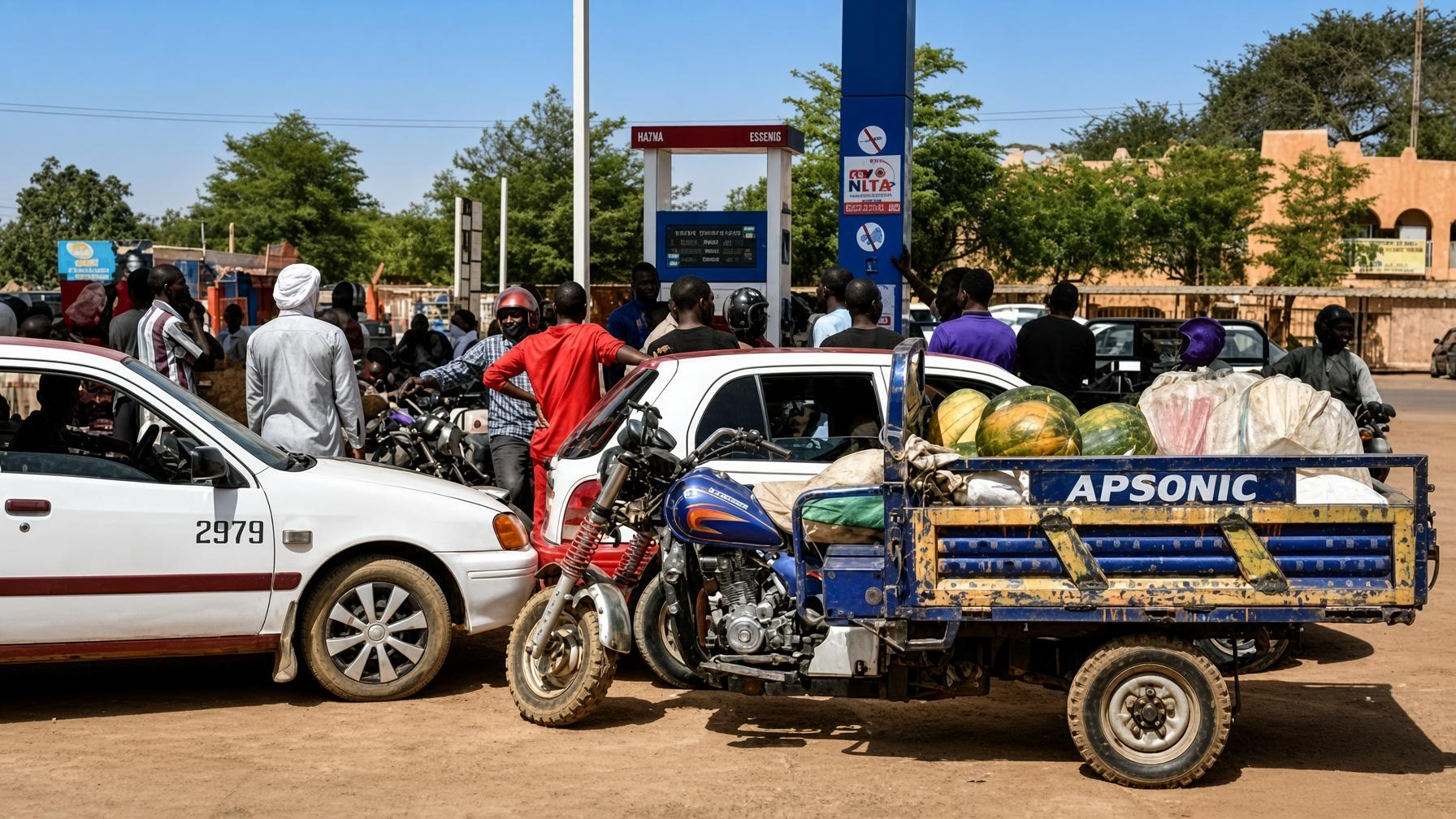
Niamey’s fuel crisis: shortages deepen as government scrambles for solutions
Niamey is now firmly in the grip of a worsening fuel shortage, plunging the capital into daily chaos. Long queues snake outside gas stations that run dry within hours, leaving commuters stranded and businesses paralyzed. The government’s latest response—a list of the few operational stations—has backfired spectacularly, funneling desperate drivers toward the same locations and turning rationing into a logistical nightmare.
From rationing to ruin: how the shortages strangulate daily life
The crisis has moved far beyond mere inconvenience. Fuel is the lifeblood of Niamey’s economy, powering everything from public transport to food deliveries and small businesses. Yet the authorities’ failure to manage supply has left workers burning time in endless lines and transporters hiked up prices to unsustainable levels. The vacuum has only widened the door for black-market dealers, peddling adulterated fuel at extortionate rates and leaving vehicle owners with costly repairs—or worse, stranded on the roadside.
Soraz underperforms as Niger’s import gap widens
Despite boasting the Soraz refinery in Zinder, Niger’s fuel production falls catastrophically short of demand. Official data from late 2026 reveals a staggering shortfall: 196.62 million liters of gasoline and 52.60 million liters of diesel went missing over the first eight months of the year. The government’s belated admission exposes a structural failure—one that goes deeper than Niamey’s streets. The root cause? The abrupt halt of smuggled, subsidized fuel from Nigeria after subsidies ended, a predictable shift that left Niger’s anemic supply chains gasping for air.
The Soraz refinery, designed to produce 20,000 barrels per day with a bias toward diesel, is hopelessly underpowered for gasoline. With the refinery unable to keep pace, the country has resorted to costly, mismanaged imports—imports that arrive too little, too late to ease the strain.
Government’s ‘solutions’ fuel public distrust
The regime’s response has been a patchwork of half-measures: intermittent rationing, half-hearted transparency, and a refusal to acknowledge systemic flaws. Publishing a list of ‘operational’ stations did nothing to ease the crunch—instead, it concentrated demand in a handful of locations, turning supply points into pressure cookers. Meanwhile, citizens clamor for clarity on stock levels and distribution schedules, but the government remains tight-lipped, feeding rumors and panic alike.
Distrust deepens as officials dismiss allegations of mismanagement or graft without offering verifiable data. The lack of accountability only emboldens speculation, leaving the public to wonder: how much of the shortfall is due to inefficiency, and how much to something far worse?
The human cost: who really pays the price?
The brunt of this crisis is borne by ordinary Nigeriens. Commuters lose entire days to waiting in line, motorcyclists drown in debt to black-market lenders, and small businesses see their margins evaporate under soaring transport costs. If the shortage drags on, the ripple effect will trigger runaway inflation on staples like food and medicine, pushing already fragile households to the brink.
The rise of the informal fuel trade isn’t a fix—it’s a symptom of state failure. By abandoning fuel distribution to unregulated profiteers, the government forces citizens to choose between financial scams and damaged engines. For a nation struggling to maintain basic services, this is an unforgivable abandonment of its most fundamental duty: ensuring energy access for work, for life, for survival.
