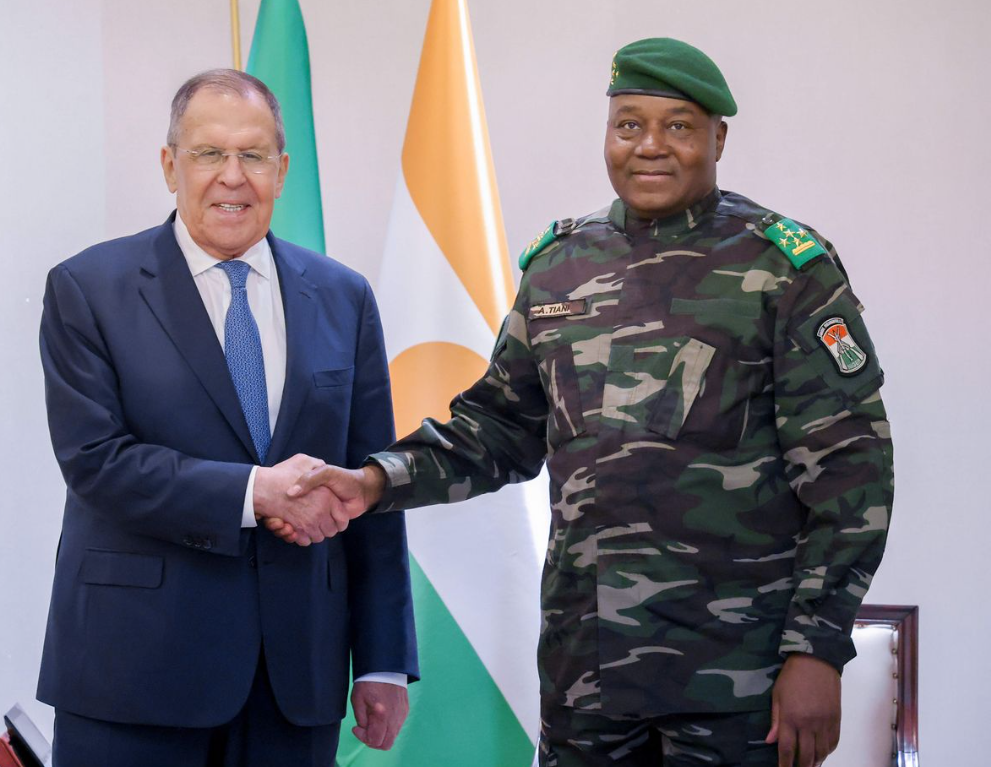
Niamey turns on Russia’s mercenaries after Niger’s own soldiers were shot
Torn plastic sachets lay strewn across a dusty street in Niamey, their contents sinking into the parched soil of the Sahel while an enraged crowd pressed around the wreckage. Thousands of water bags destined for the Russian paramilitaries of Africa Corps had been slit open and stamped flat, an act of popular sabotage that exposes the gaping rift now separating Niger’s civilians, the Russian fighters based in the country and the military junta of General Abdourahamane Tiani.
Nothing about the scene was accidental. That consignment was hauling a vital supply of drinking water towards a base sheltering Russian elements of Africa Corps, the structure that inherited Wagner’s role on the continent. For people in the Nigerien capital, intercepting the truck and meticulously destroying every pack went far beyond ordinary protest: it amounted to a rejection of sovereign surrender. Their demand brooks no ambiguity — the Russian forces must go, accused of an act beyond repair, the spilling of Nigerien soldiers’ blood on Nigerien soil.
The night that broke the bond
Understanding the anger spilling through the capital’s streets means returning to 28 and 29 August 2026. Over that night, an attempt to destabilise Niger’s security apparatus rattled the country. Rather than leaning exclusively on the nation’s regular forces, however, the head of the junta, General Abdourahamane Tiani, took a decision loaded with consequences.
When an order sent Russian rifles against Nigerien ranks
As the clashes blurred into confusion, Tiani issued a direct instruction for Africa Corps paramilitaries to move in. The Russian mercenaries then opened fire on elements of the Nigerien army. The precise toll stays nearly impossible to establish, locked down by the military authorities, yet the news raced through barracks and households alike: foreign fighters had shot at Nigeriens on the orders of the command in Niamey.
A regime that exchanged one overseer for another
This bloodshed lays bare the drift of a transitional power that grows ever more isolated and jittery. By handing the regime’s protection to foreign instructors and combatants instead of the national army, General Tiani has committed a grave political and ethical error.
The general came to power vowing to restore national sovereignty and push Western forces out. Instead, the military government appears to have swapped one form of tutelage for another — harsher, and utterly detached from realities on the ground. Permitting Africa Corps to target Nigerien service members crossed an ethical red line and shattered the fundamental pact of trust linking the population, the army and those who command it. The junta no longer leans on popular legitimacy; it leans on a private praetorian guard bought at a very high price.
Tension in the neighbourhood where the convoy was halted
In the district where the truck was immobilised and its cargo unloaded on the spot, the atmosphere remains charged. Residents no longer bother hiding their bitterness towards a foreign presence they now regard as an occupation.
“We accepted the departure of Western troops because we were promised genuine freedom,” explains Ibrahim, a trader working in the area. “But today we see Russian mercenaries shooting our brothers and our children who wear Niger’s uniform. Tiani handed them the right of life and death over us. Emptying these cartons and piercing these water bags is the only peaceful way to say they are not welcome here.”
A student’s verdict on the water poured into the sand
The young people gathered around the emptied vehicle share that sentiment. For Aïchatou, a student in Niamey, the gesture marks a definitive break.
“Every one of those water bags was meant to quench the thirst of the men who killed our soldiers a few days ago,” she says. “It was unbearable. The people of Niger did not chase out one army just to let mercenaries dictate the law in our country and fire on our troops. If the junta refuses to send them back, the people will handle it themselves.”
From one street to a nationwide confrontation
What happened to that supply convoy is no isolated news item. It belongs to a protest movement gathering strength in Niamey and in the country’s major cities. In trying to shield his power at any cost during the late-August crisis, General Tiani alienated part of the regular army and reignited civic anger.
By delegating public force to Africa Corps mercenaries, the Nigerien junta has locked itself into a dangerous standoff with its own people. The uprising against the water shipment proves that the sense of injustice has outgrown speeches: it now lives and breathes in the street.
