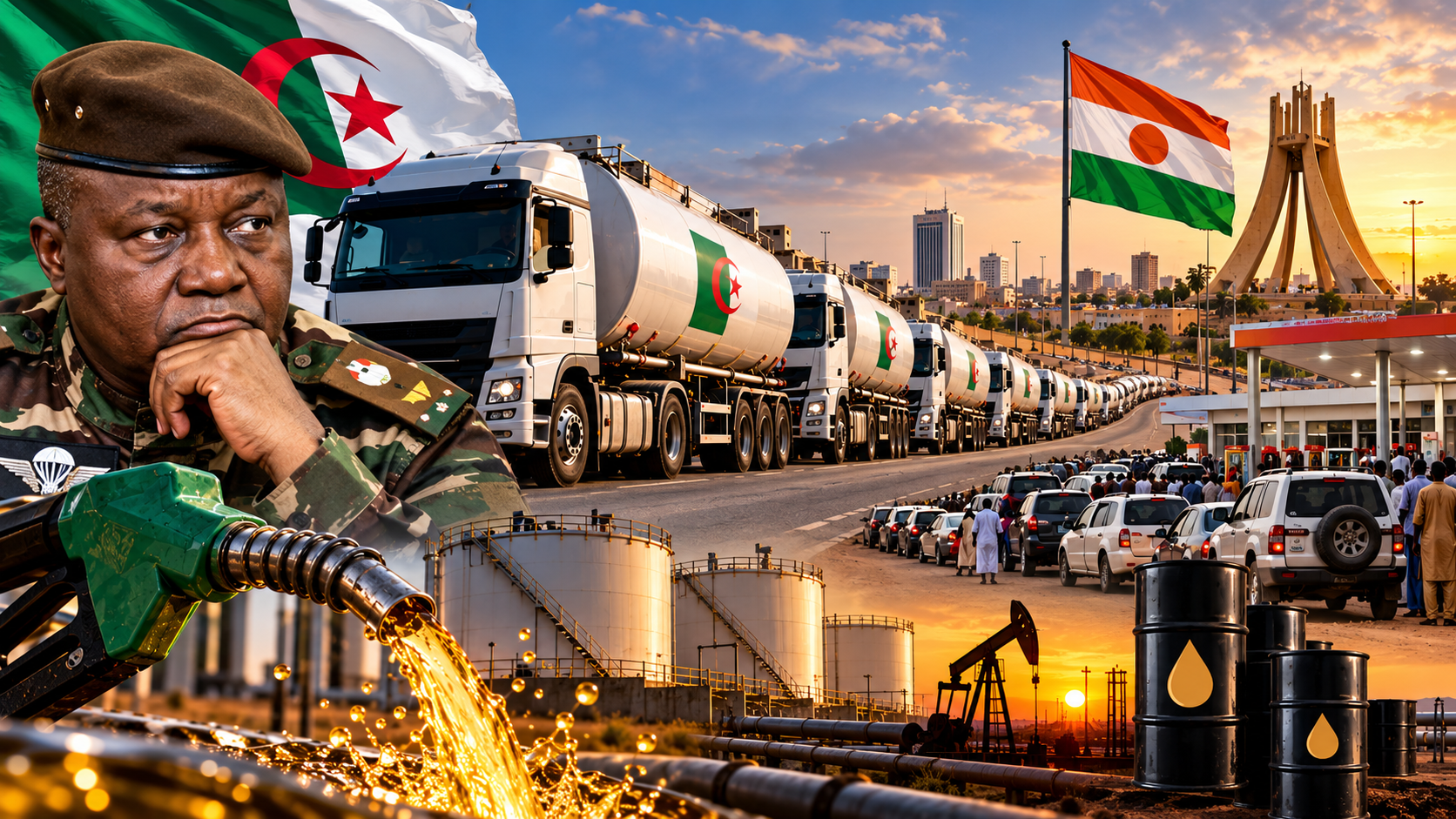
Niamey receives 3.75 million liters of Algerian fuel amid cost debates
Niamey is set to receive 3.75 million liters of Algerian fuel in a last-minute supply shift, raising immediate questions about cost, logistics, and long-term energy strategy for Niger’s capital.
Fuel rerouted: why 150 tankers are heading to Niamey instead of Agadez
Originally planned to ease fuel shortages in Agadez, 150 tankers each carrying 25,000 liters are now being redirected to Niamey. The sudden change in destination has sparked speculation about whether the move reflects an urgent adjustment in priorities or a broader strategic shift in Niger’s fuel supply chain.
The total volume of fuel remains significant: 3.75 million liters could help stabilize Niamey’s energy supply, particularly for essential services, transportation, and economic activities that depend on uninterrupted fuel access. However, the absence of an official explanation about the rerouting decision leaves key questions unanswered. Was the change driven by logistical necessity, a reevaluation of regional needs, or another factor entirely?
800 FCFA per liter: the steep price of Algeria’s fuel supply
Algeria’s fuel shipment to Niamey comes at a premium. Priced at 800 FCFA per liter 98 FCFA higher than Nigeria’s previous supply route the cost difference represents a substantial financial burden when applied to the full volume. For 3.75 million liters, the differential could total 367.5 million FCFA if fully accounted at these rates.
But the expense doesn’t stop at the delivery price. The agreement includes a repayment mechanism in crude oil, meaning Niger’s national resources are being exchanged for fuel. While this avoids an immediate cash outlay, it ties the country’s energy reserves to an external supply deal, raising concerns about long-term economic impact and resource management.
The higher cost may be justified by urgent needs, but without full disclosure of the agreement’s terms including the volume of crude oil exchanged and its valuated price it’s impossible to assess whether this deal strikes the right balance between cost, reliability, and national interest.
Beyond cost: the urgent need for fuel reserves in Niamey
While the price per liter captures attention, the deeper issue is Niger’s vulnerability to fuel shortages. Niamey, as the country’s administrative and economic hub, cannot afford prolonged disruptions to fuel supply. Power generation, public transport, and commercial activities all depend on consistent access to petroleum products. Without strategic reserves, even a brief interruption can trigger price hikes, logistical breakdowns, and broader economic instability.
The arrival of 3.75 million liters presents an opportunity to replenish emergency reserves and create a buffer against future shortages. But the effective use of these resources requires more than just delivery. Proper storage, inventory tracking, and strategic distribution are essential to ensure the fuel serves its intended purpose. Without transparency about how much will be stored versus used immediately, it’s unclear how long Niamey’s reserves would last in a crisis.
Diversification or dependency? Weighing the risks of Algeria’s fuel
Niger’s reliance on a single fuel corridor has already proven risky. The shift to Algerian supply could reduce that dependency but only if the new route proves more reliable and cost-effective in the long run. The immediate price hike suggests a trade-off between urgency and economic prudence, one that must be carefully justified.
Moreover, if Agadez’s original fuel allocation was diverted due to unmet needs, authorities must clarify how those shortages will be addressed. A transparent explanation would help distinguish between a reactive emergency measure and a calculated strategic pivot.
Ultimately, Niamey’s energy security depends not just on securing fuel in a crisis but on building a system resilient enough to prevent one. The arrival of Algerian fuel may be a short-term solution, but Niger’s long-term stability will require systematic planning, diversified supply chains, and robust reserve strategies.
As with any critical resource, fuel is only as valuable as the planning behind its use. Without clear answers on allocation, storage, and repayment terms, the 3.75 million liters arriving in Niamey remain a costly stopgap not a foundation for energy security.
By Maimouna Kaboré — Journalist
