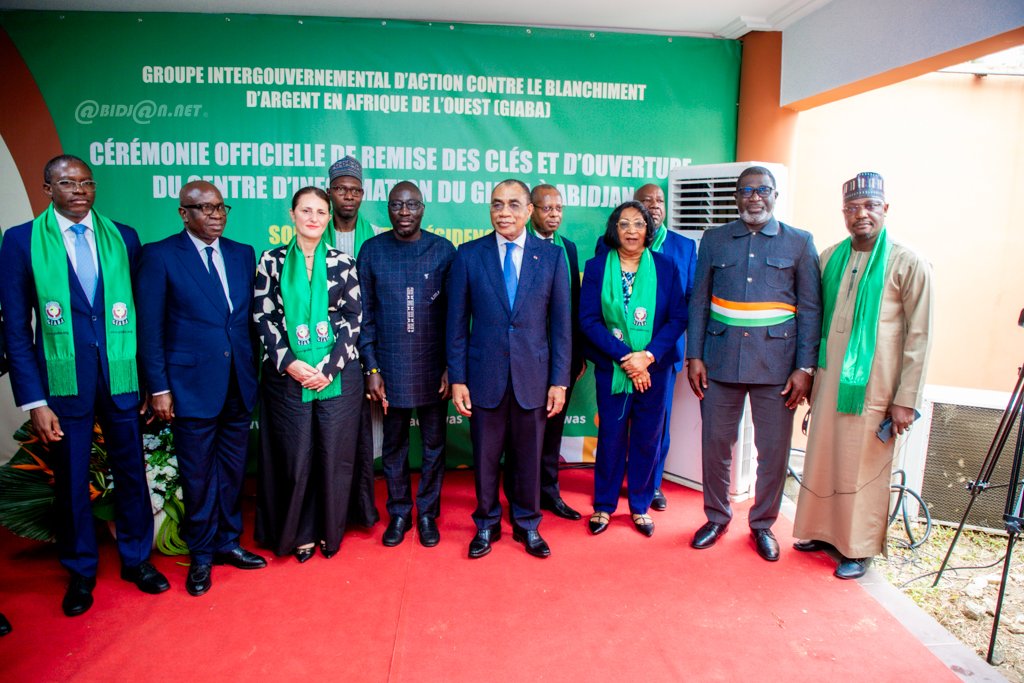
New anti-money laundering hub opens in Abidjan to boost west african financial security
Ivory Coast hosts a landmark financial crime fighting centre
On Wednesday 12 August 2026, Adama Coulibaly, Ivory Coast’s Minister of Economy, Finance and Budget, led the ribbon-cutting ceremony in Cocody to mark the handover of new facilities to the Intergovernmental Action Group against Money Laundering in Africa (GIABA). The move fulfils commitments under the Host Country Agreement signed between Abidjan and the organisation.
The inauguration underscores a major stride in regional cooperation aimed at curbing illicit financial flows. A landmark decision by the Economic Community of West African States (ECOWAS) Council of Ministers on 26 November 2010—during its 65th ordinary session in Abuja—had paved the way for two dedicated information hubs: one in Lagos targeting English-speaking countries, and another in Abidjan serving Francophone and Lusophone states.
The Abidjan centre first opened on 21 September 2015, following the signing of the Host Country Agreement on 29 March 2014 in Yamoussoukro, alongside the 44th ECOWAS Heads of State and Government Summit.
Enhancing regional defences against financial crime
Speaking at the ceremony, Minister Coulibaly highlighted how increasingly sophisticated money-laundering and terrorist-financing networks demand a unified regional response. “No single nation can tackle these evolving threats alone,” he stated. “Pooling expertise, intelligence and operational capacity is now essential.”
The minister described the upgraded facility as a regional platform for awareness-raising, capacity-building, research, documentation and communication, serving all ECOWAS member states and the wider West African community. His vision is for the centre to become an excellence hub in the fight against illicit financial flows and terrorism financing.
Edwin W. Harris Jr., outgoing Director General of GIABA, reflected on the Abidjan centre’s achievements since 2015. It has hosted open days for youth, public conferences, regional public-speaking contests, and specialised training seminars targeting journalists, faith leaders and civil society organisations. It has also supported mutual evaluation processes that strengthen member states’ compliance frameworks.
A strategic investment for Francophone and Lusophone West Africa
With the new premises, GIABA’s Abidjan hub is set to evolve into a regional knowledge and innovation hub dedicated to anti-money-laundering and counter-terrorism financing efforts. Harris called on public administrations, competent authorities, financial institutions, regulated professions, universities, research centres, media outlets, civil society groups and technical and financial partners to make full use of the space and engage in its programmes.
Special emphasis will be placed on young people—students, researchers and early-career professionals—transforming the centre into a dynamic learning environment that champions integrity, good governance and sustainable economic growth across West Africa.
Cutting-edge training solutions for financial crime prevention
A key innovation in the new facility is a Computer-Based Training (CBT) centre. This digital platform will deliver tailored modules for a broad range of users, including competent authorities, financial institutions, regulated professions, judges, investigators, academics, students and other stakeholders involved in detecting and suppressing financial crime.
These courses will lead to recognised certificates, helping to professionalise the regional workforce and consolidate expertise in combating illicit financial flows. The move reflects GIABA’s commitment to turning the Abidjan hub into a catalyst for sustainable regional cooperation and information sharing.
A lasting legacy before leadership transition
Timing of the inauguration—just weeks before Harris’s term ends on 31 August 2026—signals a deliberate effort to hand West African governments and partners a durable instrument for deeper collaboration, intelligence sharing and skills development in the ongoing battle against money laundering and terrorist financing.
