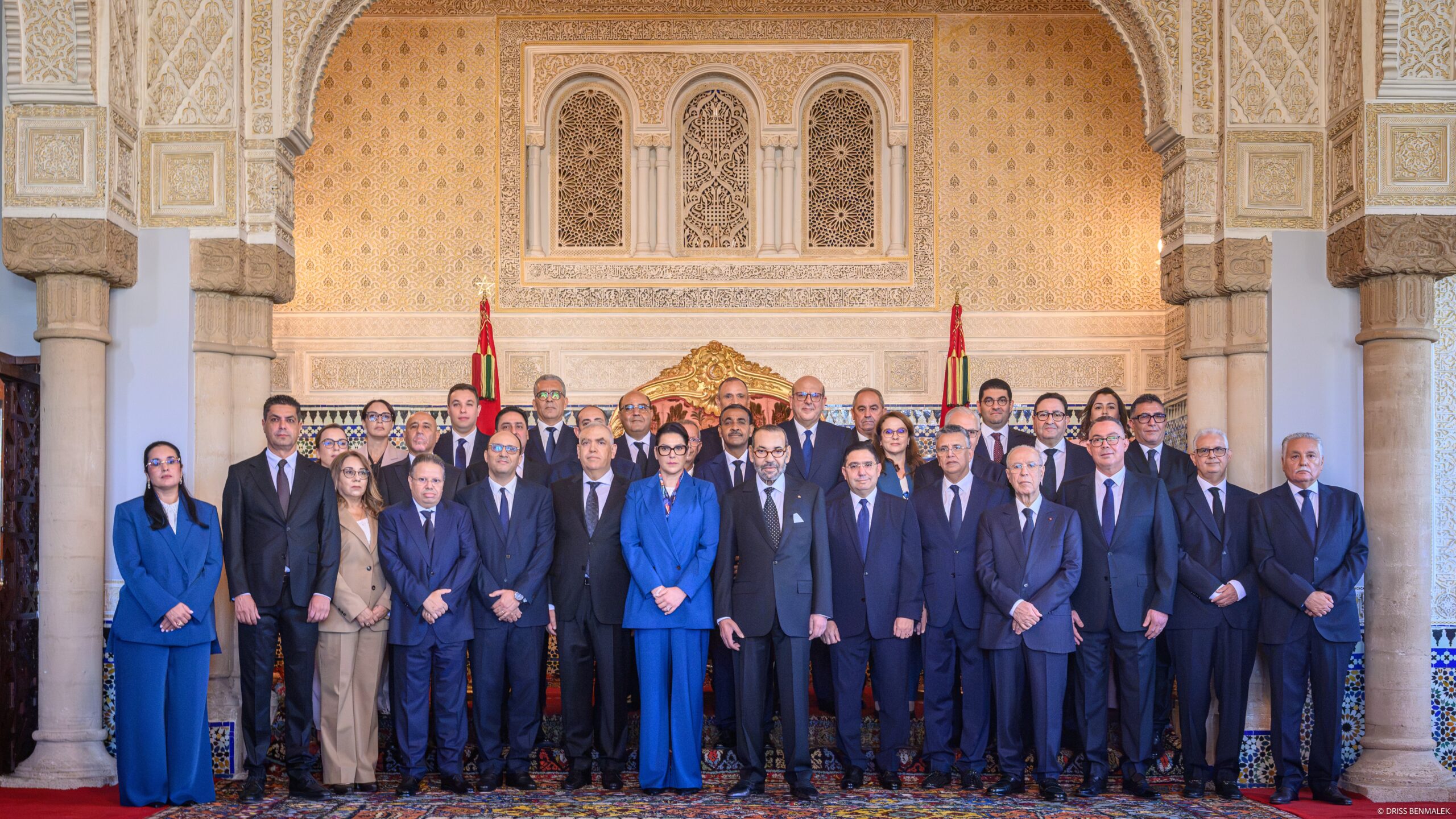
Morocco’s 2026 government: full list of new ministers sworn in by King Mohammed VI
The Royal Cabinet of Morocco has officially announced the composition of the new executive branch following a historic swearing-in ceremony at the Royal Palace in Rabat.
Key appointments in the 2026 Moroccan government
The reshuffled cabinet includes several high-profile figures, with the King’s choices reflecting a strategic approach to national priorities. Key portfolios have been reassigned to address emerging challenges and opportunities.
Prime Minister and core leadership
- Prime Minister: Aziz Akhannouch
- Minister of Foreign Affairs: Nasser Bourita
- Minister of Economy and Finance: Nadia Fettah
- Minister of Interior: Abdelouafi Laftit
- Minister of Justice: Khalid Ben Slimane
Economic and social portfolios
- Minister of Energy Transition: Leila Benali
- Minister of Education: Chakib Benmoussa
- Minister of Health: Khalid Ait Taleb
- Minister of Industry and Trade: Ryad Mezzour
- Minister of Agriculture: Mohamed Sadiki
Oversight and strategic roles
- Minister of Digital Transformation: Ghita Mezni Hara
- Minister of Youth and Sports: Rachid Talbi Alami
- Minister Delegate to the Head of Government: Younes Sekkouri
- Minister of Higher Education: Abdellatif Miraoui
- Minister of Tourism: Fatima Ezzahra El Mansouri
Ceremony details and next steps
The oath-taking took place in the presence of senior royal advisors, government officials, and members of the diplomatic corps. The new cabinet will now focus on implementing the Kingdom’s 2026-2030 development agenda, with particular emphasis on economic recovery, social cohesion, and regional stability.
Public reaction and expert analysis
Initial responses to the reshuffle have been mixed. While business leaders praised the inclusion of technocrats in key economic portfolios, opposition figures questioned the continuity of certain policies. Analysts note that the new lineup balances continuity with fresh perspectives to navigate Morocco’s evolving challenges.
Economic expectations
The financial sector anticipates cautious optimism following the appointment of experienced economic managers. The new government faces immediate challenges including inflation control, job creation, and attracting foreign investment while maintaining fiscal discipline.
Social sector priorities
Education and health reforms remain at the forefront, with the new ministers tasked with accelerating implementation of long-awaited programs. The education portfolio, in particular, is expected to see renewed focus on curriculum modernization and vocational training.
