Morocco upholds claim over ceuta and melilla amid spain tensions
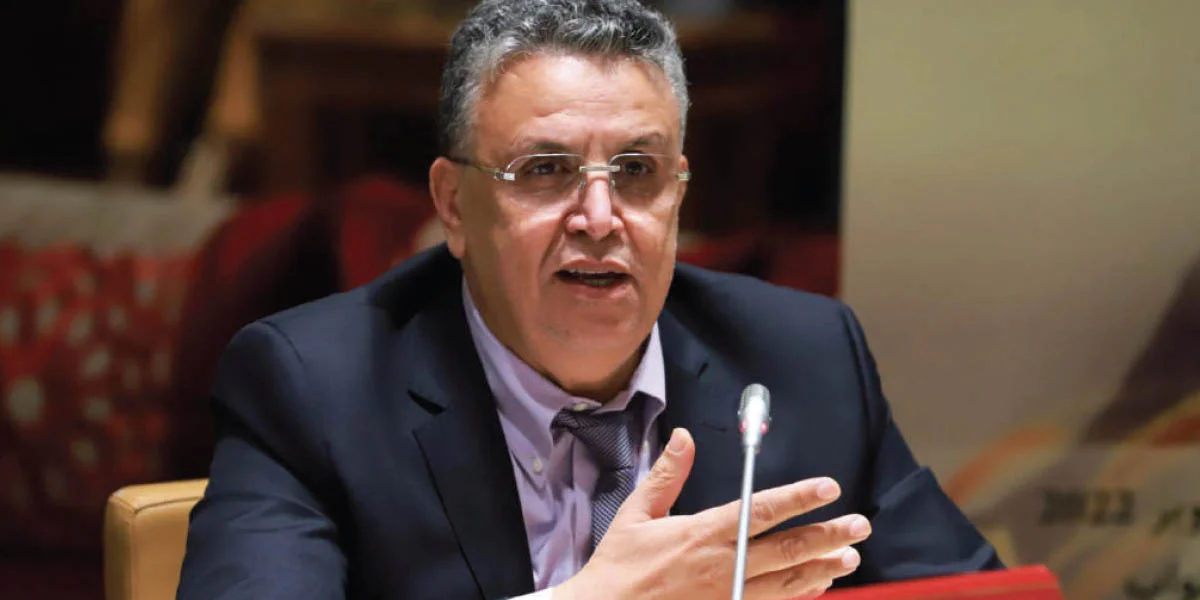
Morocco has once again brought to the forefront its longstanding territorial dispute with Spain over Ceuta and Melilla, two autonomous cities situated on the African continent but under Spanish sovereignty. Speaking in a recent interview, Mr. Abdellatif Ouahbi, Morocco’s Minister of Justice, stressed that Rabat remains committed to pursuing negotiations to reclaim what it considers historically and legally Moroccan lands. The minister highlighted that this issue remains “a priority on the agenda,” embedded within a broader strategy of dialogue and patience, particularly as it frequently arises during high-level bilateral discussions.
Addressing the recent surge in irregular migration—with over 3,000 individuals crossing into Ceuta on July 30 and 31—Mr. Ouahbi underscored the shared responsibility of both nations in managing this challenge. He called on Spain to take immediate action in repatriating unaccompanied Moroccan minors who entered Spanish territory, while also questioning why Madrid expects Morocco to curb departures when those who successfully cross are granted legal pathways to remain. The minister further emphasized that Morocco cannot be expected to act as “Europe’s border guard” without equitable cooperation.
Madrid responds with unwavering stance on sovereignty
The Spanish Ministry of Foreign Affairs swiftly rejected Morocco’s claims, affirming in no uncertain terms that the status of Ceuta and Melilla is “non-negotiable.” Officials reiterated that these cities are “an integral part of Spain’s internationally recognized territory,” dismissing any possibility of future discussions on the matter. The ministry’s response came shortly after Morocco’s latest diplomatic overtures.
Mixed reactions among Spanish officials
During a visit to Ceuta, José Manuel Albares, Spain’s Foreign Minister, focused exclusively on the migration crisis, avoiding any mention of the territorial dispute. In his public statements, he acknowledged Morocco’s willingness to take back unaccompanied minors who had entered Ceuta during the recent influx. Meanwhile, Juan José Imbroda, President of the Autonomous City of Melilla and a member of the opposition Partido Popular (PP), took a more confrontational tone. Accusing Morocco of mismanagement, he stated, “What use are Ceuta and Melilla to you if you cannot control your own borders and your youth are fleeing?” He framed the migration surge as an “international embarrassment” for Morocco, urging the country to “handle this crisis with dignity.”
Shared responsibility in tackling irregular migration
The Moroccan Ministry of the Interior, in a separate statement, framed the migration issue as a collective responsibility. It warned against online calls for further border crossings on August 15, stressing that combating irregular migration and human trafficking networks requires coordinated efforts from both sides. The ministry cautioned that unilateral action would be ineffective, reinforcing the need for a unified approach to safeguard regional stability.
