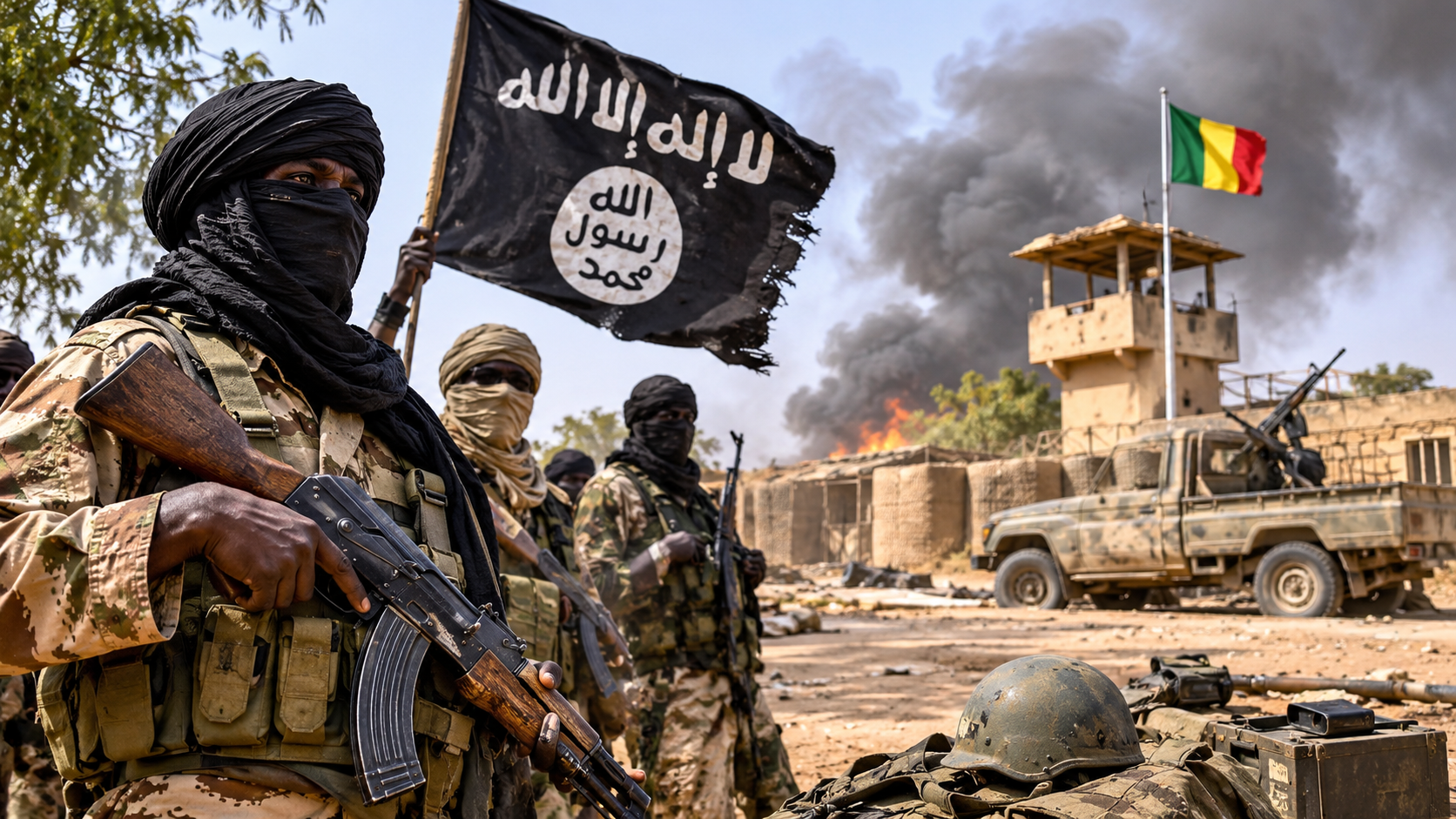
Mopti attack: JNIM claims control of pro-government outpost amid Mali’s escalating security crisis
Jihadist strike in Mopti: JNIM seizes key position from pro-government militias
A fresh wave of violence struck Mali’s central region on Saturday, October 31, 2026, after the Group for the Support of Islam and Muslims (JNIM) launched a coordinated assault on a pro-government militia outpost in Bayman, Mopti. In a statement, the group claimed to have overrun the position, which it described as being manned by fighters aligned with the transitional government in Bamako.
The attack marks another setback in the region, as JNIM continues to challenge Mali’s military strategy despite reported successes by national and foreign forces. While the exact casualties remain unverified, the assault underscores the persistent vulnerability of government-aligned militias in the face of sustained jihadist campaigns.
Uncertainty over casualties and strategic consequences
The JNIM’s claim of neutralizing several fighters on-site lacks independent verification, leaving critical details such as the number of dead, wounded, or captured individuals unclear. Military observers note that such attacks typically result in significant human losses, though precise figures are often delayed or obscured by the fog of war.
This incident follows a devastating earlier assault on Dioura in September 2026, where at least 100 Malian soldiers and five Russian paramilitaries were killed in an attack also attributed to JNIM. The capture of dozens more personnel highlighted the group’s ability to inflict heavy damage despite counterterrorism efforts.
Mali’s security strategy under scrutiny
The latest offensive raises serious questions about the effectiveness of Bamako’s military partnerships, particularly with Moscow. While authorities reported over 4,800 alleged terrorists neutralized and 850 airstrikes conducted since May 2026, the frequency of such attacks suggests a widening gap between official claims and ground realities.
Analysts point out that despite repeated announcements of territorial gains and security improvements, jihadist groups maintain the capacity to strike strategic locations. The JNIM’s ability to seize the Bayman outpost if confirmed would further erode confidence in the government’s ability to protect both its forces and civilian populations.
What’s next for Mopti and Mali’s embattled forces?
The broader implications of this attack extend beyond military setbacks. With JNIM expanding its influence, the central regions of Mali face growing instability, threatening not only security operations but also humanitarian access and local governance. The question now is whether the Malian military and its allies can adapt quickly enough to reverse the tide or whether this latest loss will signal deeper systemic failures.
As the situation develops, the international community’s response remains a critical factor. Will additional support be pledged, or will the cycle of violence continue, reshaping Mali’s security landscape for the foreseeable future?
By Yacouba Ouédraogo — Journalist
