Mecca drone interception: regional reactions harden as Riyadh weighs its next move
What happened in the skies south of Mecca
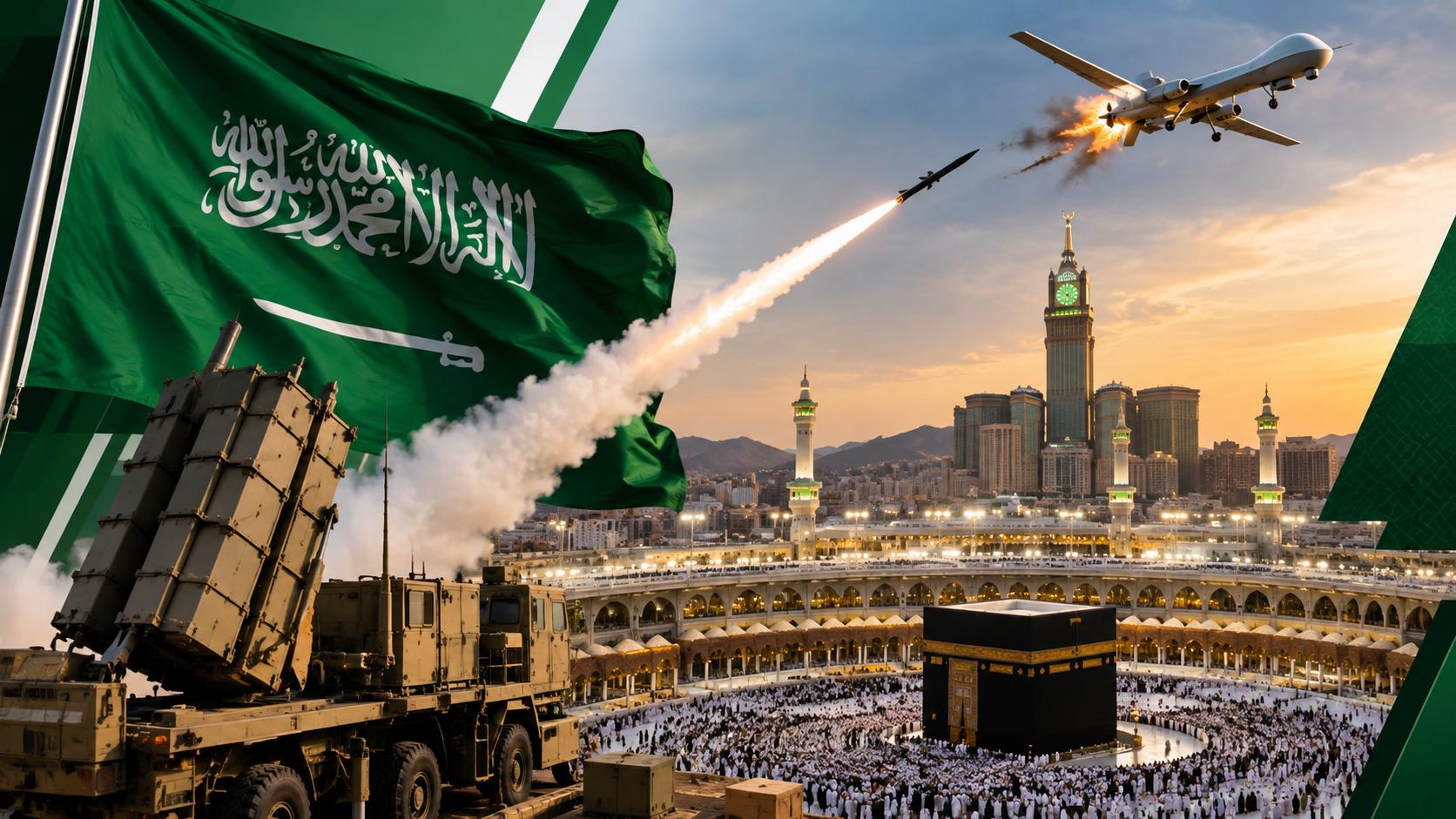
Saudi air defence units intercepted and destroyed an armed drone in the airspace south of Mecca, an operation confirmed by the military coalition led by Riyadh. According to the coalition command, the aircraft was detected and neutralised before it could reach the tightly protected air corridor surrounding Islam’s holiest city. The announcement, made public on Wednesday 16 September, followed an intervention carried out a day earlier, on Tuesday 15 September.
No injuries and no material damage were recorded, the official statement stressed. Yet the location alone lends the episode a weight far beyond a simple technical success: Mecca hosts the Grand Mosque and shelters a permanent, dense population of pilgrims and residents.
A target that is symbolic as much as military
Striking at such a site carries an unmistakable political charge. For the Saudi command, an aircraft heading towards the sanctuary is not merely an operational incident — it is a message, and one that demands a response.
Riyadh’s reaction: another red line crossed
The coalition’s spokesperson, General Turki Al-Maliki, was quick to respond publicly, condemning the attempted strike in blunt terms. He pointed at Yemen’s Houthi rebels and at their allies, accusing them of seeking to “disrupt the security and stability” of the Kingdom and of deliberately putting at risk the lives of residents and of the worshippers gathered at the Grand Mosque.
From the Saudi leadership’s standpoint, aiming at a place of worship of this magnitude amounts to crossing yet another red line. The coalition restated its readiness to take whatever measures are required to shield Saudi territory, its civilian population and its sacred sites.
How the region is reacting
The fallout has been swift. Across the Gulf and beyond, the interception has revived a familiar debate: how far can a non-state armed group push its reach, and how much protection can any state realistically guarantee over religious landmarks that draw millions of visitors each year?
Diplomatic circles have kept a cautious tone, but the question of civilian safety in and around the holy sites has returned to the forefront of regional discussion. The fact that the drone was stopped in time reassures tactically, yet it also invites an uncomfortable conclusion: the attempt itself was possible.
Why this trajectory unsettles more than others
Drone and ballistic missile launches targeting oil facilities, airports and border zones along the Saudi army’s perimeter have become a recurring feature of the war. Trajectories pointing towards the Mecca area, however, consistently trigger reactions of a different intensity — diplomatic, security-related and, increasingly, public.
Years of confrontation between the international coalition led by Saudi Arabia and Yemen’s Houthi insurgents have produced mediation attempts and fragile truces brokered under United Nations auspices. None of them has removed the underlying problem: the rebels’ military capacity endures, and stabilising the Kingdom’s southern frontier remains an unresolved challenge.
The outlook: tactical reassurance, strategic uncertainty
This latest alert brings back a question that the region has never fully answered — how exposed are the Arabian Peninsula’s strategic and religious infrastructures to asymmetric attacks? Saudi air defence performed as intended, and that performance matters. But it also underlines the urgency of a lasting political settlement to the Yemeni conflict, without which every interception is only a postponement.
What to watch in the coming weeks
- Whether the coalition adjusts its air defence posture around the holy sites and the southern border.
- How Houthi statements frame the operation, and whether further launches follow.
- Whether regional mediators revive truce talks in response to the incident.
- How markets and pilgrimage logistics react to repeated security warnings.
As foreign ministries monitor the situation closely, the episode serves as a reminder that the risk of escalation never disappears. It sits dormant, ready to unsettle peace efforts and the regional balance at any moment.
