On July 18, a military convoy from Mali’s Armed Forces (FAMa) and the Russian paramilitary group Africa Corps was ambushed near Tabrichat, in northern Mali. The attack, one of the deadliest in the region over the past fifteen years, left over 50 Malian soldiers dead and dozens captured. The assault has reignited debates about tactical failures, war crimes, and the controversial withdrawal of Russian mercenaries toward Gao.
The ambush at Tabrichat: a devastating trap
After weeks of intense fighting to control the strategic Anéfis camp, Malian forces and their allied mercenaries began repositioning. On July 18, a large convoy of armored vehicles and troop transporters departed Anéfis, heading toward Gao, the major northern hub. The convoy split into two sections: Russian mercenaries at the front, Malian troops at the rear.
The attack unfolded near Tabrichat, a critical junction linking Gao, Bourem, and Kidal. Exploiting the convoy’s stretched formation, fighters from the Group for the Support of Islam and Muslims (JNIM) and the Strategic Framework for the Defense of the Azawad (FLA) launched a coordinated assault. The offensive targeted the Malian rear section, leaving them exposed under heavy fire.
A grim toll and documented atrocities
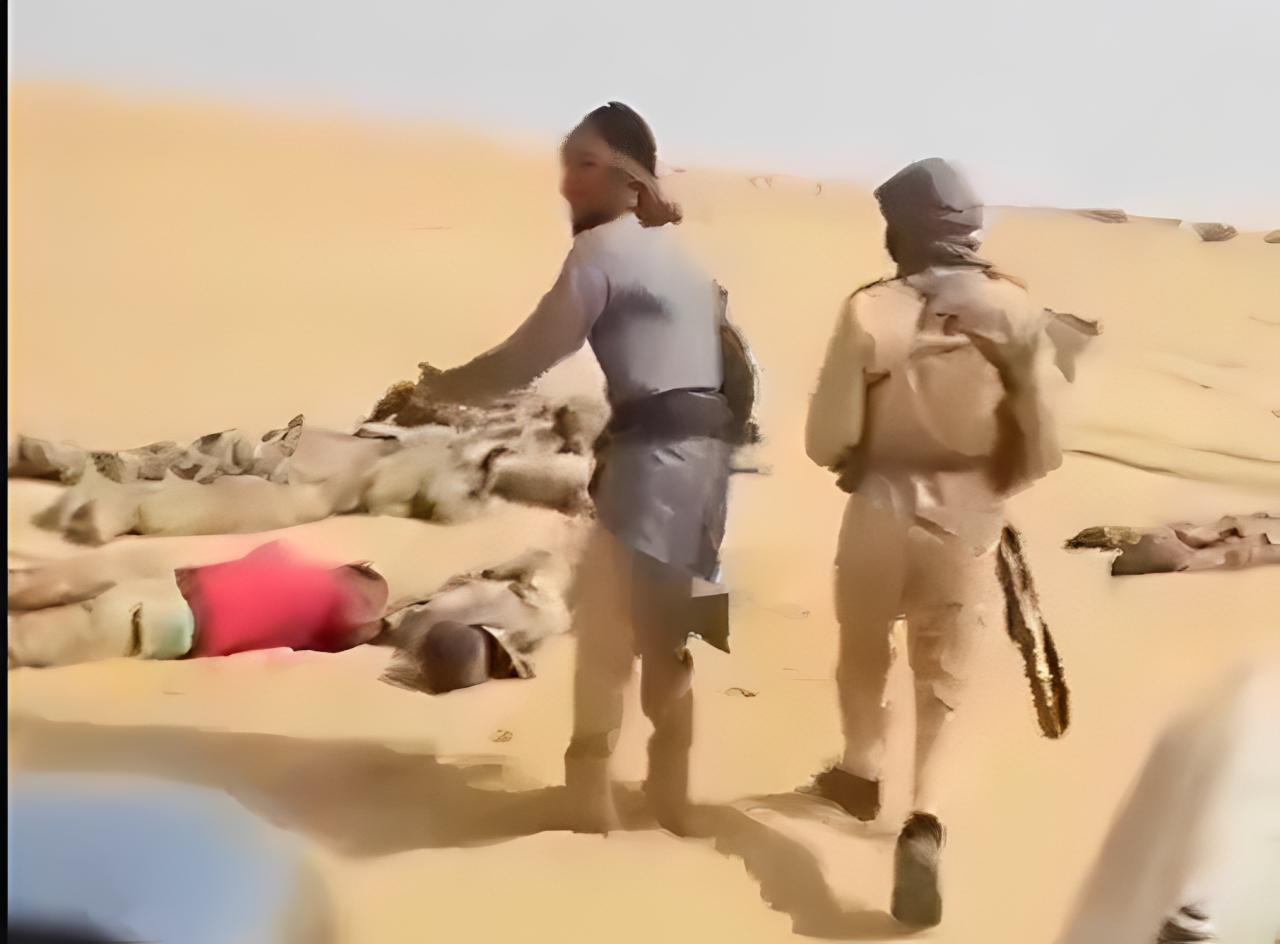
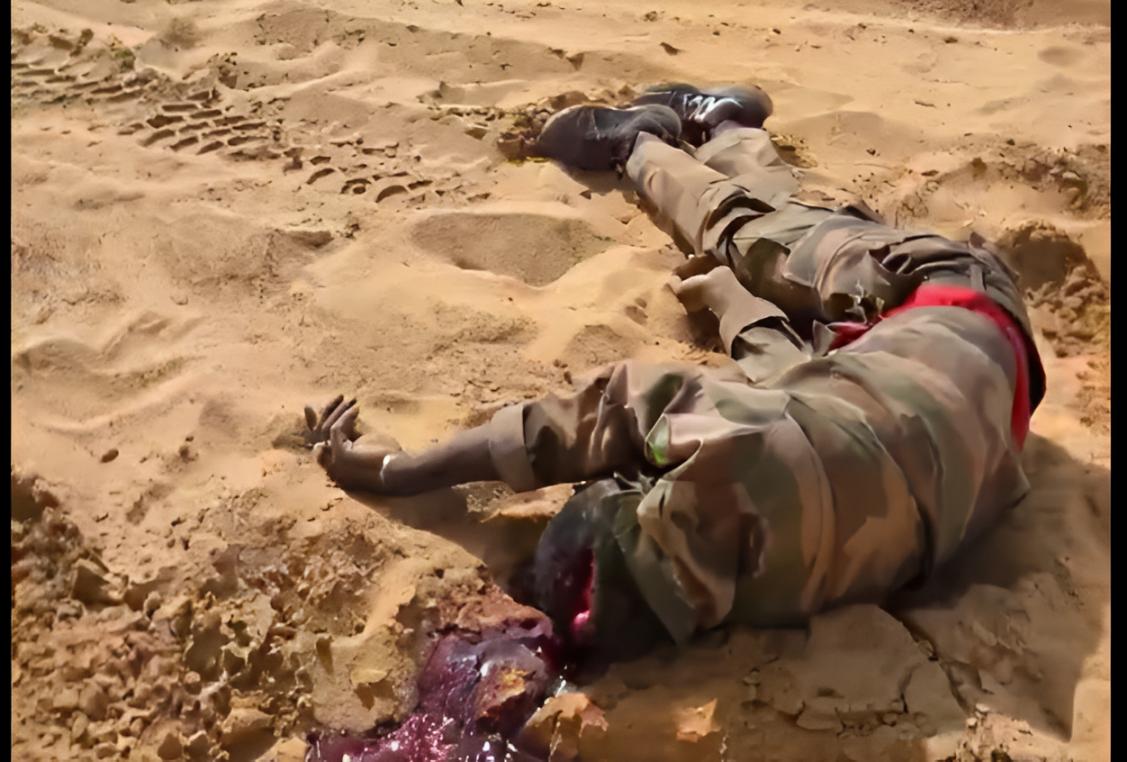
The clash left a devastating human cost. Preliminary reports indicate at least 50 Malian soldiers killed and over 30 missing or captured—one of the deadliest blows to Mali’s military in over a decade. The situation worsened when captured soldiers were executed at close range, violating international humanitarian law.
Videos and images circulating online confirmed the atrocities, sparking outrage across Mali. Shockingly, some footage was initially shared by channels linked to Africa Corps, deepening public anger and distrust toward foreign allies.
New leadership and the rise of a powerful coalition
Analysts examining the aftermath identified a key figure: Hamza Ag Gali, son of Iyad Ag Gali, the long-standing leader of JNIM and founder of Ansar Dine. His presence confirms high-level insurgent involvement in planning the attack and highlights the generational shift in jihadist command. The alliance between JNIM and FLA factions demonstrates a renewed tactical cohesion, mobility, and firepower that recent security reshuffling had failed to neutralize.
The Africa Corps controversy: aid or abandonment?
The Russian contingent, positioned at the front, suffered no losses during the initial assault. Yet, as Malian troops faced the brunt of the attack just kilometers behind, the mercenaries continued toward Gao without turning back to assist. This decision has fueled intense debate:
- Coordination breakdown: Why were the two convoy sections so poorly synchronized, lacking mutual support protocols?
- Failed commitment: Did the withdrawal stem from orders to preserve forces, or an operational inability to respond?
The refusal or inability to support allies in distress raises serious questions about the effectiveness of foreign military support in northern Mali.
A nation in mourning and rising frustration
From Bamako to northern cities, public outrage has surged. While the nation mourns its fallen soldiers, anger grows over the actions of Russian allies. Demands for official explanations regarding the convoy’s management and the Africa Corps’ conduct have intensified. The Tabrichat tragedy underscores the vulnerability of northern Mali’s supply routes and forces a reevaluation of the current security strategy.
With the JNIM/FLA coalition displaying renewed resilience and aggression, authorities may need to overhaul coordination with their foreign partners—or risk further escalation.