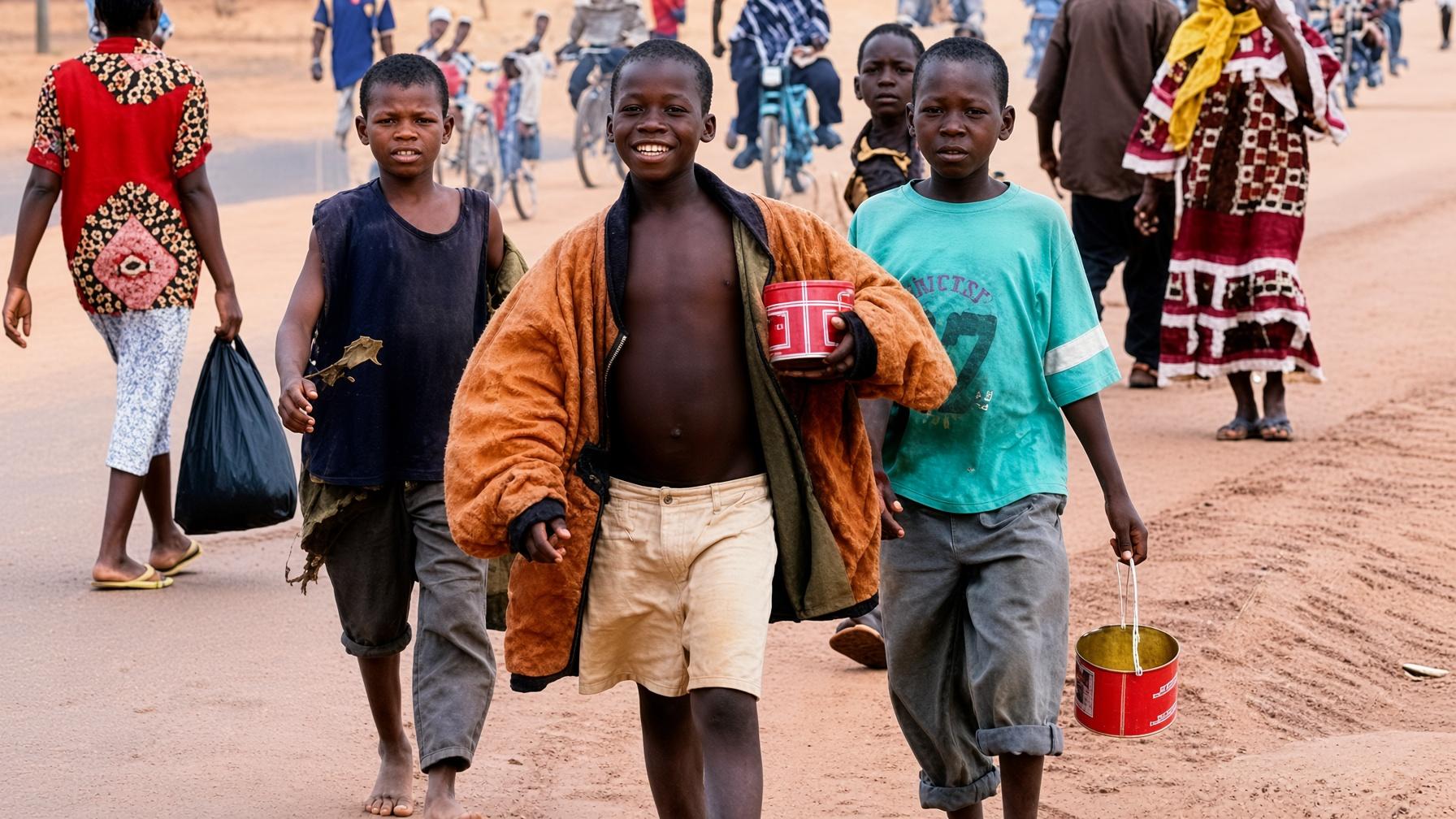
Mali’s street begging crisis: how systemic failures fuel urban collapse
Bamako’s streets have become a daily exhibition of hardship. At intersections, outside government buildings, and near places of worship, hundreds of children, people with disabilities, and elderly individuals beg for survival amid widespread indifference. Despite repeated assurances from transitional authorities and public awareness campaigns, Mali’s struggle to curb street begging has proven futile. The crisis has evolved from a marginal issue into a structural flaw in the country’s governance, exposing deep systemic failures.
Uncontrolled begging epidemic in urban centers
The scale of the problem is staggering. In Bamako alone, the sight of young children darting between vehicles at red lights—often under the orders of unscrupulous Quranic teachers or left to fend for themselves—has become a grim routine. Officials had pledged to remove minors from the streets and strengthen social welfare programs, but the reality on the ground tells a different story. Scattered cleanup and awareness initiatives, spearheaded by the Ministry of Women, Child, and Family Promotion, have yielded little more than temporary surface-level results.
Without sustainable shelters, adequate funding, or rigorous follow-up, those intercepted are frequently returned to the streets within hours. The cycle of abandonment and relapse persists, unbroken by half-hearted interventions.
The root of the crisis: governance failures
The proliferation of street begging is not a random tragedy—it is the direct result of state neglect and economic decay. Key factors include:
- Collapse of essential social services: Decades of underinvestment in education and social protection have left families in extreme poverty. The inability to provide free, quality compulsory schooling pushes vulnerable households to abandon children to the streets as a last resort.
- Unregulated Quranic education systems: Informal madrasas operate with near-total opacity. Child exploitation through forced begging remains rampant, enabled by weak enforcement of existing laws. Authorities often hesitate to intervene, citing socioreligious sensitivities, thereby allowing these abuses to go unchecked.
- Mismanagement of public funds: While the state prioritizes security spending and institutional operations, allocations for human development and poverty reduction remain critically low. Scarce resources are either misdirected or siphoned off due to systemic corruption and bureaucratic inefficiency.
- Institutional opacity and corruption: Humanitarian and social reintegration funds—often drawn from public or international sources—rarely reach intended beneficiaries. Bloated bureaucracies, lack of transparency, and poor oversight ensure that aid is diverted, diluted, or lost.
A looming social and security catastrophe
The consequences of this failure extend far beyond urban aesthetics. Thousands of destitute, illiterate children roaming the streets are vulnerable to recruitment by criminal syndicates and armed groups operating across the region. Without education, protection, or hope, these youths become easy targets for exploitation, radicalization, and violence.
By ignoring the scale of the disaster and relying on empty rhetoric rather than concrete action, the Malian government risks deepening a social contract already in tatters. Street begging is not just a visible symptom—it is a marker of a broken trust between leaders and their most vulnerable citizens. Without urgent, transparent reforms in governance and a commitment to enforcing the law, the cycle of poverty and despair in Bamako—and across Mali—will only intensify.
What needs to change?
This crisis demands more than symbolic gestures. Lasting solutions require:
- Strong legal enforcement against forced child begging and unregistered madrasas.
- Sustainable investment in free, quality education and social welfare systems.
- Transparent allocation and monitoring of public funds for social protection.
- A shift in budget priorities toward human development and away from short-term security spending.
