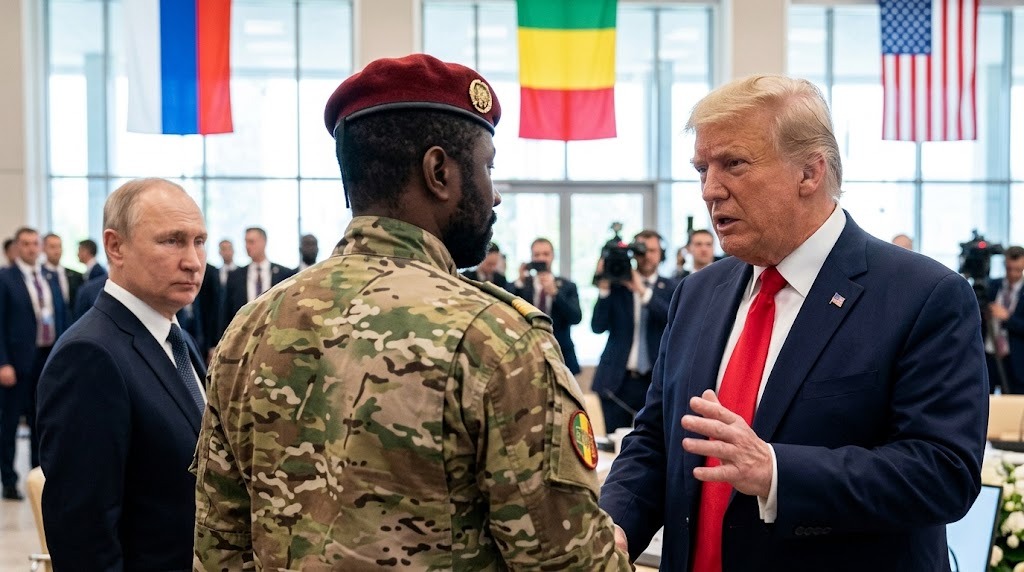
Mali’s shifting security calculus: why Bamako seeks US aerial intelligence despite Russian ties
Behind the scenes: Mali’s quiet pivot toward Washington
The partnership between Mali and Russia, once hailed as an unbreakable alliance, is showing unexpected cracks. While Bamako hasn’t formally severed ties with Moscow, the Malian junta is quietly but decisively exploring alternatives—particularly with Washington. The driving force behind this shift isn’t ideological alignment but a pragmatic reassessment of security realities that have left Bamako frustrated with Russia’s performance.
The intelligence void that prompted Bamako to look east again
After ousting French forces in 2022 and embracing Russian military support—first through Wagner, then via the Africa Corps—the Malian government found itself in a bind. The jihadist insurgency, far from receding, intensified under Russian-backed operations. In March 2026, reports emerged of a potential U.S.-Mali agreement allowing American surveillance flights over Malian airspace, a capability Bamako had previously abandoned when ties with Western partners soured.
This reversal wasn’t spontaneous. The U.S. lifted sanctions on Malian defense officials in early 2026, signaling a thaw in relations. Meanwhile, Malian authorities approved limited intelligence-sharing initiatives that had already contributed to counterterrorism operations against the Jama’at Nusrat al-Islam wal Muslimin (JNIM), Al-Qaida’s Sahel affiliate. Washington’s offer of aerial reconnaissance and satellite data presents a stark contrast to Moscow’s struggles to curb militant advances.
Russia’s security record: a liability for Bamako
Moscow’s military engagement in Mali promised decisive action against jihadists. Yet, nearly two years into Wagner’s presence (followed by the Africa Corps), the results have been underwhelming. According to U.S. State Department and ACLED data, 2022 and 2023 marked the deadliest years in Mali’s history, with terrorist attacks and counter-terrorism operations alike inflicting staggering civilian casualties.
The Africa Corps’ recent setbacks—including the loss of Kidal in April 2026 and the assassination of Defense Minister Sadio Camara, a Russian-trained officer—further eroded confidence in Moscow’s ability to stabilize the country. Analysts argue that Russia’s security model, reliant on paramilitary forces and minimal local integration, has failed to address the jihadists’ deep-rooted presence.
Civilian toll under Russian-backed operations
- In 2025, Malian forces and Russian-backed groups reportedly killed 918 civilians, compared to 232 attributed to jihadist groups (ACLED data).
- Jihadists have successfully disrupted fuel supply routes, plunging Bamako into energy crises.
- Security vacuums persist despite Russian assurances, leaving urban centers increasingly exposed.
Washington’s ace: tech over firepower
The U.S. isn’t offering troops or artillery—it’s providing something Mali’s military desperately needs: real-time intelligence. American drones and satellites can map jihadist movements across vast, lawless regions where ground operations fail. This capability aligns with Bamako’s stated goal of restoring sovereignty—but without the political baggage of former colonial powers.
Critics of the rapprochement argue that Washington’s motives aren’t purely altruistic. Washington seeks to counter Russian influence in West Africa, where Moscow has expanded its footprint. Yet for Mali’s leaders, the calculus is simple: if Moscow can’t deliver security, what’s the harm in diversifying?
The fragile balance: Moscow still holds leverage
Russia’s departure from Mali isn’t imminent. Despite military setbacks, Moscow maintains economic stakes, notably in mining projects for gold, lithium, and energy. Russian state-backed entities continue to fund infrastructure and extractive ventures, giving the Kremlin indirect influence over Bamako’s decision-making.
However, the days of Mali viewing Russia as its sole savior are likely over. The junta’s new strategy appears to be a multi-pronged approach: combine Russian firepower with American intelligence, all while extracting concessions from both. This hedging reflects a broader trend in Sahelian diplomacy, where countries leverage global rivalries to serve local priorities.
What this means for Mali’s future
The Malian junta’s pivot toward Washington isn’t an abandonment of Russia—it’s an admission of reality. Moscow’s military model has failed to curb jihadist violence, while America’s technological edge offers a complementary solution. Yet, the risks of this strategy are clear: Bamako must navigate a delicate balance to avoid provoking either power.
For now, the junta’s gamble is paying off. Recent intelligence-sharing has reportedly thwarted JNIM attacks, and U.S. surveillance flights are expected to resume this year. But the fundamental question remains: Can Mali achieve stability with partners who have competing agendas?
The answer may lie not in choosing sides, but in mastering the art of leverage.
