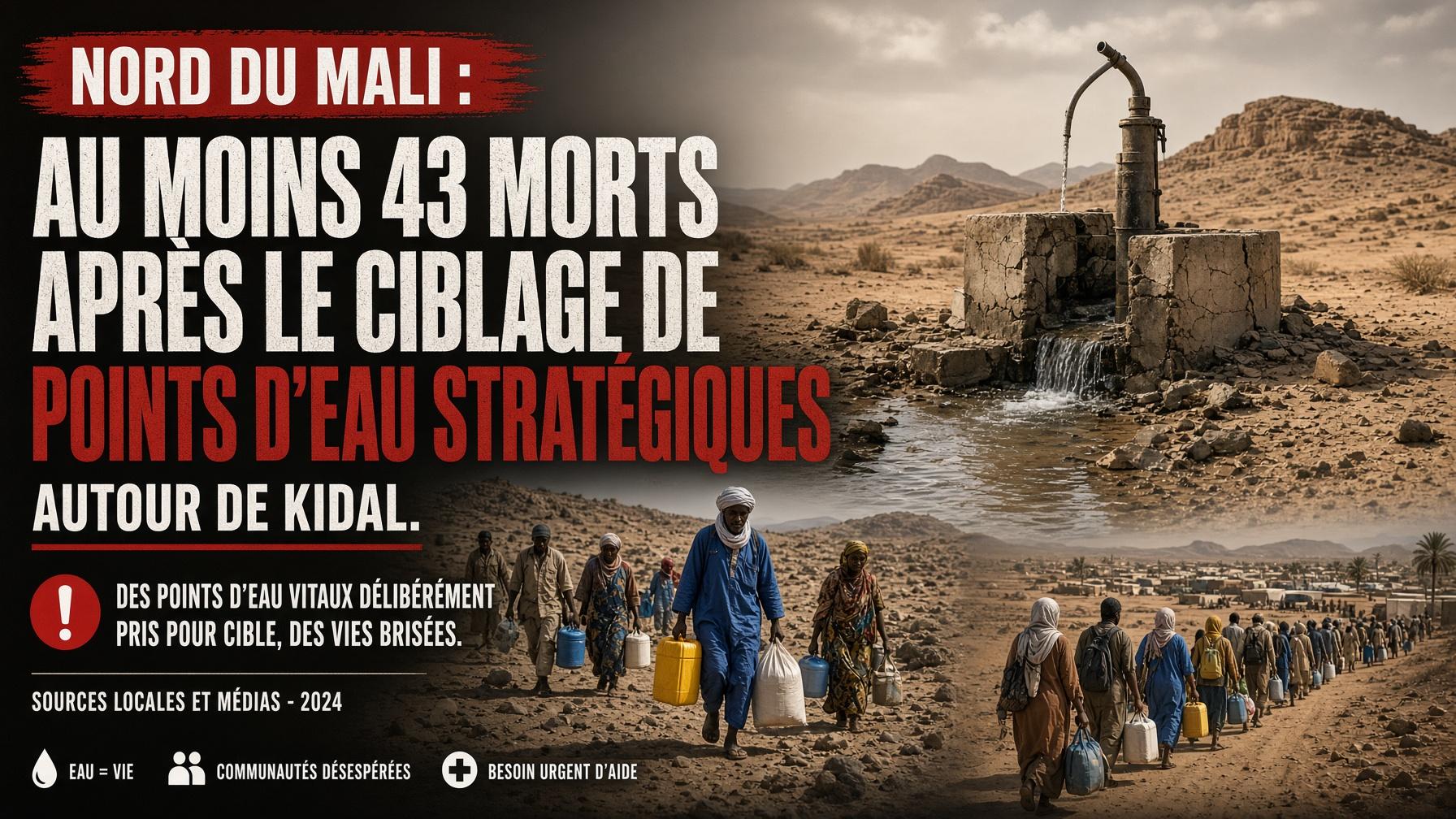
Mali’s north in crisis: how targeted water strikes left 43 dead and pastoral life in ruins
The hidden strategy behind Kidal’s wells: why water became a weapon of war
Between September 15 and 16, 2026, concentrated airstrikes and ground incursions by Malian forces—backed by foreign paramilitary units—slammed into vital water infrastructure across the Kidal region. These attacks weren’t random; they were deliberate blows aimed at the lifelines of a desert society, killing at least 43 civilians and plunging an entire pastoral territory into deep humanitarian distress.
The anatomy of two fatal strikes
The first salvo hit Amassine on September 15, 2026. A Su-24 bomber unleashed precision strikes on the village’s single communal well, the only source of clean water for nomadic herders whose livelihoods depend on seasonal grazing routes. Hours later, the violence escalated at Tassik, where military units—identified locally as Malian troops with support from Russian-aligned operatives—conducted a second round of targeted strikes on water points. By nightfall on September 16, the death toll stood at 43, with dozens more wounded who had been seeking water or tending livestock when the attacks occurred.
From Amassine to Kidal: the systematic erosion of survival infrastructure
The wells in Amassine and Tassik weren’t isolated targets. Over the months leading up to these strikes, a pattern had emerged: water systems across Kidal’s periphery were being methodically disabled. In the city center, public water and electricity networks had already been degraded by repeated military operations. Religious sites, including mosques, were also caught in the crossfire, underscoring a broader campaign to dismantle civilian infrastructure and deprive communities of any reliable support.
Why water is the new battlefield in Mali’s forgotten war
In the Sahel’s harsh climate, water isn’t just a resource—it’s survival. For pastoral families, access to functioning wells determines whether livestock lives or dies, and whether children eat or go hungry. By destroying these critical points, the strikes didn’t just kill civilians—they erased the very foundation of nomadic existence. A single well often services dozens of households and hundreds of animals. Once it’s gone, the ripple effects are immediate: thirst, starvation, and displacement.
The destruction of the Tassik and Amassine wells triggered a cascade of crises:
- Water scarcity: Tens of thousands faced immediate dehydration, with contaminated alternatives sparking outbreaks of waterborne illness.
- Livestock collapse: Within days, herds began dying from heat and thirst, wiping out years of investment and ancestral wealth.
- Economic meltdown: Local markets dependent on dairy and meat trade ground to a halt, pushing families into poverty.
- Forced migration: Nomadic parents made desperate decisions to abandon ancestral lands, flooding already strained urban centers.
A humanitarian disaster deferred by military strategy
With active frontlines still shifting, access to Kidal’s rural zones remains highly restricted. International aid groups report severe delays in delivering essential supplies—food, medicine, and clean water—due to ongoing security threats and destroyed road networks. The targeting of water infrastructure raises grave concerns under international humanitarian law, which specifically protects objects indispensable to civilian survival, such as water systems.
If the pattern continues, experts warn, Kidal could face a catastrophic double crisis: mass displacement and pastoral famine. Already, reports indicate that displaced families are settling in overcrowded transit camps, where sanitation is minimal and disease spreads quickly. Children are the most vulnerable. With livestock herds decimated, many parents can no longer afford school fees, trapping a generation in cycles of poverty and ignorance.
The long shadow of water as a weapon
These strikes expose a disturbing military calculus: the deliberate weaponization of water to break civilian morale and dismantle pastoral resilience. In a region where pastoralism is both culture and economy, erasing access to water isn’t just an attack on infrastructure—it’s an attempt to erase a way of life. Whether viewed as a tactic of attrition or a broader strategy of social control, the impact is clear: families who once thrived on the land now face extinction.
As diplomatic channels remain frozen and military operations intensify, one question looms over northern Mali: how much more of this silent war can the people endure before the wells run dry for good?
