Mali’s new presidential jet sparks debate amid security crisis
Controversial Acquisition Amid Persistent Security Challenges
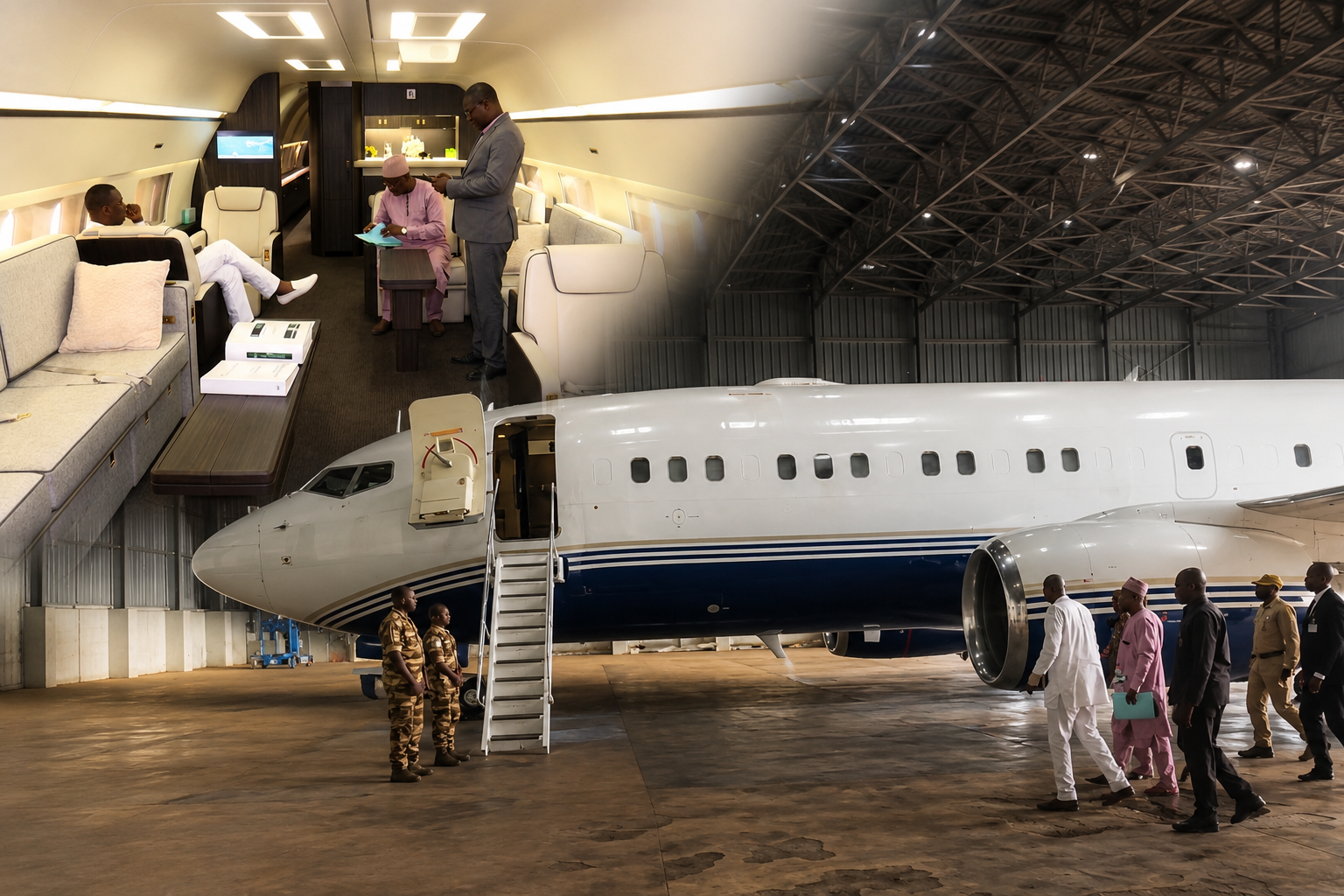
On Wednesday evening, viewers of ORTM witnessed the official unveiling of Mali’s new Boeing 737, destined for the travels of Colonel Assimi Goïta and other high-ranking officials. Authorities framed the purchase as a financially sound decision, asserting that while the gross cost reached 15.6 billion West African CFA francs, insurance compensations and the resale of parts from the previous aircraft would reduce the net expense to approximately 6 billion francs.
Timing Raises Questions About Government Priorities
The timing of the announcement has sparked widespread discussion. In a climate marked by deepening insecurity, economic hardships, and mounting public financial pressure, the introduction of a state-of-the-art presidential aircraft seems to highlight a disconnect between the government’s stated priorities and the urgent needs of the Malian people.
Despite repeated calls for national unity, resilience, and collective sacrifice, the presentation of this new aircraft has left many questioning whether the authorities are more focused on projecting prestige than addressing the pressing challenges facing the nation.
Ongoing Security Concerns Across the Country
Security conditions remain a critical issue. Military outposts continue to face frequent attacks, road ambushes are a persistent threat, and civilians continue to bear the brunt of violence in several regions. Access to numerous communities remains severely restricted, and the state’s administrative presence remains fragile in parts of the territory.
Three years after territorial restoration was declared a top priority, the Transition government continues to grapple with formidable security challenges.
Persistent Threats in Northern Mali
In the north, coalitions such as the Permanent Strategic Framework and the Azawad Liberation Front maintain significant operational capabilities, contesting control over key areas.
Growing Instability in Central and Southern Regions
The Group for the Support of Islam and Muslims (JNIM) continues to expand its influence, intensifying attacks on military forces, critical infrastructure, and state representatives. Dangerous roadways disrupt commerce, transportation, and economic activities, further straining an already fragile situation.
Budgetary Decisions Under Scrutiny
While officials argue that the aircraft acquisition was financially advantageous, critics contend that the allocated funds could have been better utilized elsewhere:
- Enhancing the operational readiness of the Malian Armed Forces;
- Acquiring armored vehicles, communication systems, and protective equipment;
- Improving intelligence and aerial surveillance capabilities;
- Supporting wounded soldiers and families of fallen servicemen;
- Assisting internally displaced persons and reconstructing damaged infrastructure.
Beyond the financial aspect, the decision challenges the government’s proclaimed commitment to frugality and national service.
Symbolism That Undermines Governance Narrative
Since assuming power, the Transition authorities have sought to distance themselves from past administrations by advocating for austerity, patriotism, and national interest. However, the procurement of a large-capacity presidential jet appears to contradict this narrative for many citizens.
The disparity is even more pronounced given the country’s economic struggles, including rising living costs, strained public finances, pressing social needs, and economic slowdowns.
Diplomatic Justifications vs. Public Expectations
Proponents argue that a modern presidential aircraft facilitates international diplomacy and official missions. Yet this reasoning fails to resonate with those who believe a nation’s credibility abroad is rooted in internal stability, citizen safety, and the proper functioning of its institutions.
For many Malians, true sovereignty is measured not by the quality of the presidential fleet but by the state’s ability to secure its territory and protect its people.
Political Interpretations Fuel Criticism
The acquisition has drawn sharp political reactions. Some interpret it as an indication that the government prioritizes its own mobility over that of the state apparatus. Others suggest that the long-range aircraft serves as both a prestige symbol and, potentially, an escape mechanism in the event of further deterioration in security conditions.
While no evidence supports the latter claim, it underscores the growing skepticism surrounding the authorities’ decision-making processes.
A Reflection on Governance During Transition
The introduction of the Boeing 737 transcends the mere purchase of an official aircraft. It reignites a broader debate about the Transition government’s strategic choices.
As security threats persist, attacks continue unabated, and economic hardships deepen, every expenditure perceived as non-essential is increasingly scrutinized.
For a significant portion of the population, genuine sovereignty lies not in the modernization of the presidential fleet but in the state’s capacity to safeguard its citizens, restore full territorial control, and improve living conditions. Until these goals are met, symbolic investments risk reinforcing perceptions of a widening gap between government priorities and public expectations.

