Mali’s hunger paradox: why poverty and food aid gaps are on a collision course by 2027
The hidden engine of Mali’s food crisis: how financing gaps reveal deeper system failures
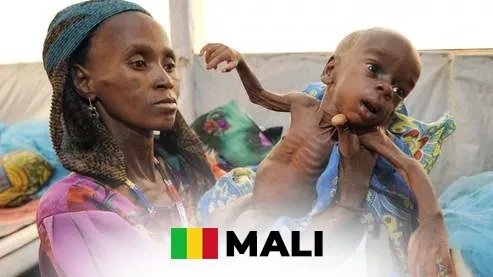
The looming $73.6 million funding shortfall in Mali’s humanitarian operations isn’t just a budgetary concern—it’s a window into how poverty, displacement, and climate shocks are colliding to intensify food insecurity. While global headlines focus on headline figures like 1.56 million people in acute food crisis or 9.7 million living below the poverty line, the real story lies in what these numbers obscure: a fragile system struggling to adapt to compounding pressures.
The dual burden of national and global poverty metrics
Mali’s poverty rate isn’t just rising—it’s stratifying. Official estimates from the World Bank place 45.5% of Malians (9.7 million people) below the national poverty threshold as of 2021, up from 42.1% in 2018. Yet this figure masks an even more alarming reality when viewed through the lens of international standards. Using the $3.65/day PPP threshold, 36.1% of Malians live in extreme poverty, highlighting how both national and global poverty lines frame a population trapped between subsistence and survival.
This dual lens is critical. The national poverty line reflects a local cost-of-living reality, while international thresholds expose the depth of deprivation. Neither metric captures the full scope of vulnerability—especially in rural regions where agriculture remains rain-dependent and climate variability acts as a silent multiplier of poverty.
The widening chasm between need and response
Humanitarian assistance isn’t just underfunded—it’s structurally insufficient. A June 2026 WFP assessment found 40% of households in need of aid, yet only 4% received any support in the prior three months. This 10-to-1 gap isn’t just a logistical failure; it’s a systemic one, rooted in access challenges, funding delays, and the sheer scale of displacement.
Consider the displaced populations: over 290,000 refugees and 400,000 internally displaced persons (IDPs) now reside in Mali. These groups face the highest barriers to stable livelihoods, yet their needs are often deprioritized in resource allocation. The result? A humanitarian system stretched thin, where resource scarcity directly translates to human suffering.
Regional hotspots: where vulnerability maps to geography
Not all regions in Mali are equally affected—but the disparities tell a story of localized collapse. The northern regions of Ménaka, Gao, and Tombouctou, along with central areas like Mopti and Ségou, bear the brunt of food insecurity. Here, armed conflict, disrupted markets, and environmental degradation create a perfect storm for household economies.
- Ménaka and Gao: chronic insecurity has displaced entire communities, eroding agricultural cycles and trade networks.
- Mopti: climate shocks and seasonal variability have turned transient food insecurity into chronic dependence on aid.
- Ségou: rural poverty intersects with high population density, amplifying pressure on already scarce resources.
These regional dynamics aren’t isolated—they’re interconnected. Displacement in the north fuels urban migration, increasing pressure on cities like Bamako, where poverty rates hover near the national average but with higher concentrations of vulnerability.
Population growth: the ticking time bomb
Mali’s population is projected to reach 25.2 million by 2025, growing at nearly 2.9% annually. This demographic momentum isn’t just a statistic—it’s a multiplier of existing crises. With fertility rates outpacing agricultural productivity and job creation, the burden on social systems intensifies. Rural areas, where 80% of the poor reside, face the highest exposure to climate-related shocks and limited infrastructure to absorb demographic pressure.
The interplay of rapid population growth and stagnant development creates a feedback loop: more mouths to feed, fewer resources to support them, and an aid system struggling to scale at the same pace. The $73.6 million gap in WFP funding isn’t just a financial metric—it’s a symptom of a system unable to keep up with demographic reality.
Beyond food aid: the structural roots of Mali’s hunger crisis
Food insecurity in Mali isn’t a temporary emergency—it’s a structural issue. The World Bank’s 2025 analysis underscores how rural poverty, tied to rain-fed agriculture, remains stubbornly high at 45%. Climate variability exacerbates this, turning seasonal hunger into year-round vulnerability. Meanwhile, urban poverty, though lower than rural rates, is rising due to rural-to-urban migration driven by conflict and economic hardship.
The result is a fractured economy where the poorest households oscillate between subsistence farming and precarious informal labor. When shocks like droughts or market disruptions occur, these households have no buffer—no savings, no alternative income, and limited access to credit or social protection. The WFP’s funding crisis isn’t just about feeding people today; it’s about preventing a deeper collapse tomorrow.
What happens if the funding gap isn’t closed?
The consequences of inaction are dire. A sustained reduction in humanitarian operations could trigger a cascade of crises:
- Rising food prices: decreased aid inflows would reduce market supply, pushing staple foods beyond the reach of millions.
- Increased displacement: without support, households in fragile regions may be forced to move, further straining urban centers.
- Collapse of local economies: smallholder farmers and traders dependent on humanitarian supply chains would face bankruptcy.
- Long-term human capital loss: children in food-insecure households are at higher risk of malnutrition, stunting development and perpetuating the cycle of poverty.
The $73.6 million isn’t a line item in a budget—it’s a lifeline. For 1.56 million people in acute food crisis, it’s the difference between survival and starvation. For 9.7 million living in poverty, it’s a buffer against further deprivation. And for a system already stretched thin, it’s the difference between resilience and collapse.
The path forward: can financing keep pace?
Closing this gap requires more than emergency appeals—it demands systemic change. Investment in climate-resilient agriculture, expanded social protection programs, and infrastructure development in rural areas are critical. But in the short term, the immediate priority is ensuring that humanitarian aid reaches those who need it most.
The numbers tell a clear story: Mali’s food crisis isn’t just about hunger—it’s about a society at risk of fracturing under the weight of unmet needs. The $73.6 million funding gap isn’t just a financial metric; it’s a warning. And if the world looks away, the consequences won’t just be measured in dollars—they’ll be measured in lives.
