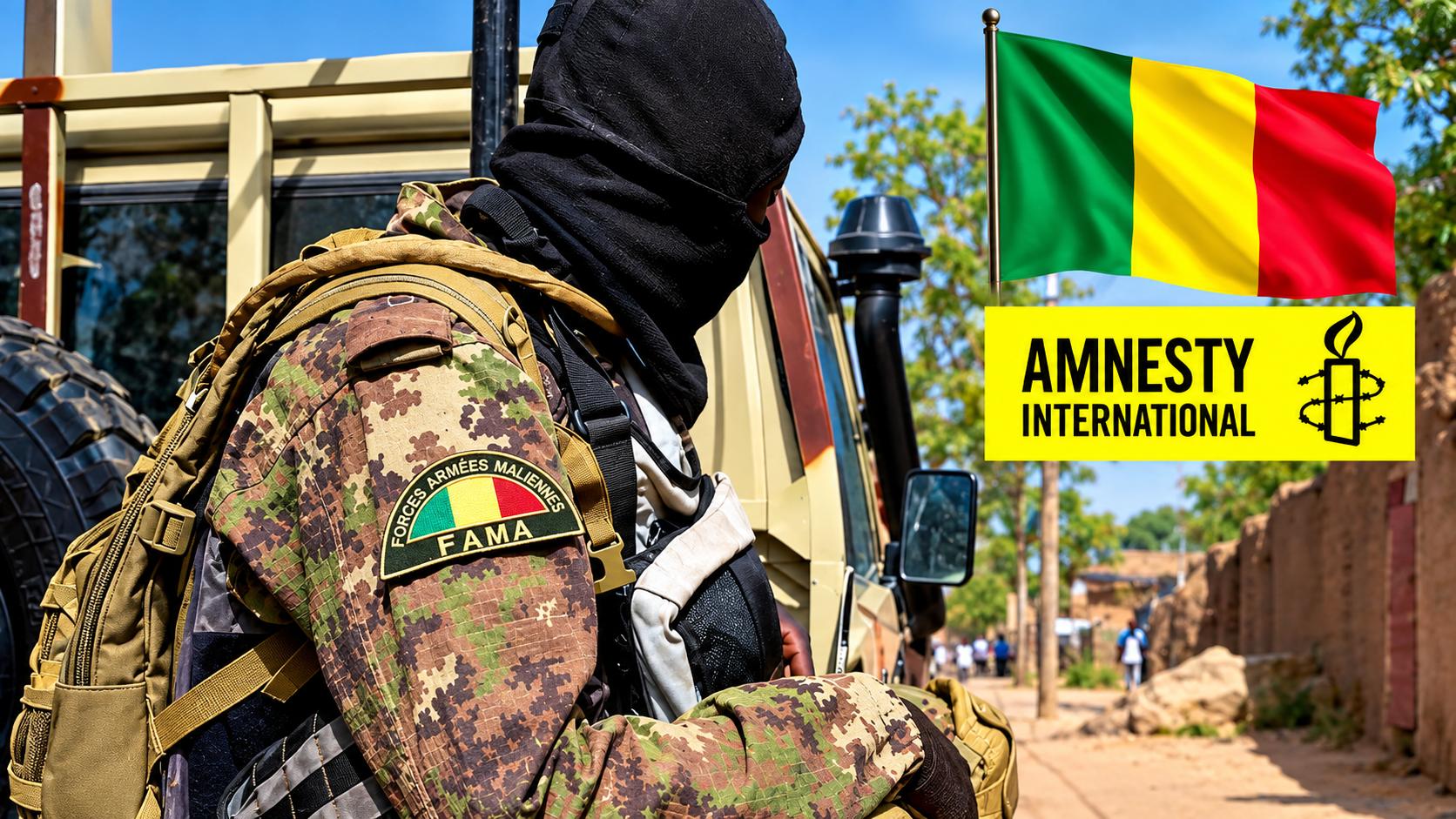
Mali’s hidden war: how military operations fuel civilian casualties and torture
Inside Mali’s forgotten frontlines: civilian victims caught in crossfire of war crimes
Deep in the heart of Mali’s central and northern regions, a shadow war has been raging for years—one where the distinction between combatants and civilians grows increasingly blurred. A landmark report released in late 2026 exposes the hidden toll of this conflict, revealing not only widespread civilian harm but also systemic violations that may amount to war crimes. The findings challenge the official narrative of military necessity and expose a disturbing pattern of abuse linked to joint operations involving Malian forces and foreign fighters.
34 Lives lost: the human cost behind military strikes
Between June 2023 and December 2025, at least 34 civilians were killed during seven documented operations across Ségou, Mopti, and Tombouctou—regions long ravaged by insurgent activity. The report details how civilians were targeted not only in crossfire but in deliberate attacks, including extrajudicial executions and reprisals. In one grim incident in February 2025, four people were reportedly killed during a joint patrol in Tin Adanda, a small village in Tombouctou.
The violence did not discriminate. Victims included farmers, traders, and pastoralists, many of whom belonged to communities such as the Fulani, Arab, and Tuareg, who have long faced suspicion of affiliation with armed groups due to their presence in rebel-held areas. The report warns that such collective targeting risks normalizing civilian reprisals—where entire communities pay the price for the actions of a few.
Drones, markets, and deadly miscalculations
Two drone strikes carried out by Malian forces in 2025 have become symbolic of what Amnesty International describes as reckless military tactics. One such strike hit the busy market of Ejdeir in March 2025, killing at least 16 people—including five children—and injuring seven others. Authorities claimed the strike targeted a terrorist meeting, but the report found no evidence of military presence at the time. The lack of a confirmed military objective raises serious concerns about the attack’s legality under international humanitarian law.
These incidents underscore a growing concern: the use of aerial strikes in populated areas, where distinguishing between combatants and civilians is nearly impossible. The report questions whether these operations were conducted with the necessary precautions to protect non-combatants—a fundamental requirement under the laws of war.
Bases of brutality: torture behind closed doors
Beyond the battlefield, another layer of violence unfolds in silence. Amnesty International documented 15 cases of torture and ill-treatment against detainees held in military bases in Léré and Nampala. Survivors reported harrowing methods: suspension by the arms, waterboarding, electric shocks, and beatings with metal rods and sticks. Five individuals are believed to have died as a result of these abuses or the appalling detention conditions.
The report implicates members of the Wagner Group—now replaced by the Africa Corps under Russian military command—in these atrocities. Though Malian soldiers were occasionally present during interrogations, the majority of abuses were reportedly carried out by foreign fighters. Detainees were held for weeks or even months without access to legal counsel, family visits, or medical care, violating both international law and basic human dignity.
From Wagner to Africa Corps: a shift in tactics, not accountability
June 2025 marked a formal change in Russia’s military footprint in Mali, as Wagner transitioned into the Africa Corps under the Russian Ministry of Defense. While this shift may represent a rebranding effort, Amnesty warns that it does not absolve Russian forces—or their Malian counterparts—of responsibility for past and ongoing crimes. The organization urges Bamako to clarify its legal and operational ties with the Africa Corps and ensure transparent oversight to prevent further violations.
This transition occurs amid Mali’s broader pivot toward closer military ties with Russia and away from Western partners—a strategy framed as essential to combating insurgent groups. Yet the report finds that this realignment has not translated into better protection for civilians, raising questions about whether military efficiency is being prioritized over human rights.
A conflict with many faces: the role of armed groups
While the report focuses heavily on state forces, it does not absolve armed groups of responsibility. Over the years, factions across the Sahel have been accused of grave violations, including unlawful killings, abductions, and destruction of civilian property. The presence of multiple armed actors—each with its own agenda—further complicates the security landscape, leaving civilians trapped between competing forces with little recourse for justice.
In this fragmented environment, communities face a daily dilemma: where to seek refuge when nowhere is truly safe. More than 2,000 schools remain closed across Mali due to insecurity, denying hundreds of thousands of children their right to education. The humanitarian toll is not just measured in lives lost but in futures stolen.
The justice gap: can Mali break the cycle of impunity?
The report arrives at a pivotal moment, as Mali’s government faces mounting pressure to address allegations of war crimes. Amnesty International submitted its findings to Malian authorities in August 2026 but has yet to receive a response. The organization calls for prompt, impartial investigations into all allegations and the prosecution of perpetrators in fair judicial proceedings.
Yet justice is further complicated by Mali’s withdrawal from the Rome Statute in June 2026, a move that excludes the country from the jurisdiction of the International Criminal Court (ICC). While the ICC retains legal authority over crimes committed during the period it covered, the withdrawal sends a troubling signal about the government’s commitment to accountability. With no independent oversight from international bodies, the burden of investigation now falls squarely on domestic institutions—a prospect that raises concerns about impartiality and effectiveness.
For the families of Ségou, Mopti, and Tombouctou, the fight for justice is not abstract. It is a race against time—one that demands answers, reparations, and the restoration of dignity. As long as violations continue unchecked and perpetrators remain unpunished, the cycle of violence will persist, and the civilian toll will keep rising.
A call to action: protecting civilians in a war without rules
The report does not challenge the legitimacy of Mali’s military operations against insurgent groups. However, it serves as a stark reminder that no government is exempt from the rules of war. International humanitarian law demands that all parties—state and non-state—distinguish between combatants and civilians, refrain from indiscriminate attacks, and treat detainees humanely.
In a conflict where the lines between friend and foe are deliberately blurred, the burden of protection falls on those in power. For Mali’s civilians, the question is no longer just about survival—but about whether justice will ever catch up to the crimes committed in their name.
