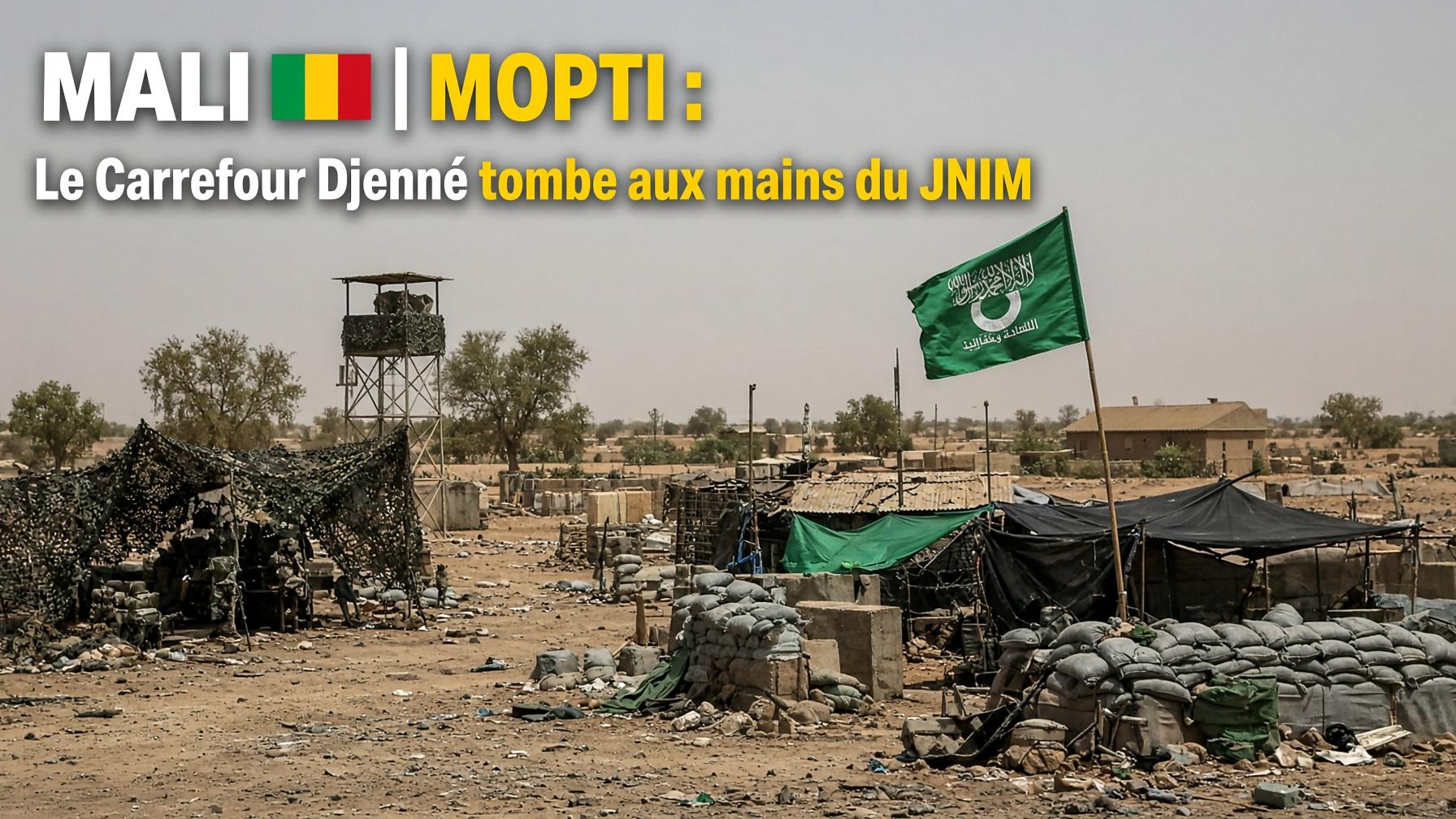
Mali’s fuel blockade fuels Djenné’s collapse: the hidden logistics war in central Africa
Inside the fall of Djenné: how a single strategic post collapsed under fuel scarcity
The heart of central Mali has once again become a battleground. On the afternoon of September 24th, insurgents from the Jama’at Nusrat al-Muslimin (JNIM)—an Al-Qaeda-affiliated group—launched a devastating assault on the crucial crossroads of Djenné along the RN6 highway, severing the lifeline connecting northern and southern Mali. Within minutes, the military outpost fell, revealing the crippling effects of a calculated fuel blockade that has paralyzed regional forces.
The speed and precision of the attack stunned local observers. Eyewitnesses describe a coordinated assault, with insurgents surrounding the base before unleashing a relentless barrage of gunfire and explosives. “The attack was overwhelming,” said a resident who requested anonymity. “Gunfire came from all sides. Our army couldn’t hold the line for long.”
Minutes after the fall, JNIM fighters paraded through the smoldering base, showcasing their captured arsenal—tactical vehicles, heavy weaponry, and ammunition—on social media platforms. The message was clear: the Malian military’s grip on the region was slipping.
The invisible siege: how fuel shortages turned into a weapon of war
The collapse of Djenné isn’t just a tactical defeat—it’s the latest symptom of a broader logistical crisis gripping central Mali. For months, the JNIM has systematically choked off fuel supplies flowing into the Mopti region, intercepting tanker convoys on key trade routes linking Mali to neighboring countries. What began as an economic stranglehold has evolved into a full-scale blockade, starving the Malian Armed Forces (FAMa) of the mobility and firepower critical to their operations.
Without fuel, Mali’s military is hamstrung. Reconnaissance patrols are canceled. Armored units remain grounded in bases. Aerial support is delayed or canceled outright. “Every operation now comes with a fuel constraint,” said a regional security analyst. “The army’s ability to respond, reinforce, or even hold territory is evaporating.”
Russia’s Africa Corps demands emergency fuel deliveries as Mali’s reserves dwindle
The crisis has sparked friction within Mali’s military alliance. According to regional military sources, the Russian paramilitary contingent known as the Africa Corps has urgently requested increased fuel allocations from Bamako’s transitional government. Without a steady supply of gasoline and aviation fuel, their ability to execute counteroffensives or secure forward operating posts is increasingly compromised.
But meeting this demand is easier said than done. National fuel reserves have plummeted due to the blockade, forcing authorities to ration supplies and prioritize critical missions. Even with emergency shipments, ensuring safe passage through insurgent-controlled roads remains a monumental challenge. “We cannot sustain this pace,” admitted a Malian logistics officer. “Every convoy is a potential ambush.”
Djenné’s fall reveals a dangerous shift in Mali’s war strategy
The seizure of Djenné marks a turning point in the conflict. The JNIM’s strategy is no longer just about territory—it’s about attrition. By severing fuel supply lines, the insurgents are systematically eroding the Malian military’s operational capacity, turning mobility into a luxury and isolated outposts into easy targets. The fall of Djenné, a once-vital artery in the country’s transport network, underscores a harsh truth: central Mali is being pushed toward collapse.
With the region’s economy and military logistics teetering on the edge, the transitional government faces a grim choice: break the fuel blockade or risk losing control of the heartland entirely. As insurgent forces celebrate their latest victory, the Malian state stands at a crossroads—one where fuel isn’t just a commodity, but the key to survival in a war of attrition.
