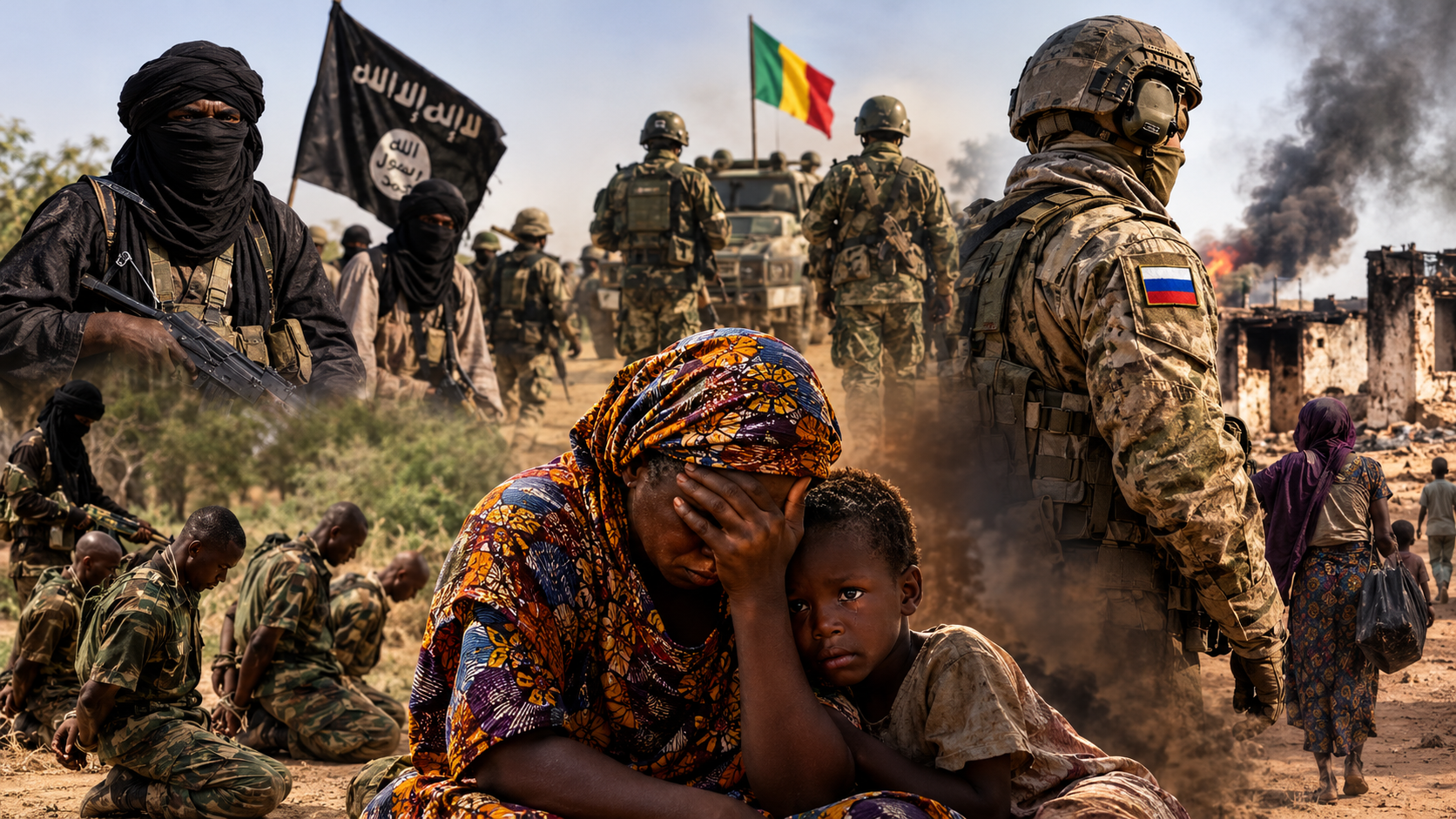
Mali’s brutal cycle: soldiers fall to jihadists as civilians bear army backlash
New evidence reveals a grim paradox in Mali’s escalating conflict: while government forces come under deadly strikes from the Group for the Support of Islam and Muslims (JNIM), civilians are increasingly caught in the crossfire of alleged army abuses. Reports highlight a disturbing trend where military operations backed by Africa Corps are linked to civilian casualties, deepening a crisis that threatens to destabilize communities already reeling from years of unrest.
Attacks on soldiers escalate as civilian toll rises
JNIM’s recent offensives have left a trail of fallen soldiers, underscoring the persistent threat facing Mali’s armed forces. Yet, the same operations appear to be accompanied by a disturbing pattern of civilian harm, according to newly documented cases. Civilians, already trapped between jihadist violence and military crackdowns, are facing arbitrary detentions, forced displacements, and deadly clashes often under the guise of counterterrorism.
The surge in both soldier casualties and civilian suffering raises urgent questions about the effectiveness of Mali’s security strategy. Despite the deployment of Africa Corps in support of Bamako’s forces, the civilian death toll continues to climb, exposing a critical failure to protect the very people these operations claim to defend.
Foreign-backed operations: accountability in question
The integration of Africa Corps into Mali’s military operations has amplified scrutiny over accountability. The alliance with Russian-backed personnel, framed as a strategic necessity by Malian authorities, has become a focal point amid allegations of human rights violations. Investigations into suspected abuses ranging from indiscriminate shelling to extrajudicial killings highlight the need for independent oversight and transparent investigations.
While the fight against JNIM remains a legitimate security concern, the line between effective counterterrorism and state-sponsored violence is blurring. The international legal obligations of Mali’s forces, reinforced by their foreign partners, demand rigorous scrutiny to ensure that no party operates above the law. Failing this, the legitimacy of both domestic and foreign military engagement risks irreversible damage.
Can Mali break the cycle of violence?
The double burden on civilians targeted by jihadists and harmed by state forces demands a rethinking of Mali’s security approach. Military victories alone cannot justify civilian suffering; instead, a sustainable solution must prioritize human rights and civilian protection. This includes:
Independent investigations: Credible inquiries into all allegations of abuse, with findings made public to restore public trust.
Community engagement: Collaborating with local leaders to identify civilian risks and prevent unintended harm during operations.
Clear accountability: Prosecuting perpetrators of violence, regardless of affiliation, to send a message that no one is above the law.
The cost of inaction is already evident. Without decisive reforms, Mali’s security strategy risks becoming a self-perpetuating cycle of violence one where the very institutions tasked with protection become part of the problem. For a nation already scarred by conflict, the path forward must prioritize the lives and dignity of its people above all else.
Beyond military gains: the true measure of success
Mali’s fight against jihadist groups cannot succeed if it sacrifices civilian lives in the process. The international community, including Africa Corps and other partners, must hold Mali’s forces to the highest standards of conduct. True security is measured not by the number of operations conducted or territories regained, but by the safety and trust of the communities they serve.
Until the cycle of violence is broken, Mali’s civilians will continue to pay the price caught between ruthless militants and a state that, too often, fails to protect them.
By Maimouna Kaboré — Journalist
