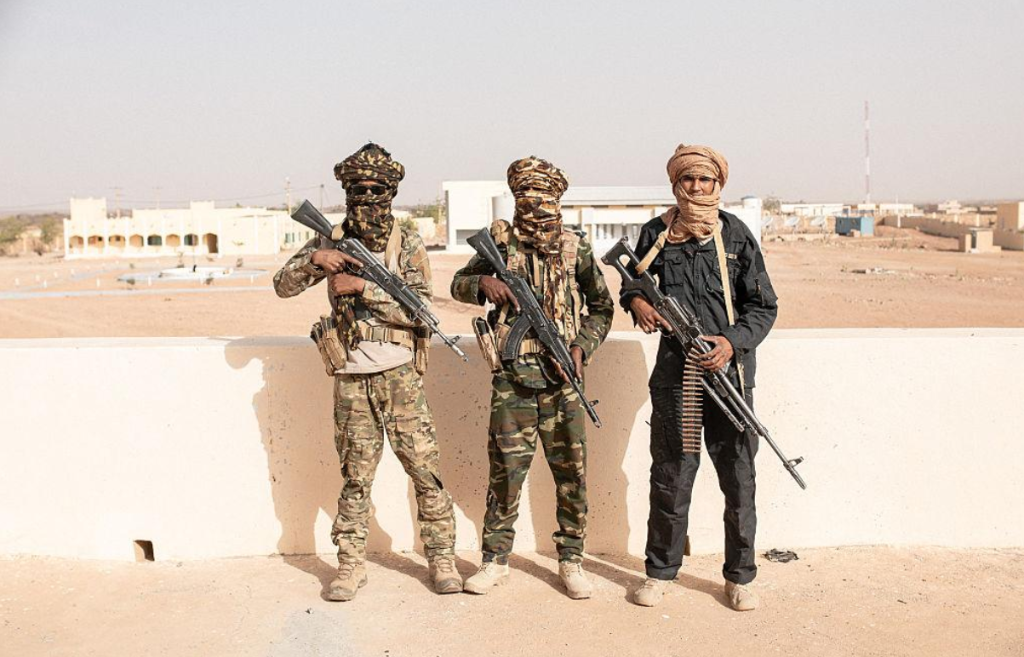
Mali’s Azawad rebels test new alliances with Libya and UAE after strategic retreat in Kidal
The Front de Libération de l’Azawad (FLA), Mali’s embattled separatist movement, is pivoting toward unconventional alliances in a bid to survive recent military setbacks. Following the fall of Kidal—a longstanding stronghold—on October 6, 2026, the group has initiated direct outreach to eastern Libya, under the control of Marshal Khalifa Haftar, and the United Arab Emirates (UAE) to secure financial and military support.
Kidal’s fall triggers a desperate search for new allies
The loss of Kidal marked a decisive shift in the Sahel’s insurgency landscape. Rather than risking a direct confrontation, the FLA withdrew from the city, framing its retreat as a strategic move to preserve forces and equipment. However, the move left the group without its most critical logistical hub, forcing a scramble for alternative supply routes and external backing. The urgency of this shift is underscored by the collapse of the 2015 Algiers Peace Accord, which Mali’s transitional government has since abandoned, eliminating a key pillar of the rebels’ political leverage.
Libya emerges as a key node in the FLA’s survival strategy
The proximity of eastern Libya, coupled with the porous borders of the Sahara, makes it a prime candidate for logistical and operational support. A high-level FLA delegation traveled to Benghazi, where they engaged with key figures in Haftar’s security apparatus, including his son, Saddam Haftar. While concrete arms transfers remain unconfirmed, the outreach signals a clear intent to forge a new axis of resistance, bypassing Mali’s tightening military encirclement.
UAE’s shadow diplomacy stirs regional tensions
The FLA’s diplomatic overtures to Ab Dhabi reflect a broader strategic calculus. The UAE has steadily expanded its influence across Africa, leveraging financial networks and security partnerships from the Horn of Africa to the Sahel. However, this potential alliance with Malian separatists risks destabilizing relations with Algeria, which shares over 1,000 kilometers of border with Mali. Algeria views the prospect of Emirati involvement near its southern flank as a direct threat to its national security, particularly amid deteriorating diplomatic ties between Algiers and Abu Dhabi over regional disputes.
Algeria responds with a renewed Sahelian outreach
Facing the specter of external interference on its southern borders, Algeria has launched a major diplomatic counteroffensive. The country is deepening its collaboration with Mali and Niger, focusing on border security, counter-trafficking operations, and economic cooperation. By reinvigorating bilateral ties with Bamako and Niamey, Algeria aims to create a stable corridor that thwarts the ambitions of rival actors seeking to exploit regional fragilities. For both Mali and Niger, this renewed partnership offers a pragmatic path to securing their territories against destabilization efforts.
Sahel’s shifting geopolitics hinge on fragile alliances
The FLA’s gamble on Libya and the UAE underscores a broader crisis of legitimacy for Mali’s separatist movements. Without Kidal or the Algiers Accord, the rebels are increasingly reliant on external patronage to sustain their operations. Meanwhile, Algeria’s assertive regional diplomacy seeks to reassert its role as the Sahel’s dominant stabilizing force, countering the encroachment of rival powers. The trajectory of this high-stakes geopolitical chessboard will depend on whether regional states can sustain their alliances—or whether the Sahara’s vast desert networks become a conduit for the next phase of conflict.
