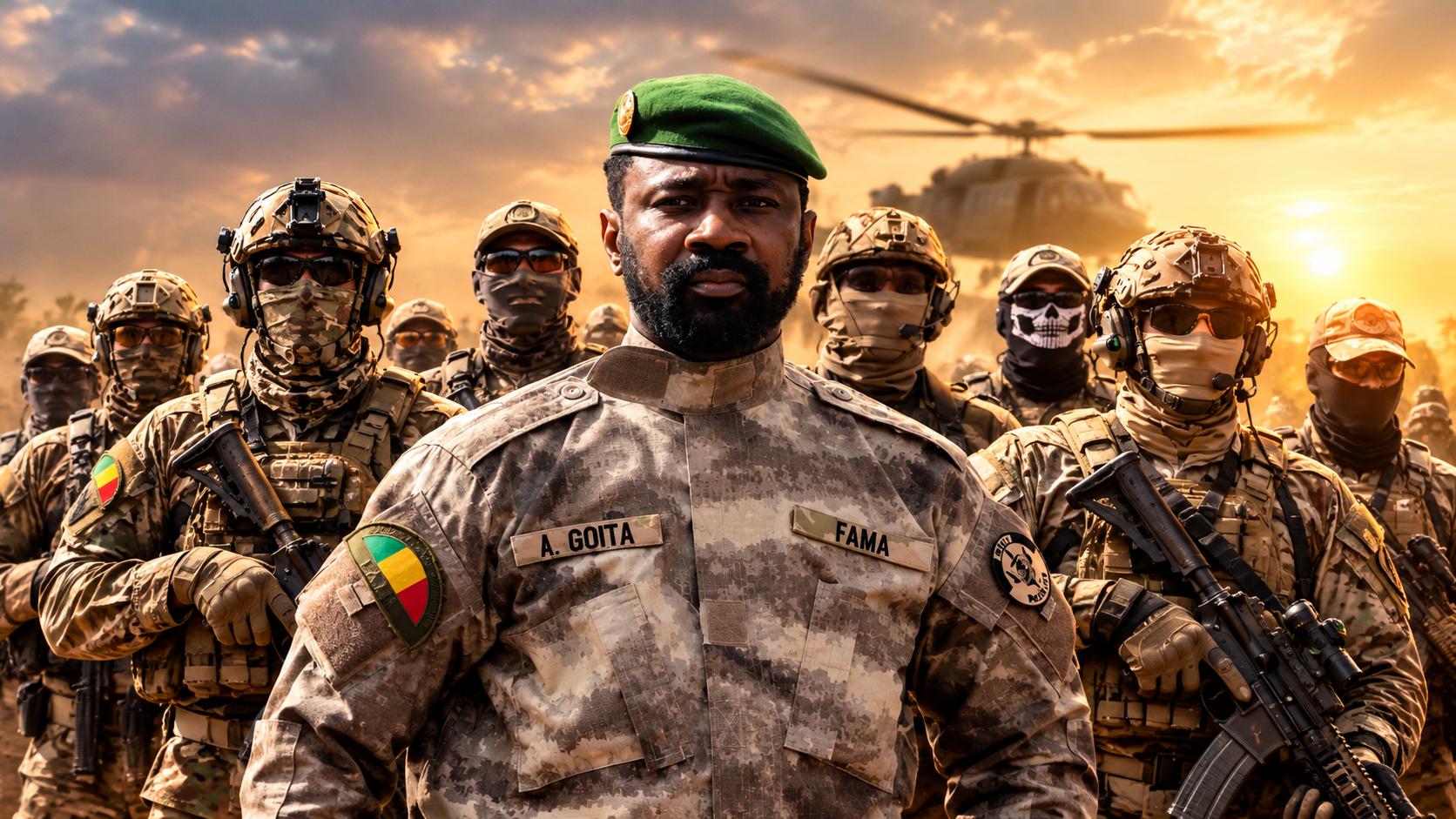
Mali’s Africa Corps: Why 358 Russian deaths in three years expose a flawed security model
The deployment of Africa Corps in Mali, Moscow’s latest military rebranding effort, has reached a grim milestone that challenges the narrative of rapid territorial recovery promised by local and Russian authorities alike. Independent conflict trackers and security analysts now estimate that at least 358 Russian fighters have been killed in Mali since late 2021, a figure that dwarfs losses incurred during France’s decade-long Sahel operations.
This staggering human toll is not merely a numerical record—it reflects a deeper strategic misalignment. When contrasted with the French military’s 59 fatalities over nearly ten years across multiple Sahel countries, the data reveals a stark disparity in operational approaches and battlefield realities. Africa Corps, now operating under a new label but with well-documented tactics, has absorbed losses at an unprecedented rate while failing to deliver the promised security gains.
From Tinzawatène to Sévaré: The turning points in a losing strategy
While the ambush at Tinzawatène in July 2024, which claimed over 80 Russian lives alongside Malian soldiers, served as an early warning, the subsequent coordinated assaults on Sévaré and Dioura have exposed systemic vulnerabilities within the joint FAMA–Africa Corps defensive network. These attacks were not isolated incidents but part of a sustained campaign by armed groups leveraging intimate terrain knowledge and modern tactical tools—drones for reconnaissance and precision strikes—overwhelming Russian-positioned forces.
The failure at Sévaré, a critical logistical hub in central Mali, and the repeated strikes on Dioura’s forward outposts underscore a fundamental flaw: Africa Corps operatives, unlike their Western counterparts, are frequently deployed in high-risk ground operations involving area clearance in heavily mined zones. This approach, which prioritizes direct confrontation over avoidance or high-altitude support, has resulted in an attrition rate that the Sahel has never witnessed before.
The attrition gap: Africa Corps versus Western operations
To quantify the discrepancy:
- Operation Serval / Barkhane (2013–2022): ~59 French soldiers killed across the wider Sahel region over 9.5 years.
- Africa Corps / Wagner (2021–2024): At least 358 Russian combatants killed in Mali alone within just three years.
This over-sixfold increase in casualties highlights divergent military philosophies. Western forces relied on air superiority, advanced electronic intelligence, and avoidance of direct engagement in hostile environments. In contrast, Africa Corps operatives, often operating as irregular forces with limited air support, are thrust into immediate combat, often in terrain saturated with improvised explosive devices (IEDs) and ambush-prone routes.
Political and financial fallout: Can Bamako and Moscow sustain the cost?
The human losses have been compounded by a financial burden reaching hundreds of billions of West African CFA francs. This combination of spiraling deaths and escalating operational costs is putting immense pressure on both the Malian transitional authorities and the Kremlin. What began as a security partnership touted as a swift path to stability now risks becoming a quagmire—one that challenges the very legitimacy of the junta’s reliance on foreign military support.
Within Malian barracks and civilian circles, skepticism is growing. The promise of a rapid and decisive recovery has given way to a brutal war of attrition, where every major assault reveals the limits of Africa Corps’ capabilities. The public discourse, once dominated by narratives of imminent territorial control, now grapples with the reality of a conflict that appears increasingly unwinnable on current terms.
The hidden cost: What 358 deaths reveal about Russia’s Sahel playbook
The high casualty count is not just a battlefield statistic—it is a symptom of deeper operational and strategic flaws embedded in Africa Corps’ model. Unlike conventional armies, these units operate with minimal overhead, blended seamlessly into local forces but lacking the logistical and intelligence infrastructure that could mitigate risks. Their reliance on secrecy, rapid deployment, and close-quarters combat leaves them exposed to asymmetric threats that Western forces have historically sought to avoid.
Moreover, the fusion of private military contractors with state objectives creates a blurred accountability chain. When losses mount, the Kremlin can distance itself rhetorically, while Moscow still reaps geopolitical leverage. Yet the bloodshed in Mali is increasingly perceived as a liability rather than an asset—both in African capitals and on the global stage.
As the death toll continues to climb, it raises a critical question: Is Africa Corps a viable security solution, or is it a high-risk gamble that threatens to destabilize Mali further—and in doing so, undermine the very alliance it was meant to strengthen?
