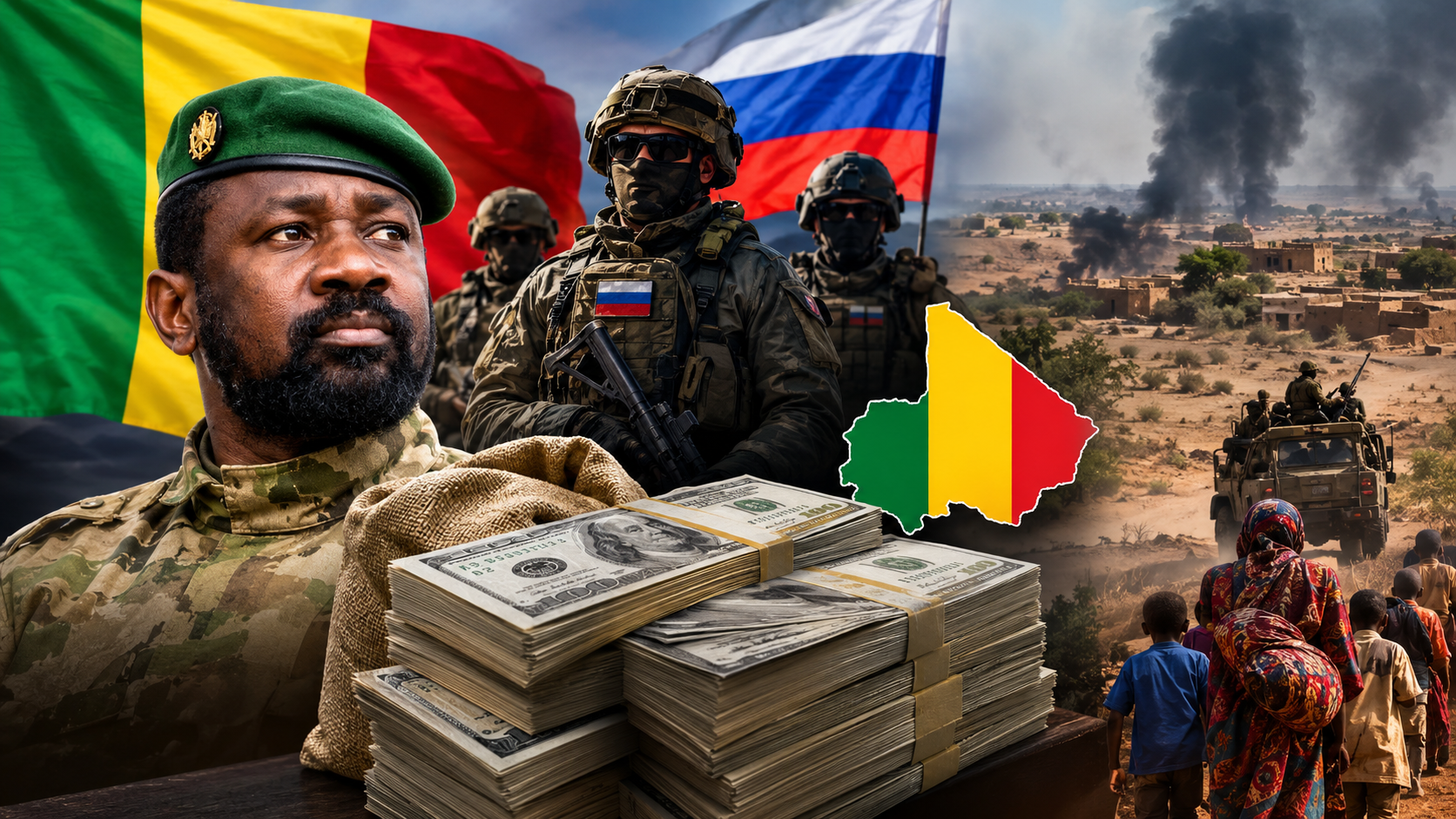
Mali’s $1 billion Russian military deal: assessing tangible security gains
The Malian government has allocated nearly one billion dollars to fund its partnership with Russian paramilitary forces, including first Wagner Group fighters and now Africa Corps units. With each contractor reportedly costing approximately $10,000 per month, this financial commitment has raised pressing questions about measurable security outcomes.
Since severing ties with former Western allies, Bamako has positioned its Russian military cooperation as a cornerstone of its self-proclaimed sovereignty-driven security strategy. The transition leadership pledged that Moscow’s involvement would restore state authority over the entire national territory by strengthening the Malian Armed Forces. Yet the true test of any security policy lies not in diplomatic reorientation but in verifiable results: reduced civilian casualties, secure transportation routes, stable governance in contested areas, and sustainable restoration of public services.
From Wagner to Africa Corps: structural rebranding without clear outcomes
The recent transition from Wagner Group to Africa Corps represents a formal restructuration of Russia’s Africa operations, but nomenclature alone cannot translate into improved battlefield performance or enhanced protection for Malian communities.
Key performance indicators must include:
- Effective coordination between Russian contractors and Malian security units
- Actionable intelligence sharing mechanisms
- Sustainable security in previously contested towns and villages
- Reduction in armed group attacks against civilians and infrastructure
- Safe return of displaced populations to their homes
Without these concrete developments, the reorganization risks appearing cosmetic rather than substantive.
Financial outlay versus public benefit: evaluating opportunity cost
The $1 billion figure extends beyond mere military expenditure. These funds could alternatively have strengthened health systems, repaired critical infrastructure, revived local economies, or improved educational facilities in regions devastated by prolonged conflict.
While no security partnership guarantees immediate victory against entrenched jihadist networks, the exceptional scale of this investment obliges the transitional authorities to demonstrate measurable improvements in public safety. Continuing attacks on military outposts, ongoing civilian displacements, and persistent jihadist control over key corridors all suggest that financial scale has not yet translated into strategic security gains.
Sovereignty through transparency: accountability in military partnerships
Choosing military partners constitutes a sovereign decision, but sovereignty also demands transparent reporting on costs, objectives, and outcomes. Malian citizens are entitled to full disclosure regarding:
- Total expenditures actually disbursed to Russian forces
- Specific mission parameters and operational constraints
- Quantifiable security improvements achieved since deployment
- Legal and financial safeguards protecting civilian populations
Without this transparency, the strategic pivot toward Russia risks becoming another opaque expenditure rather than a legitimate security solution.
The ultimate benchmark: daily safety for Malian citizens
Regardless of diplomatic narratives, the daily reality for Malians living under threat remains the most reliable indicator of policy success. Farmers attempting to till fields, traders transporting goods, families returning to liberated communities, and children attending reopened schools all deserve protection that lasts beyond headlines and press releases.
For this partnership to justify its cost, it must produce tangible results visible in reduced violence, restored state presence, and sustainable return of displaced populations. The central challenge facing Bamako is not merely counting expenses but proving those expenses have saved lives and secured territory.
A billion-dollar question demanding answers
One billion dollars represents a staggering commitment. The critical question is not how much was spent, but what security dividend Malians have received in return. Have armed group attacks declined? Have critical roads become safer? Have communities seen permanent improvements in governance and basic services?
Until such questions can be answered with verifiable evidence, the Russian military partnership in Mali remains a strategic gamble rather than a demonstrated solution. Strong leadership would acknowledge this uncertainty and commit to producing the concrete results that justify such extraordinary public investment.
The path forward requires rigorous documentation of payments, personnel numbers, operational achievements, and before-and-after security metrics. Only then can Malians and the international community fairly assess whether this billion-dollar strategy has delivered real protection or merely redistributed influence at great public expense.
