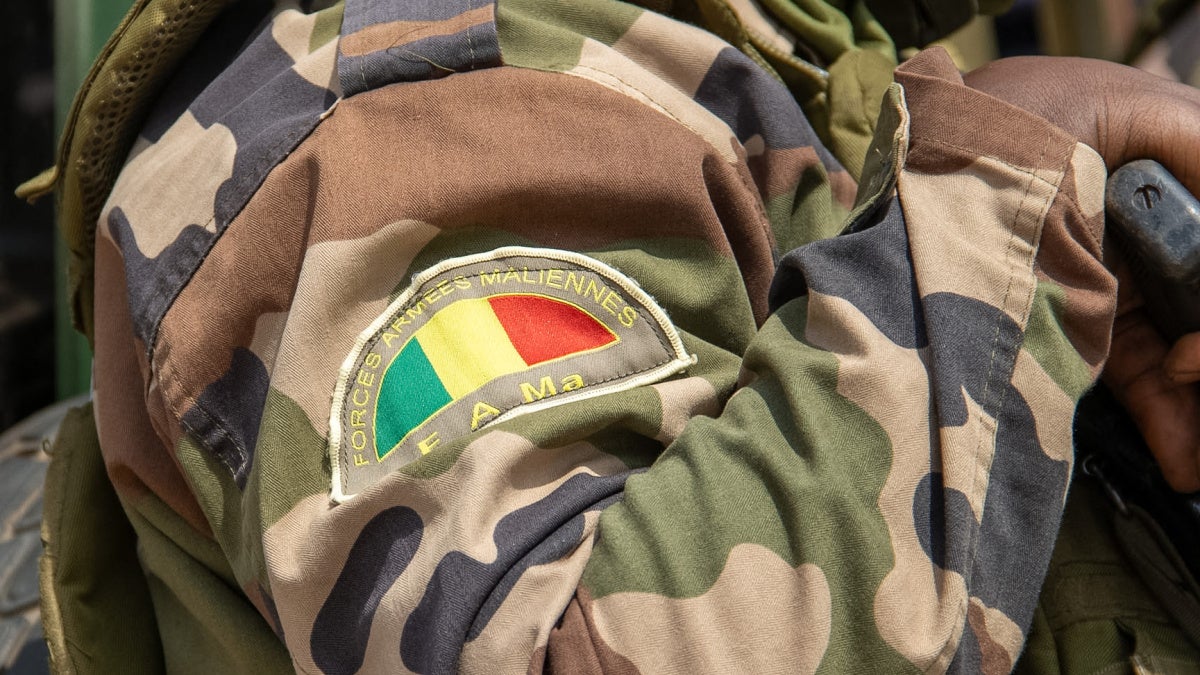
Mali army and allied militias slaughter civilians in central region
Deadly October raids leave 31 civilians dead in Ségou villages
In a grim escalation of violence, the Malian Armed Forces (FAMA) and allied militias carried out coordinated attacks on two villages in the Ségou region on October 2 and 13, resulting in at least 31 civilian deaths and widespread destruction. The raids targeted Kamona and Balle, areas under the control of the Group for the Support of Islam and Muslims (GSIM), an Al-Qaeda-affiliated jihadist group.
Execution-style killings in Kamona
On October 2, soldiers in camouflage uniforms and Dozo militiamen—traditionally clad hunters from the Bambara ethnic group—arrived in Kamona around 10 a.m. in seven pickup trucks, three armored vehicles, and multiple motorcycles. Witnesses reported that the GSIM had warned villagers of the approaching forces, prompting many to flee. Those who remained were rounded up and executed in what survivors described as a “massacre.”
By evening, 17 bodies were discovered under a tree, with four more found north of the village. Survivors recounted horrific details: some victims had been shot multiple times, while others showed signs of severe head trauma. “The bodies were riddled with bullets,” said a 40-year-old herder who hid with his 9-year-old daughter. “One man’s skull was completely shattered.”
Villagers provided a list of 21 victims, all men aged 20 to 65. They suspect additional deaths occurred outside the village, with reports of at least 15 more men killed in the bush that day. The soldiers torched at least 10 huts and three storage huts belonging to Fulani residents, further deepening the humanitarian toll.
Balle village massacre: 10 more civilians killed
A week later, on October 13, the same pattern of violence unfolded in Balle. Soldiers in five pickup trucks and Dozo militiamen on 30 motorcycles stormed the village around 1 p.m. Some residents fled, but others were subjected to brutal door-to-door searches. A 24-year-old man recounted witnessing soldiers assaulting villagers before gunfire erupted.
By the time the attackers left, 10 bodies lay strewn across the village—nine men aged 22 to 67 and a 55-year-old woman. The militiamen also looted over 100 cattle. A 33-year-old survivor described the aftermath: “The bodies were piled together, perforated with bullets. Some had broken limbs.”
The woman’s 21-year-old daughter tearfully recalled her mother’s final moments: “She confronted the soldiers, accusing them of mistreating the villagers. They dragged her to where the men were gathered and shot her.”
Military claims disputed by witnesses
The Malian military’s official narrative clashes sharply with survivor accounts. In an October 14 statement, the Chief of Staff claimed a “successful offensive” near Balle had “neutralized around twenty terrorists” and seized weapons. However, residents insist Balle has been under GSIM control for years, paying Islamic taxes (zakat) to the group, with no state presence in the area.
“The army makes no distinction between us and them,” said a local man. “If there’s a dispute, the jihadists settle it. There are no soldiers, police, or gendarmes here.”
Human rights experts demand accountability
International observers have long documented abuses by both state forces and armed groups in Mali. Since 2012, over 402,000 people have been displaced due to the conflict, which has claimed thousands of civilian lives. The October massacres are the latest in a string of atrocities linked to the GSIM’s recent offensive on Bamako, which began in early September and cut off fuel supplies to the capital.
“The October killings in Ségou are only the latest atrocities attributed to the Malian army and its allied militias,” said a senior Sahel researcher. “Authorities must conduct credible, impartial investigations and hold perpetrators accountable through fair trials.”
Legal framework and international response
Under international humanitarian law, all parties to the conflict—including the Malian Armed Forces and GSIM—are prohibited from targeting civilians, executing detainees, or committing cruel treatment. While Mali withdrew from the International Criminal Court (ICC) in September, it remains bound by the Rome Statute until September 2026. The ICC opened an investigation into alleged war crimes in Mali in 2013.
The African Union (AU) has faced criticism for its limited action amid the worsening crisis. The AU’s Peace and Security Council has issued statements expressing concern but has not taken substantial steps to address the violence or hold perpetrators accountable.
“The AU must prioritize the Mali conflict,” the researcher emphasized. “Regular briefings, strengthened diplomatic efforts, and coordinated regional action are essential to ensure justice for victims of abuses by all parties.”
