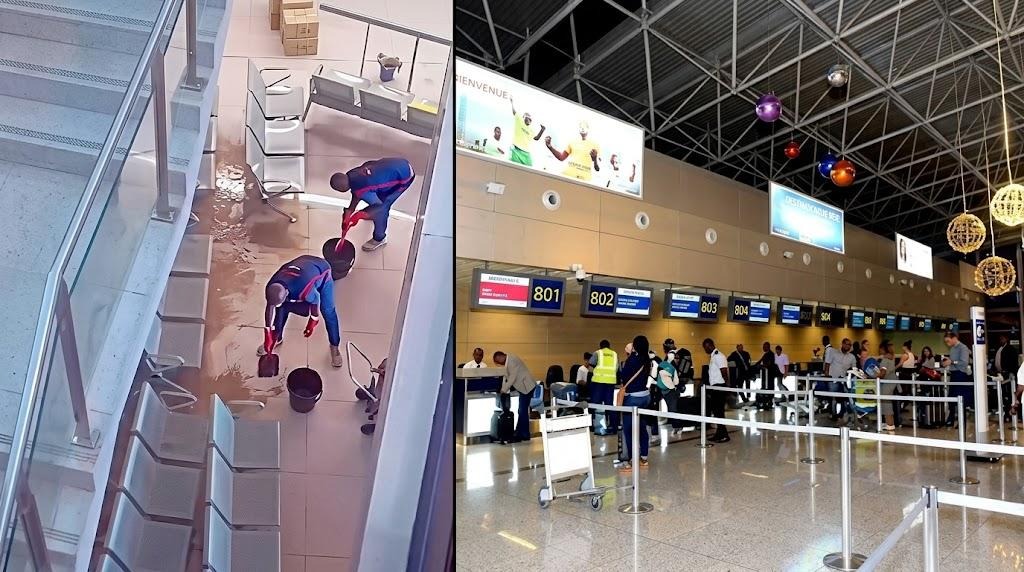
Lomé airport’s wastewater catastrophe: a defining test for Togo’s infrastructure accountability
The quiet rhythm of an ordinary afternoon at Lomé’s Gnassingbé Eyadéma International Airport was shattered in an instant. As hundreds of travellers queued at check-in counters and waited in transit lounges, a deep, muffled blast tore through the lower levels of the main terminal. Within moments, Togo’s premier aviation hub had been transformed into a contaminated disaster zone — a scene of unprecedented sanitary and humanitarian shock.
The breaking point: when a neglected sewer line finally gave way
What unfolded was not a minor leak. The main wastewater evacuation conduit — an ageing, pressurised pipe running through the ceiling cavity of the central hall — ruptured violently after years of deferred maintenance and chronic underinvestment. Trapped decomposition gases and saturated hydraulic pressure combined to blow the pipe apart, sending a shockwave that ripped ceiling panels from their mountings.
A torrent of raw sewage, toxic effluent and foul sludge crashed down onto the dense crowd below. In the check-in areas and at international transit counters, shock turned to horror, then to revulsion.
Passengers caught in the deluge: humiliation at the heart of transit
The human toll — both physical and psychological — defies easy description. Dozens of local travellers and, critically, numerous foreign passengers transiting to West African and European destinations were struck directly by the spray. Entire families, business travellers and tourists were drenched from head to toe in faecal matter.
“We were waiting for our connection to Paris when we heard a detonation above us, and then the ceiling caved in with a terrifying crash. In a split second, a black, foul mass engulfed us. I had it in my eyes, on my face, all over my clothes,” recounted a European passenger, trembling and close to tears, wrapped in a makeshift emergency blanket.
The psychological fallout is immense. Beyond material losses — contaminated carry-on luggage, destroyed passports and ruined electronic devices — the humiliation suffered by travellers trapped inside an international facility has triggered a wave of outrage. Several diplomats and foreign nationals affected have criticised the absence of immediate assistance, with emergency responders taking long minutes to arrive amid the general panic and the suffocating stench that filled the terminal.
Health emergency fears and the paralysis of an aviation hub
The situation quickly escalated into a national medical emergency. Faecal matter stagnated in an enclosed, air-conditioned space whose ventilation system spread the noxious fumes, creating a critical infection risk. Health workers rushed to the scene fear the spread of highly pathogenic bacteria, including Escherichia coli and agents responsible for cholera and typhoid fever.
Emergency crews attempted to establish a decontamination perimeter, but their under-equipped resources quickly proved inadequate. Surreal scenes played out on the tarmac and in the airport forecourt, where dazed passengers tried to rinse themselves with bottled water provided by local residents and shopkeepers shocked by what they were witnessing.
Meanwhile, the damage to infrastructure proved catastrophic. Wastewater infiltrated technical conduits, triggering cascading short circuits and disabling computer servers, security scanners and baggage handling systems. The Civil Aviation Authority was forced to order the complete closure of the airport and the diversion of all incoming flights to neighbouring airports in Cotonou and Accra, plunging the regional air network into chaos.
Anger mounts: the scandal of a maintenance failure foretold
As cleaning teams in biological protection suits desperately pumped out thousands of litres of effluent and disinfected the halls, anger surged both in Togo and internationally. How could an airport hub expected to meet international safety and hygiene standards descend into such a catastrophe?
Internal sources, speaking on condition of anonymity, reveal that repeated warnings about the deteriorating pipe networks and the failing capacity of lift pumps had been transmitted to technical management over recent months. Those warnings allegedly went unheeded, buried under budget arbitrations and widely criticised management practices.
Affected international airlines are already preparing collective legal action and demanding official explanations, while embassies of several countries whose nationals were directly contaminated and stranded are monitoring the case with extreme seriousness. For the country’s image and economic attractiveness, the blow is devastating.
An unprecedented reputational crisis for Togo
This event, unprecedented in its brutality, lays bare gaping flaws in the maintenance of the country’s major public infrastructure. Beyond the immediate management of the disaster and the decontamination of the premises, the Togolese government faces a major crisis of confidence.
Travellers and foreign victims, traumatised by this day of hell, are demanding not only compensation commensurate with the moral and physical harm suffered, but also exemplary sanctions against those responsible for this sanitary disaster. Lomé airport, once a showcase of national modernity, now stands as a bitter symbol of technical neglect whose consequences spilled out for the entire world to see.
