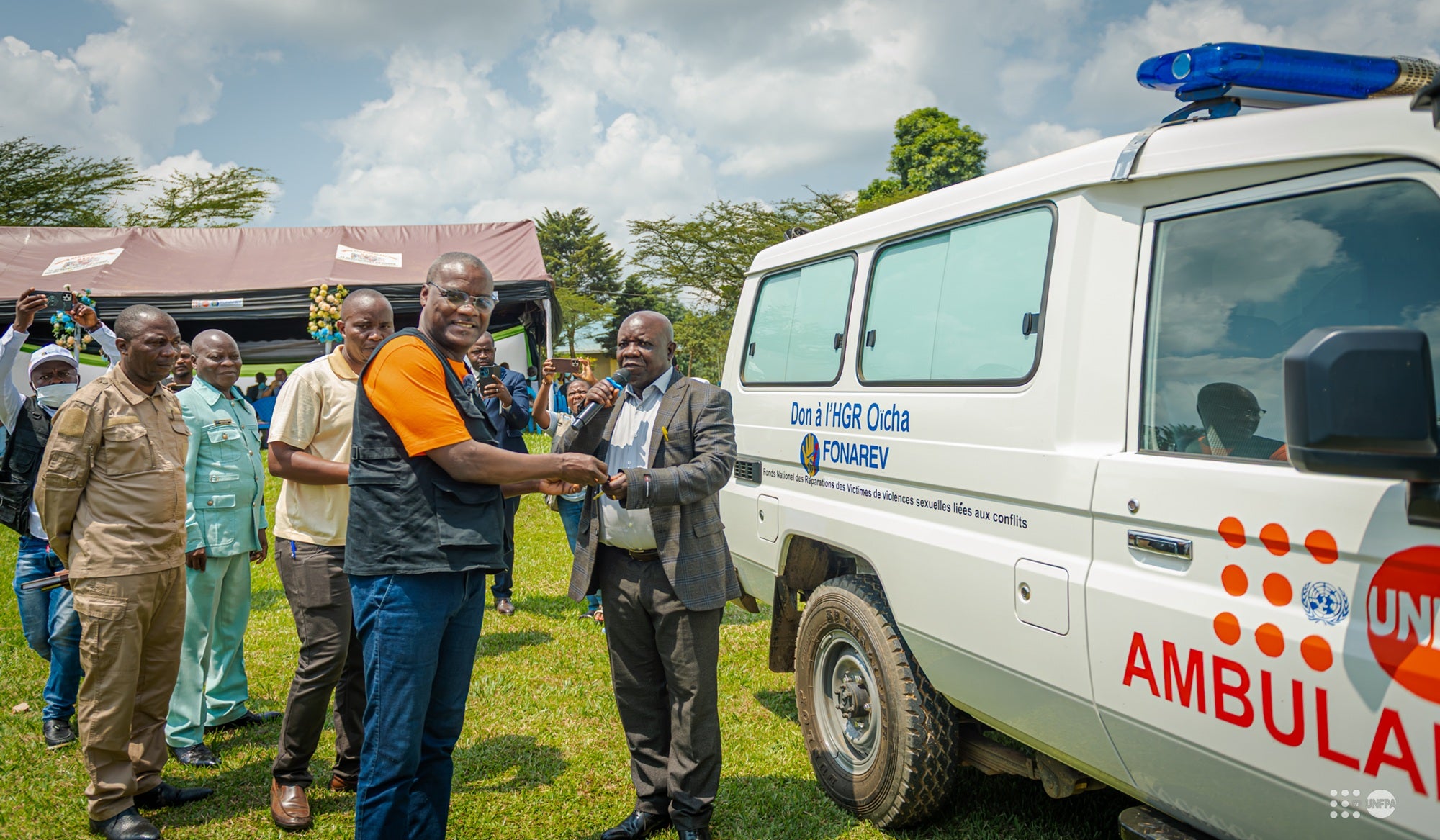
Life-saving ambulance boosts emergency care in North Kivu’s Oicha
Alain Akpadji, the UNFPA Representative, recently delivered a fully equipped medical ambulance to the Oicha General Reference Hospital. This vital vehicle is specifically designated for the maternity and obstetrics department, ensuring the swift and free transfer of medical emergencies to appropriate healthcare facilities.
This new ambulance will primarily serve pregnant women experiencing complications, survivors of sexual violence, critically ill children, and those wounded in conflict. Previously, the absence of suitable medical transport often turned patient transfers into a perilous, frequently fatal ordeal.
The provision of this ambulance is a direct component of the national strategy known as “zero franc at the cash register.” This initiative receives funding from the National Fund for Reparations for Victims of Conflict-Related Sexual Violence and Other Crimes Against Peace and Humanity (FONAREV).
Dr. Kaseraka Nzala Essaie, the interim Medical Director of the Oicha General Reference Hospital, commended UNFPA’s unwavering dedication to fostering a world where every pregnancy is desired and every birth is safe. He emphasized the profound symbolic and practical significance of this donation:
“In a region constantly affected by violent attacks, this ambulance is far more than just a vehicle; it represents a crucial tool for survival. Here, every minute saved translates directly into a life preserved.”
Beyond the vehicle donation, the hospital is also undergoing significant rehabilitation work on its delivery room. The Oicha General Reference Hospital, with an 89-bed capacity, manages an average of 350 births each month, operating under relentless demographic pressure.
Beyond transport: integrated and holistic support
During his visit, the UNFPA Representative toured the Integrated Multisectoral Services Center (CISM), located within the Oicha General Reference Hospital itself. This center provides a comprehensive response to the trauma experienced by survivors of sexual violence and other forms of gender-based violence. Specialized desks within the CISM offer complete support, encompassing medical, psychosocial, legal, and reintegration services.
During the visit, several beneficiaries shared their personal stories and expressed profound gratitude for the high-quality assistance they had received, underscoring the pivotal role these services play in their journey of physical and mental recovery.
Alain Akpadji, UNFPA Resident Representative in the DRC, pictured with survivors at the Integrated Multisectoral Services Center in Oicha, North Kivu. Photo: Junior Mayindu
Oicha: a humanitarian and health crisis hub
The security situation in Beni territory continues to worsen. Persistent attacks by the non-state armed group ADF have forced thousands of families to flee their homes. As a result, Oicha and Beni are grappling with a more than 40% increase in their populations due to the influx of extremely vulnerable displaced people.
Compounding this security crisis, which is marked by severe human rights violations and conflict-related sexual violence, is the 17th epidemic of Ebola Virus Disease (Bundibugyo strain).
A United Nations collaboration for dignity
This critical support, funded by FONAREV through a Joint United Nations Program (involving UNDP, UNICEF, UN Women, OHCHR, and UNFPA), is part of the Emergency Provisional Measures (MPU). UNFPA, which leads the agencies in this joint program, collaborates with PPSSP, Heal Africa, and TPO in the North and South Kivu provinces. Their collective mission is to provide support and reparations for victims of conflict-related sexual violence and other grave crimes.
