Lamu refinery launch: Benin’s Wadagni joins continental push as debate shifts to delivery and dividends
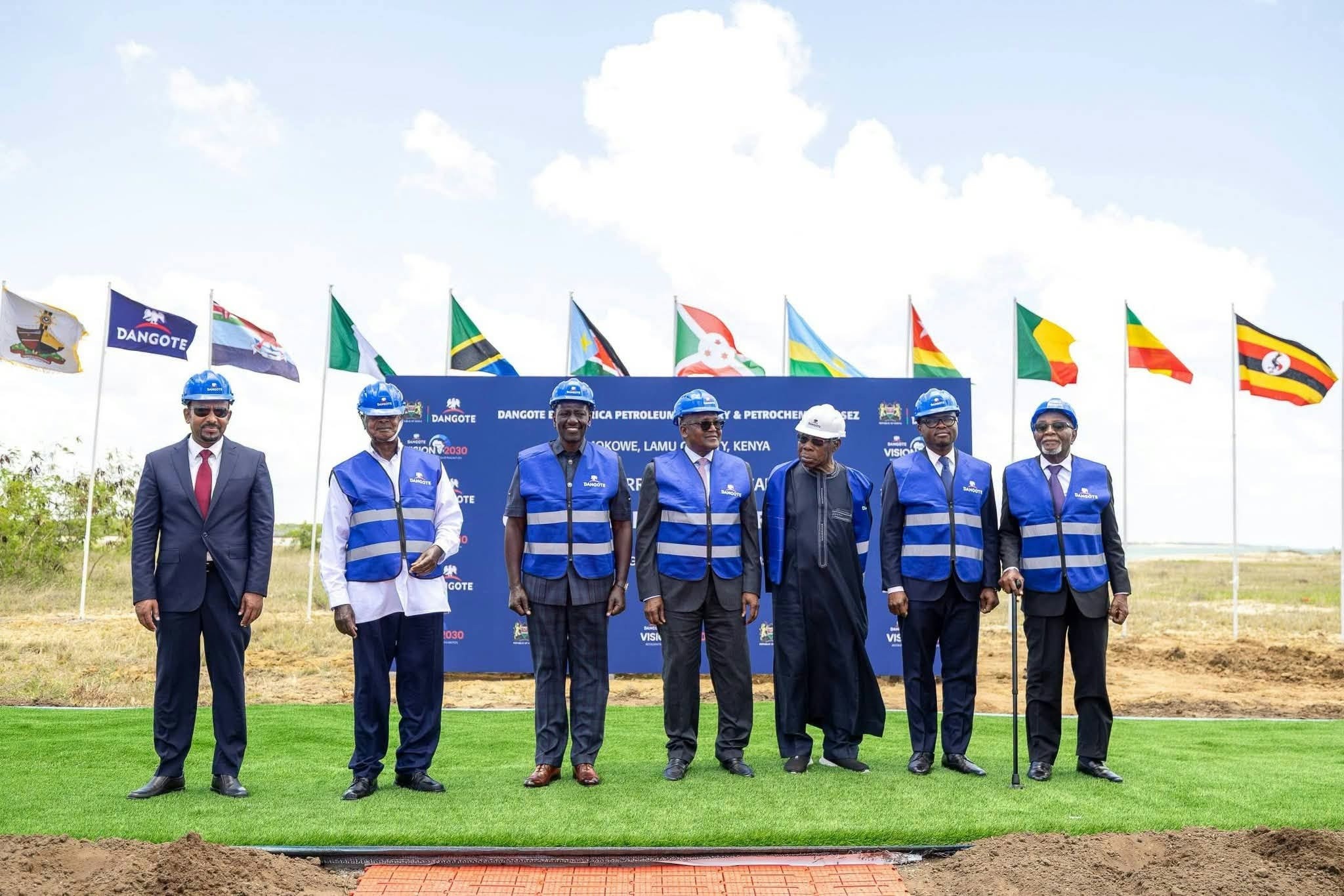
Lamu, Kenya — 30 September 2026. Benin’s president, Romuald Wadagni, joined fellow African leaders on Wednesday in Lamu, on Kenya’s northern coast, to mark the start of construction on the East African refinery being developed by the group of Nigerian billionaire Aliko Dangote.
A continental cast gathers on Kenya’s coast
Among those standing alongside the Beninese head of state were Ugandan president Yoweri Museveni, Togolese president Jean-Lucien Savi de Tové, Ethiopian prime minister Abiy Ahmed Ali and Kenyan president William Ruto.
Wadagni’s decision to attend puts Benin squarely inside a gathering built around one of the most ambitious industrial ventures announced for East Africa. The event brought together political leaders from both sides of the continent around infrastructure designed to reshape how crude oil is processed in the region.
A $16 billion wager with 700,000 barrels a day at stake
Once complete, the Lamu facility is expected to carry a price tag of roughly $16 billion, or about 8,960 billion CFA francs.
At full operation, the plant is slated to process 700,000 barrels of crude oil per day — a capacity that would rank it among Africa’s largest industrial complexes and, on the figures announced, make it the biggest refining project in East Africa.
The numbers matter because they land at a moment when a growing number of African governments are trying to build up domestic processing capacity and cut their reliance on imported refined petroleum products.
West Africa meets East Africa: the political signal
The presence of Wadagni alongside several heads of state and government also reflects the continental framing given to the initiative. Having leaders from West and East Africa in the same room signals an intent to treat the Lamu project as more than a Kenyan affair.
For Benin, the president’s participation offered a chance to see up close what large-scale African industrial investment can deliver and how new forms of economic cooperation between states are taking shape.
The Lamu project fits into a continent where energy infrastructure is playing an increasingly central role in strategies for development, economic sovereignty and regional integration.
What happens next — and who benefits
With 700,000 barrels per day promised at maturity, the future Lamu refinery is being presented as an undertaking of exceptional scale. Its construction is expected to draw substantial capital and spawn an industrial ecosystem spanning energy, transport and logistics.
The ceremony of 30 September 2026 thus stands as a major date for the leaders in attendance. For Wadagni, it was above all an opportunity to take part, alongside other African officials, in a moment dedicated to one of the biggest industrial projects currently announced on the continent.
In Lamu, attention now turns to what follows: an Africa seeking to expand its industrial capacity and process more of its own resources on its own soil.
