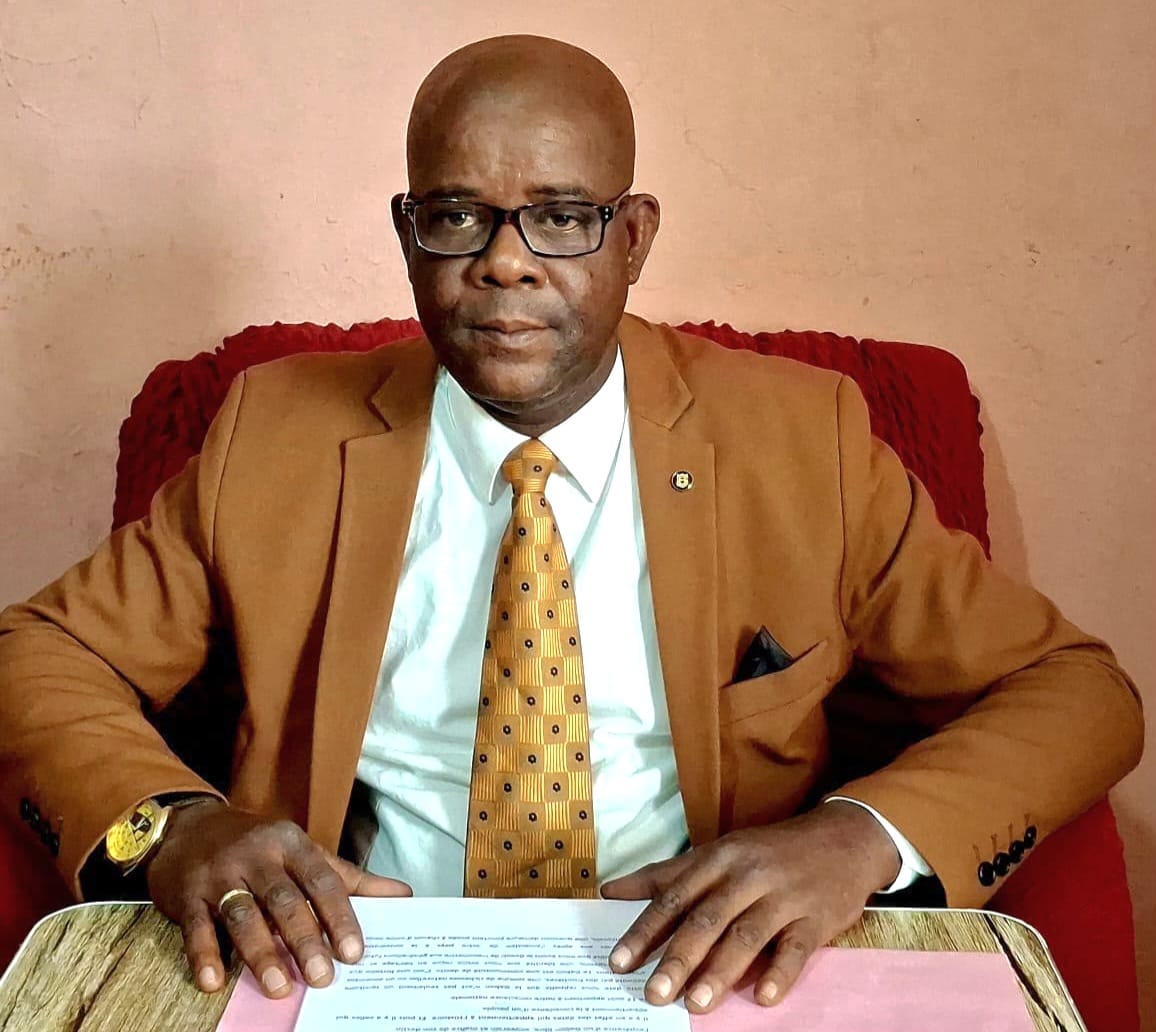
Joachim Mbatchi Pambou proposes a ‘national consolidation pact’ for Gabon
As Gabon marked its 66th Independence Day, Joachim Mbatchi Pambou, President of the Forum for the Defense of the Republic (FDR) and a candidate in the August 2023 presidential election, issued an official statement. In it, he urged all national stakeholders to embrace a ‘National Consolidation Pact’. This initiative is envisioned as a framework to unite patriots around Gabon’s most pressing priorities.
The concept championed by the FDR president is neither a power-sharing arrangement nor a demand for the opposition to abandon its critical role. Instead, Joachim Mbatchi Pambou aims to forge a collective commitment among the nation’s diverse vital forces. He articulated, “It would actually be about doing something much simpler, and at the same time much more demanding: agreeing on the essentials.”
This significant proposal emerges amid what Joachim Mbatchi Pambou perceives as a deteriorating public discourse. He laments the transformation of political disagreements into personal animosities and implores all parties to re-engage in respectful debate. “We can be political adversaries without becoming enemies. We can disagree without hating each other,” he asserted, urging his compatriots to prioritize “the essentials.”
These “essentials,” according to Mbatchi Pambou, should encompass several national priorities: civil peace and national cohesion, respect for institutions and the rule of law, social justice, reducing inequalities, job creation, improving public services, and the local transformation of natural resources.
For the former 2023 presidential contender, the proposed pact must also work to rebuild trust between citizens and institutions, among political actors, and between Gabon and its diaspora. Specifically, it should facilitate the restoration of national dialogue, establish priorities that transcend political transitions, and ensure accountability for commitments made.
Fostering inclusivity
Joachim Mbatchi Pambou’s vision for this initiative extends beyond political figures. He advocates for an inclusive dialogue framework that brings together institutions, political forces, civil society organizations, the private sector, trade unions, religious denominations, academics, youth, women, and the diaspora. The primary goal would be to identify a limited set of national priorities, define precise commitments, and enable citizens to regularly monitor progress.
This shared responsibility, he believes, should involve all segments of society. The government, he suggested, should “listen more and be more accountable,” while the opposition should continue to offer constructive criticism and propose alternative solutions. Civil society, the private sector, and the diaspora are also expected to play active roles in this national dynamic.
Through this proposition, Joachim Mbatchi Pambou calls for an end to the mindset where every political divergence escalates into confrontation. He firmly believes that the nation’s development cannot solely depend on its natural resources or potential, but equally on its capacity to preserve national cohesion. “No wealth will ever replace national cohesion. Our primary wealth is our ability to live together,” he concluded.

