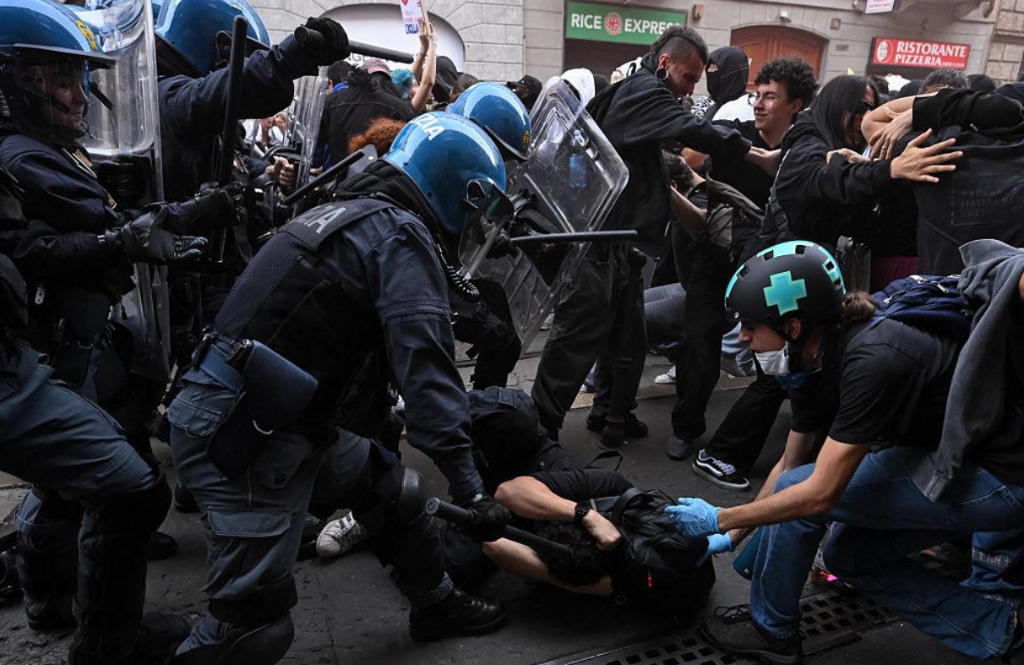
Italy enforces sweeping security measures in response to urban unrest
Government pushes forward with tougher penalties to curb escalating urban violence
Following violent riots in Milan and several northern Italian cities, the government led by Prime Minister Giorgia Meloni has enacted a sweeping new security decree, imposing stricter penalties, parental financial responsibility, and expanded policing powers. The move comes as Rome seeks to restore public order amid growing concerns over escalating urban unrest.
The decree, approved by the Council of Ministers on October 20, 2026, targets violent collective actions, juvenile offenders, and the families of minors involved in unrest. While the government defends its approach as necessary to protect public safety, critics argue it risks undermining civil liberties and fails to address the underlying social grievances fueling the unrest.
Stricter penalties for violent group participation
The new legislation introduces a specific offense for violent participation in public gatherings. Individuals joining groups of at least five people who endanger public safety now face up to five years in prison and fines of up to €20,000. Penalties are increased if participants conceal their identities or if violence results in injuries.
Organizers of violent protests, including those who coordinate through digital channels, could face four to twelve years behind bars under the new measures. The government’s stated aim is to hold accountable not only those directly involved in violence but also those who incite or facilitate it.
Parental responsibility and juvenile justice reforms
Another key component targets minors and their families. The decree lowers the age threshold for juvenile prosecutions to 14 years old, allowing for preventive detention of minors aged 14 to 17 deemed a risk. Additionally, parents may now be held financially liable for damages caused by their minor children, with authorities empowered to seek compensation for vandalism and looting.
The government argues these measures will deter recidivism and encourage parental oversight. However, legal experts warn that holding families financially accountable for their children’s actions could set a concerning precedent, potentially leading to unjust outcomes.
Milan becomes testing ground for enhanced security
The Lombard capital, a hotspot for recent unrest, is set to receive 500 additional military personnel under the Strade Sicure operation. The deployment aims to bolster security in high-risk areas and support local law enforcement. While authorities attribute the unrest to vandalism and criminal behavior, critics point to economic frustrations—rising living costs, energy prices, and housing shortages—as underlying causes.
The government has rejected claims that socioeconomic factors justify violence, emphasizing its commitment to restoring order through a firm security stance.
Balancing security and civil liberties in Italy’s new policy
The decree is the latest in a series of security-focused reforms introduced since 2022, drawing criticism from police unions and civil liberties advocates. Concerns include the expansion of preventive detention powers, the treatment of minors, and the risk of disproportionate penalties.
Despite initial proposals to grant military personnel broader policing powers in Milan, these plans were scaled back following objections from constitutional authorities. The decree takes immediate effect but requires parliamentary approval within 60 days to become permanent law.
The coming months will reveal whether these measures succeed in curbing violence without undermining democratic freedoms or exacerbating social tensions. As Italy grapples with the dual challenges of security and civil rights, the debate over balancing order and liberties enters a critical phase.
