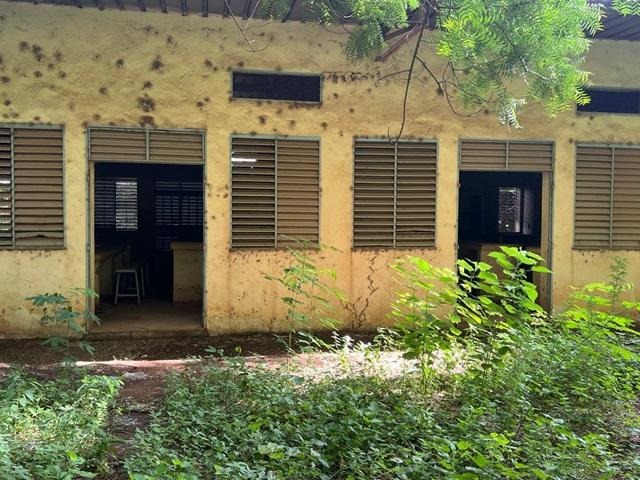
Is Mali gambling away an entire generation by closing over 2,400 schools?
Rentrée 2026-2027 in Mali: A Bet Against the Future
The first day of October 2026 marks the official start of Mali’s new school year. Under a polished national campaign, the transitional government in Bamako has grandly declared this the ‘Year of Education and Culture’—a bold vow to prioritize learning and nation-building. Yet, behind the ceremonial banners and presidential speeches lies a stark, undeniable truth: over 2,400 schools across Mali will remain shuttered, denying more than 730,000 children their fundamental right to education.
This staggering number doesn’t just represent lost classrooms—it reflects a strategic failure that may have already doomed an entire generation to a future darkened by ignorance and violence.
Schools as Battlegrounds: Education Under Siege
More than one in every five schools in Mali is now non-operational. This is not accidental damage but a deliberate weapon of influence wielded by armed extremist groups spreading their ideology. Schools are not just left vacant; many are vandalized, looted, or torched. Some have been repurposed as makeshift shelters for internally displaced families. Others are used as propaganda centers where children are indoctrinated into radical worldviews.
The pattern of closures paints a grim map of state retreat. In the far northern region of Kidal, where government forces cling to heavily fortified enclaves, more than 84% of schools remain closed. Neighboring Ménaka, under the brutal control of the Islamic State in the Greater Sahara (ISGS), sees 52% of its schools classified as ‘non-functional.’ The crisis deepens in central zones like Mopti and Bandiagara, where the Group for the Support of Islam and Muslims (GSIM), aligned with Al-Qaeda, enforces ideological blockades. Even once-stable regions in the south—Ségou, Koulikoro—now face persistent threats, as armed cells disrupt daily life and shut down public education.
From Classrooms to Recruitment Hubs
Every closed school represents a void in children’s lives—and a vacancy filled by extremists. With no access to formal education, thousands of adolescents are left vulnerable to recruitment, economic exploitation, or forced displacement. The closure of these institutions doesn’t just deny knowledge; it cedes moral and social ground to those who seek to shape a generation in their image.
Bamako’s Hollow Victory: Promises vs. Reality
The transitional authorities, led by General Assimi Goïta, came to power pledging to restore national sovereignty and security. To achieve this, Bamako severed long-standing ties with Western partners, expelled French troops from Operation Barkhane, withdrew from the UN peacekeeping mission (MINUSMA), and abandoned the Algiers Peace Accord. In their place, Mali turned toward Russian military advisors and the Africa Corps (formerly Wagner Group), seeking rapid military gains.
Yet, the reality has been far from triumphant. Despite widely publicized recaptures—such as the retaking of Kidal in late 2023—the military campaign has stalled into a bloody stalemate. The catastrophic defeat at Tinzaouatène in the summer of 2024, where government forces and Russian auxiliaries were routed by GSIM and allied rebels, exposed critical flaws in strategy and logistics. Far from stabilizing the country, this heavy-handed approach triggered brutal reprisals. Extremist groups escalated attacks beyond their northern strongholds, striking at the heart of Malian institutions—including an audacious assault on the gendarmerie school in Faladié and the Bamako military airport in September 2024.
Territorial Fragmentation: A State in Name Only
Today, Mali’s sovereignty exists largely on paper. In the vast desert expanses of the north—Kidal, Ménaka, Taoudénit—the state survives only in fortified towns, while armed groups govern the surrounding terrain. The ISGS imposes its brutal tax (zakat) on local populations, and the GSIM contests border areas with neighboring countries. Central Mali, including Mopti, Ségou, and San, is now the operational heartland of the Katiba Macina insurgency. Rural communities live under de facto extremist rule, where cities like Niono and Djenné endure regular blockades and threats against teachers who defy closure orders.
Even the relatively stable south—Koulikoro, Sikasso, Kayes—is no longer safe. Sleeper cells of the GSIM have begun targeting fuel supplies and major roads, strangling the flow of goods to Bamako and squeezing the capital’s economy.
What Future Awaits 730,000 Children?
The contrast could not be more tragic. While officials in Bamako celebrate a ‘refoundation’ of the nation, children across Mali wake up each morning in a world where education is a privilege—and an increasingly distant one. Over 730,000 students are locked out of school, their dreams deferred, their potential wasted.
This isn’t just an education crisis—it’s a national security risk. A generation denied knowledge becomes a generation susceptible to radicalization, recruitment, and migration. The ‘Year of Education’ risks becoming a cruel misnomer unless urgent action is taken—not just in rhetoric, but in strategy, security, and support.
The question now hangs heavy in the Sahel air: Has Mali, in its struggle for survival, already sacrificed its most precious resource—its children?
