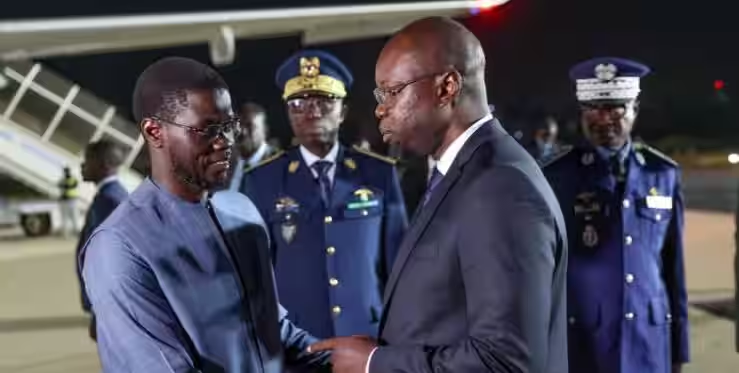
Insights into the bond between Bassirou Diomaye Faye and Ousmane Sonko in Senegal
The political landscape of Senegal has taken a decisive turn, with the evolving relationship between President Bassirou Diomaye Faye and Ousmane Sonko at its core. Far from a simple alliance, this dynamic is a tapestry of strategic cooperation and underlying friction, reshaping the nation’s power structure in ways that demand closer examination.
the roots of a complex partnership
Both Bassirou Diomaye Faye and Ousmane Sonko emerged from Senegal’s vibrant opposition movement, their paths converging long before recent political shifts. Their collaboration, forged in shared opposition to the status quo, has since evolved into a more intricate power dynamic under the new administration. While public displays of unity often dominate headlines, the reality is far more nuanced, blending mutual respect with calculated political maneuvering.
alliances and fractures in the political arena
The relationship between the two leaders is a microcosm of the broader challenges facing Senegal today. On one hand, their partnership has enabled President Faye to consolidate his position, leveraging Sonko’s grassroots influence to strengthen his reforms. On the other, tensions simmer beneath the surface, particularly as competing visions for the country’s future clash within the ruling coalition.
Key policy decisions have tested their bond, with Sonko sometimes adopting a more confrontational stance toward the government. This has raised questions about the sustainability of their alliance, especially as Senegal navigates economic pressures and political expectations.
the impact on Senegal’s future
The interplay between Bassirou Diomaye Faye and Ousmane Sonko extends beyond personal chemistry—it shapes the very trajectory of Senegal. Their ability to reconcile differences will determine whether the country moves toward stability or faces deeper political divides. With public sentiment finely balanced between hope and skepticism, the stakes could not be higher.
