Inside the quiet diplomacy: why Kinshasa’s written message to Lomé matters for eastern DRC
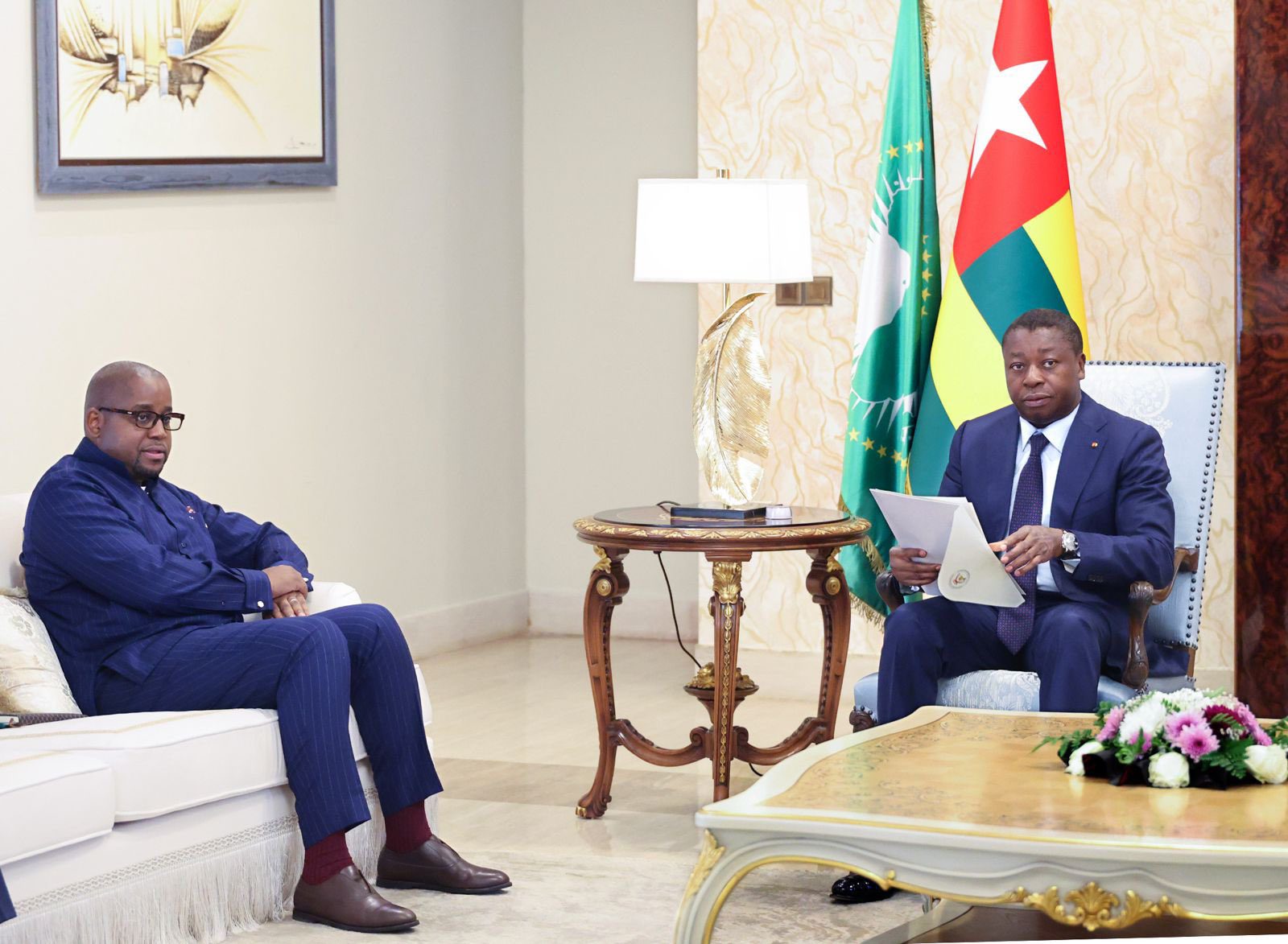
On Tuesday, September 29, 2026, Togo’s president Faure Gnassingbé granted an audience in Lomé to Floribert Anzuluni, the Democratic Republic of Congo’s minister of regional integration, who was on an official visit to the country.
The Congolese envoy came to hand over a written communication from his counterpart in Kinshasa, President Félix-Antoine Tshisekedi Tshilombo. Speaking after the meeting, Anzuluni explained: “We were dispatched to the president of the council to deliver a particular message from President Félix-Antoine Tshisekedi. This letter concerns the pacification process in eastern DRC, in which His Excellency Faure Gnassingbé plays a central role as African Union mediator.”
The Congolese minister also took the opportunity to lay out a detailed assessment of recent progress on programs to demobilize armed groups, a crucial initiative undertaken by Kinshasa to build lasting peace in the country’s eastern region.
This audience falls squarely within Togo’s diplomatic commitments to support pacification and the restoration of durable stability in the DRC and across the wider Great Lakes region.
Why this handover is more than a routine courtesy call
Behind the formal handshake in Lomé lies a carefully calibrated diplomatic choreography. The written message is not merely a courtesy note; it signals that Kinshasa wants to keep the African Union mediation track alive and visible at a time when multiple peace initiatives compete for attention.
By choosing Togo’s capital as the stage for this exchange, both sides reinforce Lomé’s role as a neutral hub where Congolese authorities can engage regional facilitators without the pressure of larger, more politicized forums. The audience also allows Togo to demonstrate that its mediation mandate, held by Faure Gnassingbé since April 2025, remains operational and trusted by the parties.
What the demobilization update reveals about the ground reality
The detailed briefing on disarmament, demobilization and reintegration programs is arguably the most substantive part of the visit. It shows that Kinshasa is trying to move beyond military responses and address the structural drivers of conflict in the eastern provinces.
Yet the update also hints at the scale of the challenge. Armed groups remain fragmented, and each demobilization cycle risks being reversed if political dialogue stalls. That is precisely why the Congolese minister’s presentation to Gnassingbé matters: it ties technical progress on the ground to the broader political process that the African Union mediator is trying to advance.
How Lomé became a diplomatic workshop for the Great Lakes
Since his appointment as African Union mediator in April 2025, Faure Gnassingbé has steadily turned Lomé into a meeting point for African facilitators and stakeholders. Several summits and strategic gatherings have been hosted in the Togolese capital, all aimed at pushing political dialogue forward, consolidating ceasefire commitments and aligning the various peace initiatives.
That accumulation of meetings has given Togo a rare commodity in regional diplomacy: institutional memory. Lomé now holds the threads of multiple conversations, which makes it harder for any single party to walk away from the table without losing credibility.
What to watch next in the mediation process
The written message from Tshisekedi is likely to feed into the next round of consultations led by the African Union mediator. Observers will be watching whether the demobilization momentum translates into concrete security improvements in the eastern provinces, and whether the mediation can bring armed groups and political actors into a single, coherent framework.
For now, the Lomé audience serves as a reminder that peace in eastern DRC is being pursued through patient, often invisible diplomatic work, and that Togo’s role as mediator remains a central pillar of that effort.
