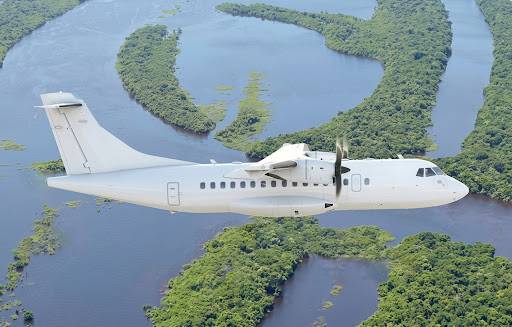
Inside the Nigerian military ATR-42 disaster: why routine flights demand scrutiny after Igbokoda tragedy
Uncovering the hidden triggers behind the ATR-42 crash near Igbokoda
When a Nigerian Air Force ATR-42 vanished from radar during what officials described as a routine flight, it wasn’t just the aircraft that went missing — it was public trust in the safety of military aviation. The crash near Igbokoda, Ondo State, on October 5 has exposed critical gaps in how routine operations are monitored, maintained, and scrutinized within Nigeria’s defence sector. While the flight carried 32 individuals between Benin City and Lagos, the true story lies not in the number of lives affected, but in the systemic factors that turned a standard mission into a national emergency.
From airspace silence to a frantic search: how the ATR-42 disappeared
The timeline of the disaster is as revealing as it is unsettling. At 9:13 AM local time, the Nigerian Air Force ATR-42, designated NGR 931, lost radio contact with air traffic control while en route from Benin City to Lagos. All efforts to re-establish communication failed. Hours later, the aircraft was located in a marshy, coastal area near Igbokoda — close to a naval base — confirming a crash with no survivors confirmed yet. The emergency response, led by the Nigerian Air Force in coordination with local authorities and civil protection agencies, faced immediate obstacles due to the rugged terrain and water-logged environment.
Local witnesses reported debris scattered near a waterway, complicating rescue operations. With communities in the region dispersed and access limited in parts of Ondo State, the recovery of the wreckage became the first critical step — but one that offered no immediate answers about the cause.
32 Souls in transit: passengers, crew, and the weight of uncertainty
Federal authorities confirmed that 25 passengers and seven crew members were on board at the time of the incident. Yet as of the latest updates, there has been no official identification of those on board, nor a confirmed fatality count. This silence speaks volumes: in the absence of verified information, speculation spreads, and public anxiety grows. Authorities have urged restraint in sharing unverified reports, especially as early images and testimonies from the scene began to circulate online.
The composition of the passenger list — likely including military personnel, support staff, and possibly civilians — raises further questions. Was this truly a routine logistical flight, or did it carry a more sensitive payload or personnel? The Nigerian Air Force has classified it as routine, but routine operations are now under scrutiny.
The human ripple effect in Ondo State
The crash has sent shockwaves through Igbokoda and surrounding communities. First reports were inconsistent, with some residents initially believing the downed aircraft was a helicopter. Confusion and fear spread as official confirmation took time. Local leaders have called for calm, emphasizing reliance on verified updates from authorities.
For families and loved ones connected to the flight — whether stationed in barracks, working in logistics, or traveling on official duty — the agony of not knowing is compounded by the difficulty of accessing the crash site. In a region where infrastructure is stretched and terrain is challenging, even basic communication becomes a hurdle during emergencies.
Mechanical failure, weather, or human error? The investigation’s invisible clock
Hours after the crash, the primary question remains unanswered: what brought the ATR-42 down? Was it a mechanical failure, a weather-induced loss of control, a communication breakdown, or a flaw in operational protocols? These are not rhetorical questions — they are the foundation of a military aviation safety crisis.
The Nigerian Air Force has confirmed the aircraft’s identity and mission type, but the absence of a root cause means every potential factor must be examined: flight data records, maintenance logs, weather conditions at the time of departure and en route, and air traffic control transcripts. Investigators are also tasked with securing the wreckage to prevent tampering and ensure a forensic reconstruction of the final moments of the flight.
Nigeria’s military air fleet under pressure: a fleet built for routine, tested by reality
The ATR-42 is a versatile turboprop used by the Nigerian Air Force for transport, surveillance, and reconnaissance. While its role is often described as routine, the term ‘routine’ in military aviation can be misleading. The pressures of a stretched defence infrastructure, inconsistent maintenance cycles, and high operational tempo all contribute to risk.
This crash is not an isolated incident — it is a symptom. As the Nigerian armed forces rely increasingly on air transport for internal security, troop movement, and logistical support, the fleet’s age, maintenance standards, and pilot training are being tested in ways they were not originally designed for. The ATR-42 may fly missions labeled ‘routine,’ but in a high-stakes security environment, no mission is truly routine.
What happens next: accountability, answers, and aviation reform?
As rescue and recovery efforts continue in Ondo State’s coastal wetlands, the nation waits for two critical outcomes: the truth about what happened, and the assurance that it won’t happen again. Federal authorities have promised transparency, but the road to accountability is paved with challenges — logistical, political, and operational.
The crash has already ignited public debate on military aviation safety. Citizens and lawmakers alike are demanding answers: Are maintenance protocols being followed? Are pilots receiving adequate training? Are air traffic and emergency response systems robust enough to handle such incidents?
Until these questions are addressed, the Igbokoda tragedy remains more than a statistic. It is a turning point — one that could redefine how Nigeria views the safety of its skies and the lives entrusted to its military aviation.
