Inside Chad’s Klessoum prison release: how Decree No. 2151/PR/2026 quietly cleared 150 sentences
Inside Chad’s Klessoum prison release: how Decree No. 2151/PR/2026 quietly cleared 150 sentences
The mass remission at Klessoum remand prison did not happen overnight — it was the product of a presidential decree, a carefully calibrated legal formula, and a ceremony that turned abstract clemency into 150 walked-out doors.
By Hassan Abderamane
What actually triggered the Klessoum releases
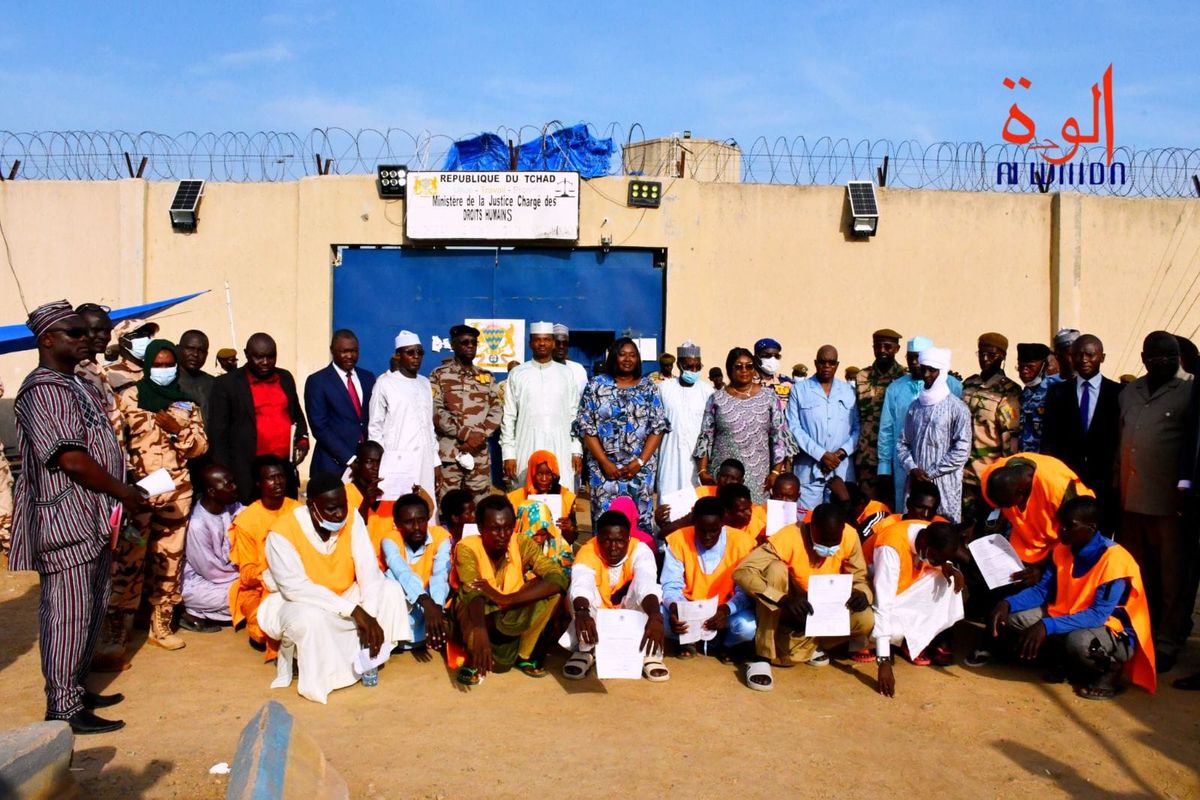
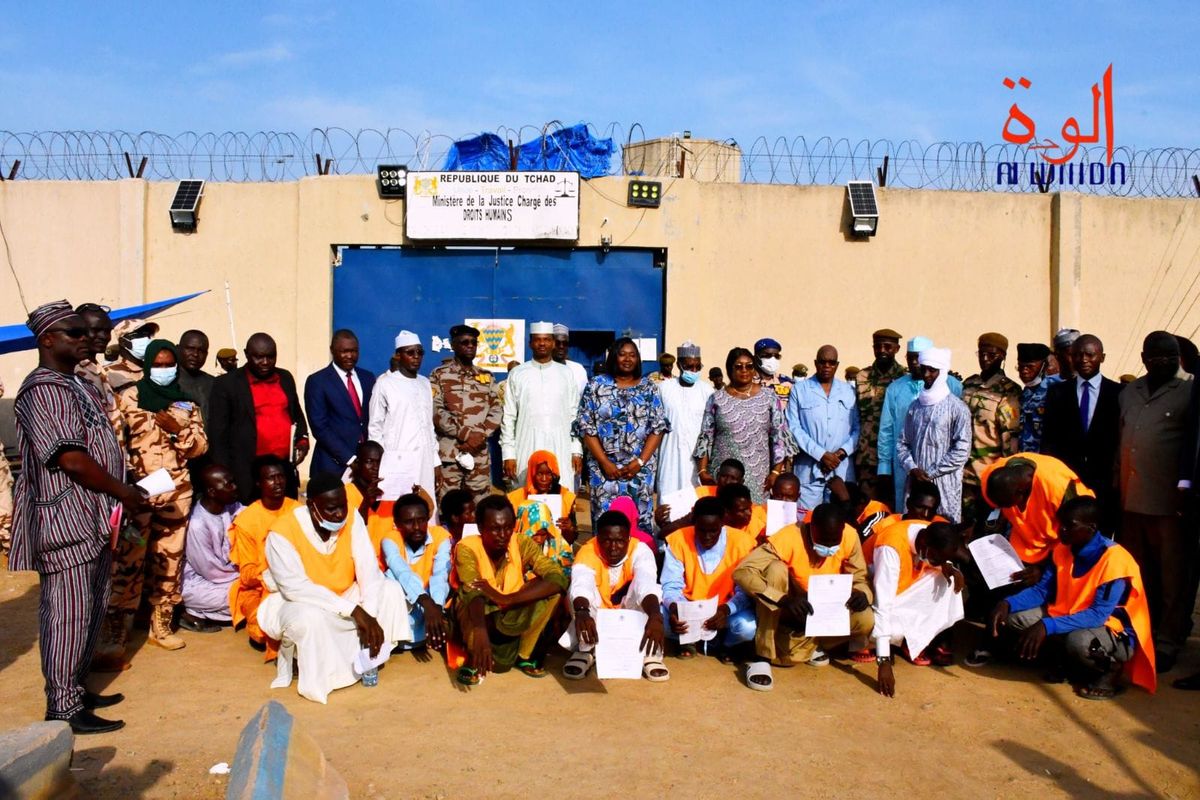
On Wednesday 16 September 2026, Justice Minister and Keeper of the Seals Ndolenodji Alixe Naïmbaye presided over a collective sentence remission ceremony at the Klessoum remand and correctional facility. The event was not improvised: it applied Decree No. 2151/PR/2026, signed on 14 August 2026, which set a legal scale for reducing or commuting certain sentences.
The ceremony drew the full chain of judicial authority — the Public Prosecutor at the N’Djamena High Court, the President of that court, the General Prosecutor at the N’Djamena Court of Appeal, the Secretary General of the Ministry of Justice, as well as defence and security officials and civil society representatives. Their presence underscored that this was an institutional act, not a discretionary favour granted at the prison gate.
By the end of the event, 150 detainees had been freed under the decree. The figure was not arbitrary: it resulted from the immediate application of the legal scale set out in the text, which identified those whose remaining time had been fully served once the remission was calculated.
The legal machinery behind the numbers
The minister paid tribute to the Head of State, describing the decision as one rooted in humanity and fairness toward citizens under final, enforceable criminal rulings. She quoted the Marshal of Chad: “Every citizen deserves competent, swift, accessible and equitable justice.”
She reminded the audience that pardon is a sovereign prerogative embedded in the constitution — a regal privilege often exercised by the President in favour of thousands of convicts, either by fully remitting their sentences or substituting lighter ones. It was in that framework, and with attention to the fate of compatriots in conflict with the law, that Marshal Mahamat Idriss Déby Itno, President of the Republic and Head of State, issued Decree No. 2151/2026 of 14 August 2026 on collective sentence remission.
The minister called the measure more than a single event: “a moment in which some of our definitively convicted fellow citizens will benefit from a partial and staggered reduction of their custodial sentences, or even release.”
Why the release was both symbolic and technical
Two dynamics ran in parallel. On one side, the decree reflected a stated desire to humanise detention conditions and to make sentence enforcement more pragmatic. On the other, it translated into a targeted but positive act of clemency — one whose immediate application emptied 150 cells because the residual sentences were now fully purged.
Naïmbaye stressed that the measure applies exclusively to the custodial portion of a sentence. It does not erase the rights of the State, civil parties or third parties. In other words, freedom from prison does not automatically cancel financial or civil obligations attached to a case.
What the government says comes next
Speaking on behalf of the government, the minister reaffirmed her department’s determination to continue modernising judicial institutions and consolidating the rule of law, with the support of partners whose ongoing commitment she acknowledged.
During the ceremony, release certificates were handed to the former detainees who benefited from the decree. The moment carried visible joy and emotion, closing with a group photo to mark what officials presented as a high point in the justice system’s handling of collective remission.
Chad’s Klessoum release in context
For observers, the significance lies less in the ceremony itself than in the mechanism. A decree signed weeks earlier provided the legal formula; the prison visit executed it; and the 150 releases became the measurable outcome. The episode illustrates how a sovereign pardon can be operationalised through a precise scale rather than through individual petitions — a detail that shapes both its speed and its limits.
