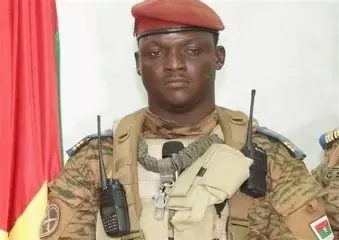
Ibrahim Traoré’s power in Burkina Faso: legitimacy through force and its consequences
Assumption of power: a deliberate break with constitutional norms
In Burkina Faso, Captain Ibrahim Traoré’s recent statements have sharpened discussions regarding the nature of his authority and the trajectory of the nation since the September 2022 coup. Observers note that his declarations leave no room for ambiguity: they openly affirm a seizure of power achieved outside constitutional frameworks, presenting this deviation as a new political paradigm.
The facts are unambiguous. Ibrahim Traoré did not ascend to leadership through universal suffrage but through a military takeover that ousted Lieutenant-Colonel Paul-Henri Sandaogo Damiba, who himself had come to power by overthrowing President Roch Marc Christian Kaboré. This chain of coups underscores a fundamental departure from the democratic principles that traditionally underpin a head of state’s legitimacy.
Normalization of force: a perilous precedent
Critics argue that the discourse surrounding this seizure of power is even more concerning than the circumstances of its attainment. By publicly justifying his rise to power through force, Ibrahim Traoré, they contend, sends a troubling message: that military intervention could become an acceptable means of seizing power, provided it garners fleeting public support.
This reasoning carries significant risks. If political legitimacy no longer derives from institutions, elections, or the rule of law—but instead from the ability of an armed faction to impose its will—future discontent could similarly justify further military takeovers. Such a cycle would erode institutional stability, entrenching chronic instability where the barrel of a gun supersedes the ballot box.
Patriotism and sovereignty: powerful narratives, limited substance
Proponents of the current regime often highlight restored sovereignty, a break from foreign influence, and a resurgence of national pride as key achievements. While these themes resonate emotionally, they cannot, in isolation, constitute a comprehensive governance record. History demonstrates that nationalist rhetoric, no matter how compelling, cannot substitute for tangible outcomes in economics, security, or institutional functionality.
In fact, political communication appears to have taken precedence over governance. Speeches are frequent, patriotic symbols pervasive, and displays of support widely amplified on digital platforms. Meanwhile, critical questions persist about concrete results in areas that originally justified the coup: counter-terrorism efforts, territorial recovery, and improvements in living standards.
Security and economy: unmet expectations
The most pressing criterion by which the regime is judged remains security. Despite announced reforms and military restructuring, large parts of the country continue to endure deadly attacks, mass displacements, and a humanitarian crisis affecting hundreds of thousands. In several regions, civilians live under the constant threat of armed groups, while access to healthcare, education, and essential services remains severely disrupted.
Economically, the situation remains precarious. Insecurity continues to hamper agriculture, domestic trade, and investment. The population’s primary expectations—job creation, higher purchasing power, access to basic services, and stability to rebuild livelihoods—have yet to be met. The gap between these aspirations and current realities persists, casting doubt on the transformative promises made in 2022.
Concentration of power: a growing concern
Critics also warn of an increasingly centralized authority. Public dissent is narrowing, journalists, civil society actors, and opponents operate in an environment where criticism of the regime is often equated with disloyalty to the nation. This conflation of national pride with uncritical support for the government is seen as a dangerous trend. In a democracy, loving one’s country does not require blind endorsement of its leaders.
The adage ‘Jupiter drives mad those he wishes to destroy’ resonates here—not as a personal indictment, but as a reflection on the corrosive effects of unchecked power. History abounds with leaders who, emboldened by popularity or a sense of historical mission, believed themselves indispensable to the nation’s salvation. Such convictions often lead to the rejection of criticism, the marginalization of dissent, and the conflation of personal destiny with that of the state.
This is the risk that analysts highlight. The more a leader centralizes power and presents their authority as infallible, the greater the likelihood of losing touch with the lived realities of the people. Applause at rallies, orchestrated communications, and staged demonstrations cannot replace an honest assessment of ground-level results.
The true measure of legitimacy
Ultimately, a head of state’s legitimacy is not forged through force, slogans, or defiant declarations. It is rooted in the preservation of institutions, the protection of citizens, the safeguarding of fundamental freedoms, and the sustained improvement of living conditions. It requires the understanding that power is a means, not an end.
It is against these benchmarks that Ibrahim Traoré’s tenure will be judged. As long as concrete responses to the security, economic, and social crises remain insufficient, doubts about the legitimacy and durability of his leadership will continue to fuel Burkina Faso’s political discourse.
