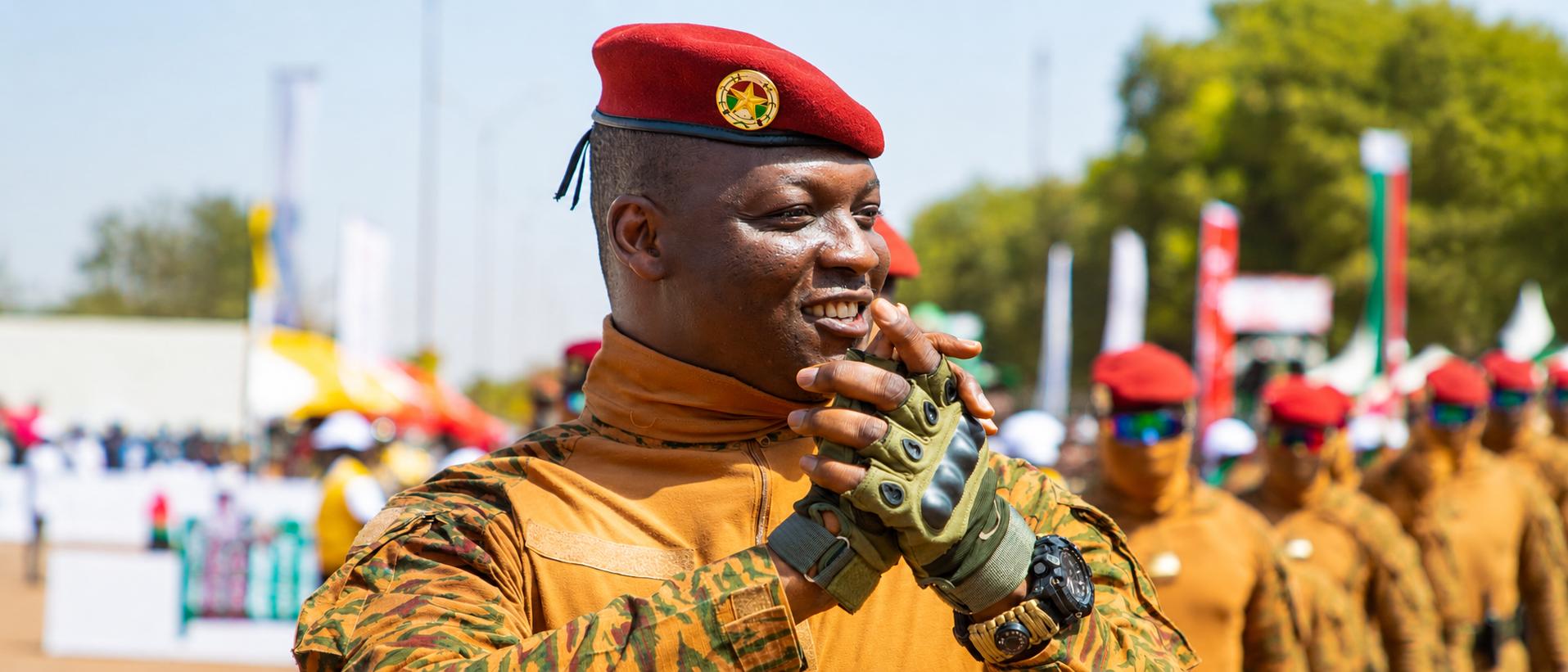
Ibrahim Traoré faces military cohesion crisis in Burkina Faso
Captain Ibrahim Traoré’s recent address in Ouahigouya has laid bare a deep structural fracture within Burkina Faso’s transitional leadership. The blunt, aggressive tone—replete with crude expressions like « merde » and threats of brutal suppression—betrays a profound crisis of confidence in the military apparatus itself.
In both governance and warfare, resorting to intimidation and vulgar rhetoric is rarely a sign of strength. Instead, it signals a systemic vulnerability, revealing a regime that clings to power not through shared doctrine or strategic unity, but through sheer fear of internal purges. When a leader publicly vows to « crush » even his own cadres, it is an admission that the cohesion of the junta is no longer anchored in loyalty or vision, but in the ever-present threat of punishment.
This approach creates a perilous paradox for Burkina Faso’s transition. By denying the existence of any hierarchy—claiming there is « no number one or number two »—Traoré seeks to prevent rival factions from emerging. Yet in doing so, he concentrates all decision-making power—and all associated risks—on his own shoulders. By staking his legitimacy solely on his battlefield experience, he falls into the classic trap of praetorian regimes: a legitimacy that is entirely personal, non-transferable, and contingent on immediate military success.
Worse still, this hardening of rhetoric conceals a strategic blunder in the management of the conflict. By prioritizing political loyalty checks over structural reform of military capabilities, the transition risks suffocating its own command chain. Officers, now more concerned with avoiding accusations of disloyalty than with tactical innovation, may retreat into cautious conformity. An army paralyzed by internal surveillance loses its edge in the field. The result is a dangerous disconnect between the defiant speeches delivered in Ouagadougou and the harsh realities unfolding on the front lines.
History in the Sahel has shown time and again that when regimes govern through fear and suppress internal debate, dissent does not vanish—it merely goes underground. The more a leader relies on threats of « crushing without remorse », the more dissident factions are driven into secrecy, waiting for the moment when the balance of power shifts. Far from consolidating control, such tactics may ultimately hasten the erosion of authority and deepen the crisis.
